Again this year the Fort Walla Walla Camp 3 of the Sons of Union Veterans of the Civil War will hold their annual Memorial Day remembrance service (5/26) at Tahoma Cemetery of Yakima at 10:45 to about noon. The public is invited, with limited seating, visitors are advised to bring a personal lawn chair. Camp 3 members will lead the service. WVHS Jr ROTC to post the Colors. Will be music and several brief speakers, a discussion on Decoration Day & on discovering your C.War ancestor, and a gun volley salute and Taps played.
Questions? address to Camp Commander Clifford Peterson phone 509 969 8844 Or www.suvpnw.org and Fort Walla Walla events .
Thanks Don Jameson Past Camp Commander. or Cell 509 945 0549
Let’s Talk About: Bison or Buffalo?


Buffalo or Bison? Which do we have in the American West?
I recently taught a lesson to my 11yo and 7yo great-grandkids on this subject. We have BISON in America. Bison have humps, shorter horns, live on the prairies and are ill-tempered. BUFFALO live in the wetlands of Asia and Africa, have long broad horns and are more mild-mannered, and so in Asia have been domesticated by man.
Did you know: Male bison an weight up to 2000 pounds and stand 6′ tall. (And we see videos posted on YouTube of stupid tourists in Yellowstone trying to pet a bison and getting gored.) Females are slightly smaller. Bison calves weigh 30-70 pounds at birth.
American bison are a keystone species that provide many benefits to other animals and the land. Their manure and grazing patterns increase the amount of nitrogen to prairie plants which facilitates plant growth giving habitat to nesting birds. Thick bison fur catches and disperses native seeds. Bison wallows, where the animals roll and scuffle, create specialized habitats for plants and capture moisture. Using their big heads as plows, bison push through deep snow creating paths for other animals such as elk and antelope.
Bison are the official mammal of America and also the states of Wyoming, Kansas and Oklahoma. But the history of the American bison is full of a lack of appreciation. Long ago, the continent held an estimated 40,000,000 bison. Then came hunting and by 1884 the official estimate of remaining wild bison was a mere 325.
There are volumes more to the full story and there are many books written on the subject of the history of the American bison. Want a good read?
P.S. Did you catch the phrase “keystone species?” Google that phrase for some really interesting knowledge.
(Thanks to the North Columbia Monthly, Dec 2024, for this story.)
Let’s Talk About: Remembering Mt.St.Helens

If you were living in Washington on Sunday, May 18, 1980, do you remember what you were doing? I was walking to church on that sunny day and remember hearing what I thought was a sonic boom. (Fairchild AFB is just west of town.) An hour later, I fled home and was among thousands of Washingtonians wondering WHAT IN THE WORLD IS HAPPENING?
At 8:32 that morning, Mt. St. Helens erupted as the result of an earthquake measuring 5.1 on the Richter scale. Here’s what happened:
- Eruption lasted 9 hours
- Nearly 230 square miles of forest were destroyed
- The explosion blew a crater 1968.5 feet deep and almost 1 1/2 miles wide from rim to rim on the mountain’s face
- The speed of the subsequent landslide was estimated to be between 70 and 150 mph
- As much as 600 feet of debris were deposited in the nearby North Fork Toutle River
- An estimated 7000 big game animals were killed in the blast
- An estimated 12 million chinook and coho fingerlings and 40,000 young salmon were destroyed
- 60 people living near the mountain were killed
I remember gathering my family close, including my future son-in-law. I remember them playing RISK for hours. I remember waking up Monday and Tuesday morning to everything coated with white ash….. and nobody knew how dangerous it might be to breathe or to our cars. Spokane, among many eastern Washington cities, stood in shocked stillness.
Now, 45 years later, we still see white streaks in the banks along I-90 when we head west. And I wonder how many baby girls born that day were named Helen or Ashley???
Will Mt. St. Helens blow again? She is considered the volcano in the Cascades most likely to erupt again in our lifetimes, and scientists expect it to erupt again though the timing and magnitude are uncertain. (So says Google.)
You Can File a Claim for Part of 23andMe’s $30 Million Data Breach Settlement Right Now
Reprinted from Eastman’s On-line Genealogy Newsletter, May 13th 2025
Claims are now open for individuals impacted by DNA-tracking company 23andMe’s 2023 data breach, and we’ve got all the details about how to opt in and how much you might be able to get paid.
The San Francisco-based company, which allows people to submit genetic materials and get a snapshot of their ancestry, announced in October 2023 that hackers had accessed customer information in a data breach, but the company didn’t confirm the full extent of the incident until December. Around half of the company’s 14 million people saw their personal information exposed in the leak, which first began in April 2023.
The lawsuit, filed in January 2024, accused 23andMe of not doing enough to protect its customers. It also accused 23andMe of not notifying certain customers with Chinese or Ashkenazi Jewish ancestry that their data was targeted specifically and spread on the dark web. The company opted to settle the suit for $30 million.
“We have executed a settlement agreement for an aggregate cash payment of $30 million to settle all US claims regarding the 2023 credential stuffing security incident,” a 23andMe spokesman told CNET. “We continue to believe this settlement is in the best interest of 23andMe customers, and we look forward to finalizing the agreement.”
Now, a few months on, there’s finally an official method available for you to make your claim and potentially get paid by 23andMe, in some cases as much as $10,000. Keep reading to get all the details you need, and for more, find out why T-Mobile settlement checks have been delayed and see if you’re able to claim a piece of Apple’s Siri privacy settlement.
How many people were affected by the 23andMe data breach?
The settlement could cover roughly 6.9 million 23andMe customers whose data was targeted in the leak. To qualify for the proposed settlement, 23andMe users must also have been a US resident on Aug. 11, 2023.
That 6.9 million number includes around 5.5 million users of 23andMe’s DNA Relatives profiles, which lets users find and connect with genetic relatives. The other 1.4 million people affected by the breach used another service known as Family Tree, which predicts a family tree based on the DNA users share with relatives, 23andMe said.
How much money could you get as part of the 23andMe settlement?
At the top end, 23andMe has said that it will pay out up to $10,000 with an “Extraordinary Claim” to users who can verify that they suffered hardships as a direct result of their information being stolen in the data breach that resulted in unreimbursed costs. This includes costs resulting from “identity fraud or falsified tax returns,” from acquiring physical security systems, or from receiving mental health treatment.
Residents of Alaska, California, Illinois and Oregon who were impacted by the breach can also apply for a payment as part of the proposed settlement, since those states have genetic privacy laws with damages provisions. The payments for these individuals are expected to be around $100, depending on how many people file for them, a settlement document said.
Also, a smaller subset of affected users whose personal health information was impacted by the breach will be able to apply for a payment of $100.
Infographic credit: Gianmarco Chumbe/CNET; Background image: Jason Doiy/Getty Images
Will the settlement include anything else?
Beyond those payments, 23andMe will also offer impacted users three years of a security monitoring service called Privacy Shield, which filings described as providing “substantial web and dark web monitoring.”
How can I apply for the 23andMe settlement?
In order to file a claim electronically, you can do so using this official online portal from the Kroll Restructuring Administration. An additional online form is available if you would like proof of your claim sent to you.
Potential claimants can also download and print out hard copies of the claim form and proof of claim form if they wish to submit them by mail. If you’re planning to use this method, send your forms to one of the addresses listed on the official claims website. The deadline to make your claim is July 14.
Donna Potter Phillips Named One of WSGS’s Outstanding Volunteers in 2024
Since 2003, the Washington State Genealogical Society has recognized over 600 outstanding volunteers and teams, nominated by their local society or genealogical organization for their service and dedication. These volunteers are the backbone of their local society, giving their time and expertise, to the organization and the field of genealogy. In the coming months, you will be introduced to each of the 2024 award recipients and learn why they received they received a WSGS Outstanding Volunteer and Team Award.
Today we’re introducing Donna Potter Phillips of Spokane, Washington who was selected by the Eastern Washington Genealogical Society (EWGS) as its recipient of a WSGS Outstanding Volunteer Award.
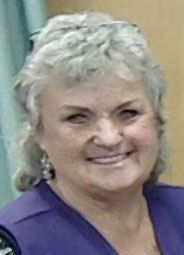
Donna has contributed nearly 50 years of dedication to EWGS. She has held every position on the Board except Treasurer. She has been the driving force for multi-class workshops, an annual Board retreat, keeping scrapbooks and other EWGS materials, the Walking with Ancestors event and the massive Obituary Indexing Project with more than 100,000 records to date.
Donna has written over 40 articles for the EWGS Digital Digest. She writes weekly Blog articles for EWGS and WSGS. She also volunteers at the library helping the public find their own story. Her dedication is an inspiration to all of us!
For more information on the WSGS Outstanding Volunteer Award program, visit the Recognition page of the WSGS website or contact Info@wasgs.org. Please type “Volunteer Award” in the subject line.
Tacoma Pierce County Genealogical Society May Chat Meeting

Tacoma-Pierce County Genealogical Society Genealogy Chat Meeting
Tuesday, May 20, 2025, starting at 7:00 PM via Zoom
Please join us and let’s chat!
Discussion starter topic – open forum
This is a monthly opportunity to connect with others and talk about anything and everything genealogical. The value of this meeting increases with the participation of each person that attends and contributes to the conversations. This is your chance to celebrate the breaking down of a brick wall in your research, or ask questions of others that can help you find records or relatives. Everyone, members and guests are welcome and encouraged to attend and participate.
Meeting invite with links in file attached below.
Date & Time: Every month on the Third Tue, from 7:00 PM until 8:30 PM Pacific Time
Please download and import the following iCalendar (.ics) files to your calendar system.
Monthly: https://us02web.zoom.us/meeting/tZMldOCprTsqGtSoVglOBTElUaBRgTq5IEgI/ics?icsToken=98tyKuGvpjgjG9eVsBmHRpwEGojCXevztmJfjbdukyniDw9xVib6A-NgALVLAY35
Join Zoom Meeting:
https://us02web.zoom.us/j/87839130000?pwd=dGdHY2wrZ0d1bDNRTEQ4Uk15OVk0Zz09
Meeting ID: 878 3913 0000
Passcode: 836216
One tap mobile:
+12532050468,,87839130000#,,,,*836216# US
+12532158782,,87839130000#,,,,*836216# US (Tacoma)
Dial by your location:
+1 253 205 0468 US
+1 253 215 8782 US (Tacoma)
Meeting ID: 878 3913 0000
Passcode: 836216
Find your local number: https://us02web.zoom.us/u/kdesX0el3t
National Genealogical Society Healthy Aging and the Role of the Family History Community

 Join NGS, Vivid-Pix, and FamilySearch for a Spcial Symposium on Healthy Aging Honoring Mental Health Awareness Month and the Future of Healthy Aging Dear Friend, In recognition of Mental Health Month, the National Genealogical Society, Vivid-Pix, and FamilySearch invite you to attend the Symposium on Healthy Aging and the Role of the Family History Community, on 22 May 22, 2025 from 1:00 PM–5:00 PM ET with online access via Zoom.* The symposium tackles increasing challenges facing Americans as they age: social isolation, dementia, and mental health. Join NGS, Vivid-Pix, and FamilySearch for a Spcial Symposium on Healthy Aging Honoring Mental Health Awareness Month and the Future of Healthy Aging Dear Friend, In recognition of Mental Health Month, the National Genealogical Society, Vivid-Pix, and FamilySearch invite you to attend the Symposium on Healthy Aging and the Role of the Family History Community, on 22 May 22, 2025 from 1:00 PM–5:00 PM ET with online access via Zoom.* The symposium tackles increasing challenges facing Americans as they age: social isolation, dementia, and mental health. Register Now “Family history activities are a pathway to good mental health and combat social isolation. The research, analysis, and writings associated with family history stimulate brain activity; storytelling, photos, and mementos bring back happy memories and intergenerational connection,” said Dr. Charlotte Yeh, Founder, Yeh Innovation, Past Chief Medical Officer, AARP. “We’ve witnessed firsthand how photo reminiscence therapy (pRT) can reduce social isolation, improve medication compliance, and enhance connection and cognitive performance with older adults. That’s why we’re dedicated to expanding its availability and making this therapy affordable to all who need it, as well as supporting others’ work to help our community,” said Rick Voight, CEO, Vivid-Pix. Important topics include: Understanding the health and cognitive issues facing an aging American population. How aging, isolation, and loneliness affect cognition – and how to assist those impacted. How the family history community can help our communities and the aging population. Activities that individuals and organizations, such as genealogy societies, libraries, archives, and museums (SLAMs), are conducting to support healthy aging. Panelists include leaders in aging health, genealogy, and technology: Charity Rouse, NGS Delegate Council secretary and Spartanburg County Public Libraries Crista Cowan, Ancestry Curt Witcher, Director, Special Collections & Manager, Genealogy Center, Allen County Public Library David Rencher, NGS president and Chief Genealogical Officer, FamilySearch Debbie Gurtler, Assistant Director, FamilySearch Library Dr. Charlotte Yeh, Founder, Yeh Innovation & past Chief Medical Officer, AARP Dr. Shelley Viola Murphy, International African American Museum (IAAM) Ed Donakey, NGS board member and Deputy Chief Genealogical Officer, FamilySearch Ellen Goodwin, Co-Founder, Artifcts Jake Rankin, Owner, Talem Home Care, Certified Senior Advisor John Dougan, NGS board member and Missouri State Archivist Matt Menashes, NGS executive director Matt Weismantel, NGS Delegate Council chair Rick Voight, CEO, Vivid-Pix Sheri Rose, CEO, Thrive Center Theda Heiserman, Director of Training & Education, CERTUS Institute Uniquely suited to support activities that promote healthy aging and the family NGS, FamilySearch, and genealogy societies, libraries, archives, museums and companies help thousands of people daily with family history research. “The family history community . . . helps people learn about their past through research, writing, and storytelling. These activities improve mental health and build strong relationships,” said David Rencher, NGS president and Chief Genealogical Officer, FamilySearch. “We think our community is well-positioned to improve long-term outcomes for an aging population.” “We’ve found that when helping people trace their roots, it can be transformative for a person’s mental health and perspective,” said Dr. Shelley Murphy of the Center for Family History at International African American Museum. “The people who come to programs at the museum come away with new energy, stronger connections to their past, and a newfound passion for family history research.”Plan to join us online. Registration is free. Register Now * An authenticated (paid or free) Zoom account is required to register. Copyright © 2025 National Genealogical Society (NGS), all rights reserved. National Genealogical Society · PO Box 128 · Annapolis Junction, MD 20701-0128 · USA |
International German Genealogy Partnership Celebrate Your German Speaking Ancestors
 |
 Hello IGGP partners and friends, Time to register for the 2025 German genealogy conference is running out. Registration is closing May 28!The conference will be held June 12-15 at the Nationwide Hotel and Conference Center in Columbus, Ohio. The event is in-person only for attendees. Hello IGGP partners and friends, Time to register for the 2025 German genealogy conference is running out. Registration is closing May 28!The conference will be held June 12-15 at the Nationwide Hotel and Conference Center in Columbus, Ohio. The event is in-person only for attendees.You can register online and pay by credit card. (The mail-in option has closed.)If you want to have recordings of the weekend presentations, including three bonus sessions not being given live, you can purchase access as an add-on when you pay for a registration — even if you are not able to attend in person.Our speakers and topics are all available for review. As is the weekend schedule. And don’t forget to plan for the social activities on Thursday, Friday and Saturday.Our conference app, Whova, is already live and attendees are “meeting” each other and sharing information even before suitcases are packed. You can join the fun by registering today.Questions may be sent to info@iggp.org. For questions specific to registration, email iggp.registrator@gmail.com.We look forward to seeing you in a few weeks! |
 Copyright © 2025 International German Genealogy Partnership, All rights reserved. Copyright © 2025 International German Genealogy Partnership, All rights reserved.You subscribed to receive news about IGGP and its activities. Use the links below to change your subscription preferences or unsubscribe. Our mailing address is: International German Genealogy Partnership1385 Mendota Heights Road, Suite 100c/o Minnesota Genealogy Center Mendota Heights, MN55120-1367Add us to your address book |
Let’s Talk About: Wreck of the Peter Iredale


(note the horse and wagon)
Strollers along a particular stretch of Oregon beach sometimes are lucky enough to see the fading remnants of a shipwreck. I’d bet that when they do, they wonder “what happened?”
Ships, and everything about ships, is vital to our collective family history. Our ancestors traveled in ships, fished from small ships, explored in ships, fought battles in ships, migrated in ships ………. and often died in ships.
The Peter Iredale is rather famous. She was a four-masted steel bark built in Maryport, England, in 1890. In September, 1906, she sailed north from Mexico bound for Portland where she was to pick up a cargo of wheat to return to England. From the Oregon History Project website we learn:
“Despite encountering heavy fog, she managed to safely reach the mouth of the Columbia River in the early morning of October 25. The captain of the ship later recalled that as they waited for a pilot ‘a heavy southeast wind blew and a strong current prevailed. Before the vessel could be veered around, she was in the breakers and all efforts to keep her off were unavailing.’ She ran aground at Clatsop Beach, hitting so hard that three of her masts snapped from the impact. Fortunately, none of the crew were seriously injured.”
Our Washington coast, particularly around the Columbia River mouth, is known as the “Graveyard of the Pacific,” and has seen approximately 2000 wrecks since 1792 with about 700 lives lost. The sandbar at Columbia’s mouth is three miles wide and reaches seven miles into the open ocean, and being sand, is constantly shifting, making it a navigational nightmare.
Do you have ships mentioned in your family history? If you do, and would enjoy learning more, click to www.ShipIndex.org. This is a fabulous database all about ships………sailing, steam, fighting or sunken ships.
Susan Palmer Named One of WSGS’s Outstanding Volunteers in 2024
Since 2003, the Washington State Genealogical Society has recognized over 600 outstanding volunteers and teams, nominated by their local society or genealogical organization for their service and dedication. These volunteers are the backbone of their local society, giving their time and expertise, to the organization and the field of genealogy. In the coming months, you will be introduced to each of the 2024 award recipients and learn why they received they received a WSGS Outstanding Volunteer and Team Award.
Today we’re introducing Susan Palmer of Bainbridge Island, Washington who was selected by the Bainbridge Island Genealogical Society (BIGS) as its recipient of a WSGS Outstanding Volunteer Award.
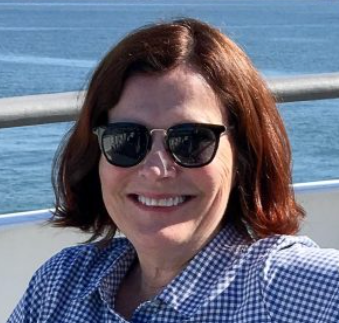
Susan joined the BIGS Board as Director of Programs in April 2022. Selecting topics for and delivering the monthly programs is a major cornerstone of BIGS’ work. Susan jumped in and helped the society move forward with the Zoom platform. She was an essential member of the Hybrid Team to again offer in-person programs. She was instrumental in developing the Zoom registration process. Susan broadened the society’s horizons in the breadth of speakers she engaged, including their first international speaker.
Under her leadership, BIGS was finally able to celebrate its 1st Annual BIGS at the Beach – for members and their families that had been cancelled the previous two years.
Susan developed a very useful planning document, providing speaker and topic information for programs well into the future. This is an effective tool in communicating with the board and the communications team’s use. Susan worked quietly, efficiently, reliably and collaboratively to deliver excellent program results.
For more information on the WSGS Outstanding Volunteer Award program, visit the Recognition page of the WSGS website or contact Info@wasgs.org. Please type “Volunteer Award” in the subject line.