Let’s Talk About: History of Ancestry

1983  —  Ancestry Publishing is founded, publishing over 40 family history magazines and genealogy reference books

1990 – Ancestry publications move to floppy disks

1996 – Ancestry.com is launched, paving the way for online family history

1997 – Ancestry offers family history on CDs (compilations of those who use Family Tree Maker)

2000 – Ancestry launches first census images; completes 1930 census in 2003

2001 – Ancestry reaches the 1,000,000,000 record milestone; Ancestry.co.uk debuts

2006 – Ancestry introduces Australian, Canadian and German sites/records

2006 – Ancestry adds new customer-centric innovations (shaky leaf hints and member trees)

2007 – Ancestry adds more international sites, inc. French, Italian, Swedish and Chinese

2009 – Ancestry reaches the 1,000,000 subscriber mark

2010 – Ancestry offers the first season of  Who Do You Think You Are?

2011 – Ancestry unveils the Ancestry app for iPad and iPhone

2012 – Ancestry hits the 2,000,000 subscriber mark

2012 – Ancestry DNA is launched

2013 – Ancestry announces exclusive agreement with FamilySearch to digitize one billion records

            from its Granita Mountain Vault

2015 – Ancestry releases exclusive collection of U.S. wills and probate records

2018 – Ancestry achieves 10,000,000 people tested via AncestryDNA; 15,000,000 in 2019

2020 – Ancestry reaches over 3.5 million subscribers and 27 billion records

2021 – AncestryDNA tests over 20,000,000 people

2022 – AncestryDNA becomes worldwide


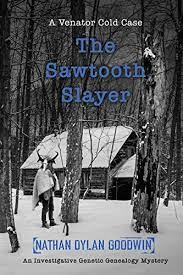
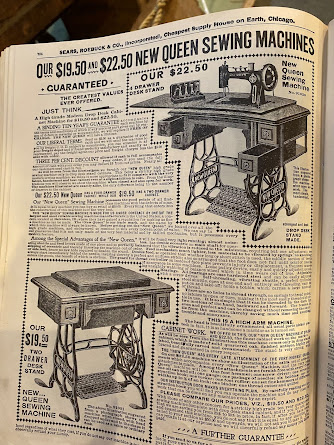
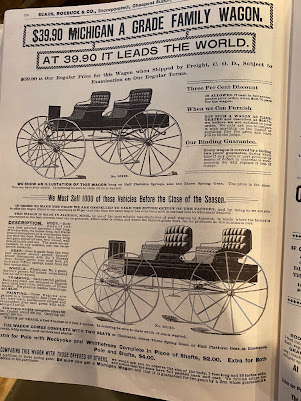
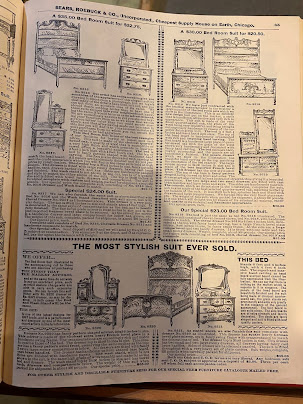
** The above image shows Ancestry’s first magazine publication, 1985-2010. These early publications can be accessed via Google Books. 

Let’s Talk About: Sad 1811 Story

John Cleves Symmes, 1742-1814, was the delegate from New Jersey to the Continental Congress. The following is a letter he wrote to his grandson, John Cleves Short, from Cincinnati and dated “March the 3rd, 1811.”

“My dear grandson, your letter of the 18th I received this day a week ago, and the day after I arrived in town. …….. I have now, my son, a Melancholy piece of intelligence to communicate. I left home in the morning of the 22nd of Feby and went first to Springfield, then crossed the country to Columbia, came to this place on Saturday the 23rd…went again to Springfield on the 27th and returned here on the 28th…

(In this letter I learned that )my house at Cleves with all its contents was reduced to a heap of ashes in the afternoon of the 1st instant….. the flames burst out and by three o’clock that valuable pile that 14 years ago cost me $8000 was in ashes. All my maps, deeds, mortgages, receipts, ledgers, day books, many of my bonds, and thousands of other important papers are lostAll my books, and yours, your clothes and mine, save what I have on my back, all my bedding, my years provisions, ten barrels of beef and pork of the first quality, 100 lbs of tallow, 100 lbs of old sugar, a stock of butter and cheese, all sorts of furniture…..not a cents worth has been saved that could not burn and what is not combustible is either melted, broken or in some way spoiled. $30,000 cannot repair my loss. But to all this I must submit and give up the idea of ever being able to keep house there again during my life. 

I have no appetite, my sleep is short, my thirst feverish. I hope however, my son, that it will not drive me mad. I know that I came naked into the world and I can but go naked out of it….. Man projects, but God frustrates the most sanguine prospects.” 

As I read this sad tale, I wondered how much paper-documentation-of-history has been lost through the years to fire????

Let’s Talk About: Useful Tidbits

War Bonds:  debt securities issued by a government to finance military operations and other expenditures in time of war.  

Chain:  a chain is a unit length measuring 66 feet, or 22 yards, or 100 links. There were/are 80 chains in one statute mile. The chain was used for several centuries in Britain and in some other countries influenced by British practice. (Can you imagine dragging this through the dense woods of the forests of Eastern America, up and down hill????)

Scurvy:  Our long-sea-voyage-seafaring ancestors often suffered from scurvy. After three months at sea, with no Vitamin C in their diet, the sailors would become irritable, lethargic and with bleeding gums leading to tooth loss. Once this was realized, captains would take jugs of vinegar on board for these long voyages. People in third-world countries still get scurvy today. 

Gretna Green:  A Gretna Green was a favored marriage place when a couple wanted to run away from home to get married…… a place with fewer marriage restrictions. Maybe they wanted to marry without parental consent, marry at a younger age, wanted to avoid paying a marriage bond, etc. The original Gretna Green is a town by that name just over the border in south Scotland. Most all U.S. states have a Gretna Green. 

Let’s Talk About: Sharing Books

 Found these three books in a going-to-the-dump pile and rescued them!

Will send them to you for postage.


Garden of the Sun: History of the San Joaquin Valley: 1772-1939 by Wallace Smith, 2004


Collected Poems of Robert Service, “poet-bard of the Yukon”


The Fountain & the Mountain: The University of Washington Campus, 1895-1995, by Norman J. Johnston

Let’s Talk About: Halloween

One good picture says it all:

Starting in early September, the stores are already stocking Halloween stuff and I for one do not like that. By October the offerings include 100 different “ghoulish goodies.” It’s always fun to find something really different.

I spotted this Mickey Mouse Pumpkin Lamp in a thrift store! Was only $22. Now this is my kind of Halloween decoration. 

Let’s Talk About: Military Records

The above iconic image is from the Civil War. But clear up to today, it’s the same: In war, young men die.  (Col. Blake, M*A*S*H, “and rule #2, doctors can’t change rule #1.”)

Many, if not most, of us have ancestors that participated in a war. Have you searched out all you’d like to know about a certain conflict?

World War I lasted from 28 Jul 1914 to 11 Nov 1918;  the U.S. entered the war on 6 Apr 1917

World War II lasted from 1 Sep 1939 to 2 Sep 1945; the U.S. entered the war on 7 Dec 1941

There are literally dozens of resources for you to learn about your ancestor’s service. You might start with this book (less than $5 via Amazon): 

Fold3 is the premier collection of Military Records. This is a subscription website but they periodically do offer specials. From this website you can find information and links to records on these conflicts:

  • Revolutionary War
  • Civil War
  • War of 1812
  • Mexican & Early Indian Wars
  • World War I
  • World War II
  • Korean War
  • Vietnam War
  • International Records

YouTube has hundreds of “war documentaries” and thousands of books have been written about these “American conflicts.” 

Bottom line, if you want to know more, go find out. The resources are out there. 

Let’s Talk About: New England Ancestor Arrivals in the Colonies


When did your ancestor arrive in the colonies? American Ancestors offered this chart:

Year        Geographic Area                    Resource

1620            Plymouth Colony                     Mayflower Families books (silver books)

1607-1657    13 Original Colonies                Founders of Early American Families

1620-1633    Plymouth & MA Bay               Great Migration Begins

1634-1635    Plymouth & MA Bay               Great Migration

1607-1650    New England                            Founders & Patriots (by Kolket)

1620-1640    New England                             Great Migration Directory

1620-1650    Massachusetts                           Pioneers of Massachusetts

1641-1700    New England                              Early New England Families

by 1699        Maine & New Hampshire        Genealogical Dictionary of ME & NH

to 1700(marriage, not arrival) New England    Torrey’s New England Marriages;

                                                                            New Englanders in the 1600s

Let’s Talk About: Learning from David Rencher

At the 2015 Washington State Genealogical Society conference in Ellensburg, David Rencher was the primary speaker. His talk, Framing the Problem, was so excellent that I often think back upon and ponder the truth he presented.

David began his talk with this question:  “Have you a tough genealogy problem? Worried you won’t solve it in your lifetime?”  He then taught us how to “frame the problem differently.” Simply put, how to look at the problem differently.  He showed three pictures of the Golden Gate bridge and explained:

If you’re driving across the bridge, you see the bridge from that angle. If you’re in a boat on the water, you see the bridge from that angle. If you’re flying over the bridge in a 747, you see the bridge from that angle. 

David’s point with these images of the Golden Gate Bridge is that, with regard to your tough genealogy problem, you’re looking at the bridge as you drive over it. That’s all you see. But if you were to see it from a boat or from up in the air, you’d have an entirely different perspective. You “must frame your picture differently” and then from that new angle, you might see things that you did not see before.

Does this make sense to you? It did to me. And then, of course, the question follows, how do you do this?

Then David launched into the main theme of his talk to answer this question. “Descendant research.  Some cousin, near or distant might just have the answer you seek.” 

I need not go on and on about “descendant research” for I assume that most of you know what that means and entails. Between Google, YouTube and CyndisList you can find all the tutorials you’ll ever need. Good luck as you “re-frame” your tough genealogy problems. 

Let’s Talk About: Washington Apples

Was Johnny Appleseed for real?  Click to this link and find out:

https://waapple.org/johnny-appleseed/

(You may have to copy/paste this link.)

Apple facts perhaps you didn’t know:

Apples are a $2 BILLION industry in Washington. 

Washington grows over 30 varieties of apples….can you name five?

Apple sizing is designated by count—specifically the number of apples that can be packed in a 40-pound fiberboard carton. 

The average apple contains only FIVE seeds.

29 – times you could circle the earth with the apples picked in Washington state

7500- varieties of apples grown around the world

1381 – Year the earliest known apple pie recipe was recorded

4 lb 1 oz – weight of the world’s largest apple, picked in Japan in 2005

95 – calories in a medium apple

Did our ancestors eat apples? Darn tootin. Driving around and trying to find old homesteads, the surest indication that you’re in the right spot is to find an old, gnarled, apple tree. 

Let’s Talk About: Vampire Lady Ancestor?

‘Vampire’ grave shows 17th-century fear of women who ‘didn’t fit in’

A sharp sickle was placed across her neck, ready to decapitate her should she jolt awake after death, and a padlock was put around her big toe.

That’s what scientists found when they excavated the corpse of a woman they believe was suspected of being a vampire in 17th-century Poland.

The unnamed woman — thought to be young and of a high social class, given that she was buried in a silk scarf — was probably accused of being supernatural because she stood out, experts said. A large protruding tooth may provide some clues.

A professor from Poland’s Nicolaus Copernicus University in Torun said burials involving a sickle are extremely unusual. Archaeologists from the universitymade the discovery in the southern village of Pien in the Eastern European nation last month and published their findings this week.

“Ways to protect against the return of the dead include cutting off the head or legs, placing the deceased face down to bite into the ground, burning them and smashing them with a stone,” Dariusz Polinski, who led the research team, told The Washington Post. Instead, in this case, a sharp scythe is “not laid flat but placed on the neck in such a way that if the deceased had tried to get up, most likely the head would have been cut off or injured.”

The woman’s exhumed remains are now being studied by Polinski’s team.

Her burial reveals “paranoia” and “fear” around vampires — and the “gender politics” at the time, Stacey Abbott, author of “Undead Apocalypse: Vampires and Zombies in the 21st Century,” told The Washington Post on Wednesday.