Heritage Quest Research Library is seeking your help to move forward. As many of you know, on October 28, 2022, we experienced a devastating fire in the building next door to our library. Because of the smoke damage to our space, we had to remove the entire contents of our library. The books and shelving units have been through an ionization/cleaning process and are ready for us to reopen at any time.
Because of the fire, the building owner is required to do major restoration and seismic upgrades to the building that will take many months to complete. We are and have been looking for a space for many months now.
One of the major stumbling blocks to our search, is the cost per square foot, to lease a unit large enough to accommodate the library, bookstore, classroom and office space. We will be required to double the rate we were paying before the fire.
We hope that you will consider our plight and feel the need to HELP. You can find the GoFundMe page for Heritage Quest Research Library by clicking on the link below. We sincerely Thank you for considering our request.
In April 2023, I was blessed to take a deep dive into the history, geography, geology and culture of the far northeast corner of America, the Canadian Maritimes and the St. Lawrence River and Seaway. Con su permisio, as they say in Spanish, I would like to share with you some of what I learned in these blog posts over the next couple of months. Hope you benefit and enjoy!
“The humble, hard-working beaver is honored on the Canadian nickel and for good reason. The beaver is an animal that was the architect of the nation of Canada,” explained David, our ship’s history presenter. “It was beaver fur that first drove exploration and exploitation.”
“The beaver is not leading-man material,” David quipped,” but is well adapted to its aquatic life. Its engineering acumen is what makes it outstanding. Its behavior comes from its genes; they are genetically programmed to build. Their ability to do it well develops over time and with practice. The longest known beaver dam is in Northern Canada and is over a mile long.”
Beavers are revered in Canada for a different reason. So what made it such a star? Its FUR! Fur trading was a big part of the economy since the first white explorers arrived. Samuel Champlain established a fur trading post in what became Quebec City in 1608. There were other fur-bearing animals but beaver were the most plentiful, were easy to find and catch. The First Nations were happy to trade beaver furs for the white man’s goods. Beaver fur was the currency of the frontier. As the beaver were trapped out, people (forts, towns) moved west with them. By the 1850s, the west was “beavered out” clear to the Rocky Mountains.
Today it’s hard to realize the great demand for beaver fur. Fashion drove the industry in the early 1800s: beaver hats were “the thing.” Luckily for the beaver, by the 1850s fashion was changing. Queen Victoria’s consort, Prince Albert, wore a silk top hat and quickly beaver hats were out. The beaver’s work was done; Canada was established.
By 1867, Canada was a nation built in many ways upon the humble beaver. To honor this “founding father,” the beaver is featured on the Canadian nickel.
In April 2023, I was blessed to take a deep dive into the history, geography, geology and culture of the far northeast corner of America, the Canadian Maritimes and the St. Lawrence River and Seaway. Con su permisio, as they say in Spanish, I would like to share with you some of what I learned in these blog posts over the next couple of months. Hope you benefit and enjoy!
By definition, an island in the St. Lawrence River & 1000 Islands area must meet these criteria: have at least one tree and at least one square foot above water year round. And actually, there are 1864 islands comprising the 1000 Islands area. These islands are mostly granite and the trees mostly deciduous ones. I spotted houses built on some TEENY rocky spots in the water….. accessible only by boat, obviously. No tides affect this area but due to the outflow from Lake Erie, the water can rise 3-4 feet from year to year. Called “Millionaires Row,” this area in the 1870s was the mecca for wealthy folks to build build their summer “cottages”……. mansions of 100+ rooms! President U.S. Grant visited a friend there one summer and the media blasted it well, bringing in new millionaires. In the day, these residents had 100+ foot long yachts with gleaming teak decks and built enormous boat houses for these boats.This area is more than a summering spot for the wealthy. The broad expanse of water in this area (and the many islands) resulted from the creation of the St. Lawrence Seaway. After years of yammering and problem solving between Canada and New York, construction of the seaway began in 1954 and was completed in 1959. Why was this important? The St. Lawrence River was THE artery into the heart of the North America continent and if it could be made navigable to the Great Lakes, the possibilities were endless.
The saddest story from human history standpoint was the submerging of nine villages, some Canadian and some American. Two towns/villages were relocated: Iroquois and Morrisburg. Nine were completely submerged: Aultsville, Farran’s Point, Dickenson’s Landing, Wales, Moulinette, Mille Roche, Woodlands, Santa Cruz and Maple Grove. Of course people shed tears, grumbled and filed lawsuits but in the end their towns and homes were relocated “for the greater benefit of the nations.” There is a Lost Villages Historical Society, founded in 1977, headquartered in Ault Park, near Long Sault, Ontario. Ten restored historic structures from Moulinette have been relocated there. If your ancestors lived in one of these Lost Villages, do contact this society: 16361 Fran LaFlamme Drive, Long Sault, Ontario, K0C 1P0. And perhaps watch the YouTube video, “No Road Home.”
This website has links to more history of each village.
Inundation Day, June 26, 1959, a ceremony was held in Montreal. Queen Elizabeth, President Eisenhauer and Prime Minister Diefenbaker were the speakers “affirming the grandeur of the project and all the good it meant to both Canada and the United States.”
Via phone: (253)205-0468,,85164040192#,,,,*816294# US
One of our most exciting agenda items will be the announcement of the 2023 Outstanding Volunteer and Team recipients! We’ll also talk a little about the WSGS, our programs and services and how to get involved.
We hope you join us! If you want more information, email Info@wasgs.org.
Tacoma-Pierce County Genealogical Society DNA Special Interest Group Meeting
Tuesday, August 22 at 7:00 pm via Zoom
We will continue studying Genetic Genealogy in Practice by Blaine Bettinger and Debbie Parker Wayne.
This month we will continue discussing Chapter 6: Genealogical Applications for X-DNA.
This book is available from The National Genealogical Society (the publishers, Amazon, or perhaps through your local public library or via Inter-Library Loan.
Check WorldCat to see what libraries may have copies.
Add to Calendar:
TPCGS DNA Special Interest Group Meeting
Every month on the Fourth Tue beginning at 7:00 PM Pacific Time
Please download and import the following iCalendar (.ics) files to your calendar system.
Topic: “Wanting to travel to German archives? Hold up! Finesse and Know how Required!”
Come and learn how to:
– Establish a prioritized research objective(s) list
– Leverage online archival finding aids to maximize your research time in physical archives
– Assess physical finding aids
– Anticipate key record types, and what they are
– Understand archival etiquette
– Getting help with gathered data
Presenter: Annette Unrau
As a native German from Hamburg, Annette takes immense interest in German genealogy, emigration, consulting others in discovering their heritage. She is currently completing her final course in social media marketing to wrap up her BS in professional studies with an emphasis on family history from Brigham Young University Idaho. Annette worked as a German research consultant at the Family History Library, in Salt Lake City, Utah. Last summer Annette conducted extensive research in German archives, while completing her Germans from Russia Studies Certificate from Northern State University. She is working towards research hours for ICAPGen accreditation in the Germany Northwest Region.
In April 2023, I was blessed to take a deep dive into the history, geography, geology and culture of the far northeast corner of America, the Canadian Maritimes and the St. Lawrence River and Seaway. Con su permisio, as they say in Spanish, I would like to share with you some of what I learned in these blog posts over the next couple of months. Hope you benefit and enjoy!
Lighthouses. Who does not like lighthouses? How many of you have braved the 100-spiral-open-metal stairs to climb to the top of a lighthouse? (And remember than in days of yore, the lighthouse keepers would climb those stairs at least twice a day carrying fuel for the fire………. and there were women lighthouse keepers too, going up those stairs in their long dresses.)
Lighthouses are beautiful and romantic and have been featured in a million books and movies. “But what, really, is a lighthouse for?” asked David, our experience instructor on the ship. He continued, “A lighthouse is a navigation aid, surely not just by a light, but by a point to steer by. The lighthouse was the GPS of the 1800s. The lighthouse was a landmark visible at sea to enable recognition to ships of where they were. Anciently, shore fires wee used before lighthouses.” ****
“Imagine the coast of North America in the late 1800s. It was a broad expanse of rocky shores, forested wilderness, populated by the First Nations and then by lumbermen and fisherman,” David taught us. “In the mid-1800s there were hundreds of vessels from a dozen nations in North Atlantic waters for by water was the easiest mode of transport and transportation for both cargo and passengers. Today, modern ships navigate by GPS and other automated systems to keep safe on the water, but there were only lighthouses in the 1800s.”
“In the 1800s, sailing captains had only crude maps and a compass and sailors hoped for a captain skilled in these tools. Accidents occurred constantly….capsizing, beaching, grounding and collisions. The lighthouse was the technology of the day, built to make travel safer for the ships and people on the waters.”
*** On my Mississippi River trip in 2022, due to an extremely low river, we could not moor at Vicksburg but were diverted south to a hastily-extended concrete fishing access. Being up in the pre-dawn dark, I knew we passed Vicksburg and shortly in the pitch black darkness, I spotted a small, flickering light on the shore. As the ship’s floodlight zoomed in on that signal light, I could see that it was a beach fire! Lighted purposefully to guide us to where we could moor! So old time methods were still necessary in 2022!
The Clallam County Genealogical Society’s Speaker Series will host Mike Karsen Saturday, September 9th at 10:00 am.
In his program, “Sex, Murder, and Genealogy?” Mike will tell the story of Dora Feldman McDonald, the daughter of German Jewish immigrants, who made the front page of Chicago newspapers in 1907 when she shot her lover. Dora, who was married to one of the most powerful political bosses in Chicago at the time, used murder to end this affair and her lover’s blackmail.
But what ever happened to her after her dramatic acquittal the following year? Genealogist Mike Karsen uses every trick in his tool bag to set the record straight and follow her trail and brings Sex, Murder, and Genealogy together.
A professional speaker, Mike Karsen is a member of the Association of Professional Genealogists (APG), and the Genealogical Speakers Guild Illinois. He has presented over 300 talks on genealogy topics locally, nationally, and internationally including Newberry Library and Spertus Institute for Jewish Learning and Leadership in Chicago. Mike is the author of the JewishGen website, “Guide to Jewish Genealogy in Chicagoland,” and has published articles on genealogy. He holds an undergraduate degree in mathematics/computer science and a master’s in operations research alongside 30 years in telecommunications management. We enjoyed a previous presentation he provided. A wonderful speaker and storyteller, he is back by popular demand!
All are invited to attend this free presentation via Zoom or by joining us at the CCGS Research Center and Library. To obtain the Zoom meeting number and passcode, call or email the society. The CCGS Research Center is located at 403 8th Street in Port Angeles, WA. For more information and to get the meeting number and passcode: Our email address: askus@clallamcogs.org. Phone number: 360-417-5000. Call between the hours of 10am – 4pm Mon-Friday or on Saturdays noon to 4pm. Otherwise leave a message.
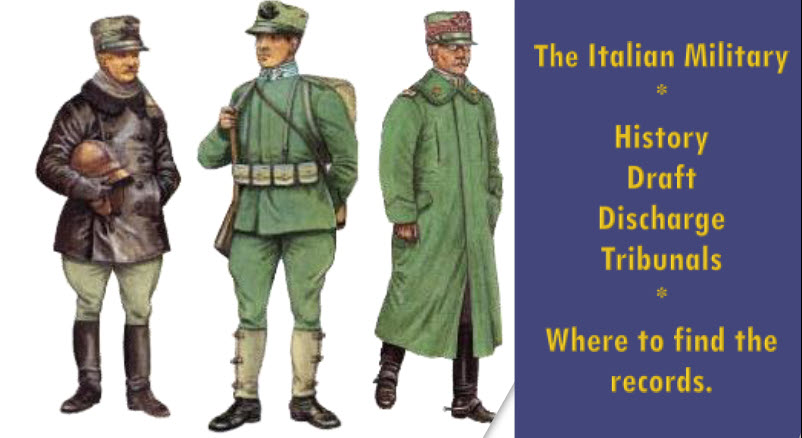
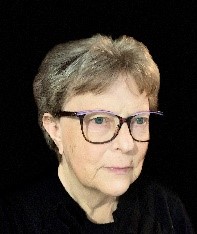
October 2023 Meeting Special Webinar Welcome to Italian GenealogyLet’s explore the world of Italian genealogy together, one person at a time. ZOOM MEETING TOPIC: 9 Types of Italian Military Records and Where to Find Them presented byAnn Tatangelo WHEN: Saturday, 21-Oct-2023 TIME: SPECIAL TIME 10:00 AM – 12:00 PM (PDT) 7:00 PM – 9:00 PM (Italy time) The history of the military in Italy is complex due to the fact that Italy wasn’t even a country until 1860 And was dominated by several foreign nations until Garibaldi led his army to victory and the Unification of the country (well, most of it) in 1860.Since my personal research focus is south Italy I am going to concentrate on that for the history part. But the presentation will apply to the whole country.I plan to cover Italy’s military history, its divisions, the Leva and other lists, the role of the military, service and discharge records, and Military Tribunals. I’m looking forward to meeting you all and hope there will be time for questions. Presenter: Ann Tatangelo BIO Ann Tatangelo has had three different surnames and lived in three different countries. Born Ann Kenyon in Lancashire, England, she emigrated to Canada with her husband Geoff Livesey in 1967. After Geoff’s death in 1998, she met Vincenzo Tatangelo who introduced her to his home in the ‘wonderland’ or Paese della meraviglia of Sora, Italy where she fell in love with the culture, the food and the history.Ann’s earliest experiences and adjustments to life in Italy, brought her face-to-face with Italian life, death and even the early days of a blossoming Italian pop star, which she recounted in her first book Annoying the Saints: Stories of MyLife in Italy. After permanently relocating to Italy, she soon began researching her husband’s family tree to keep busy and discovered a love and talent for sifting through genealogical records that evolved into Angel Research and Genealogical Services. Twenty years after founding Angel Research, Ann has compiled her insight into the various legal documents and genealogical hurdles of the area into two easy-to-read handbooks for the Provinces of Frosinone and Latina that will allow amateur genealogists from all over the world to connect their ancestors in Italy.
Fort Walla Walla Camp 3 is holding a dedication ceremony on Aug 19 at 1100 for a new CW Union marker stone for James W Fox. Public invited. At Methow Cemetery — NW of Pateros, WA at 935 State Hyway. 153. Details at www.suvpnw.org under events of Ft Walla Walla Camp 3. Or Don Jameson cell 590 945 0549
Thanks for any help. regards, Don Jameson, Camp Commander of FWW 3
You are free to copy articles to any non-commercial web site or message board or printed publication you wish. Don’t bother to ask permission, just do it.




 Welcome to Italian GenealogyLet’s explore the world of Italian genealogy together, one person at a time. ZOOM MEETING
 Presenter: Ann Tatangelo BIO