Seattle Genealogical Society Tip of The Week Spring is Cemetery Season

TIP OF THE WEEK – SPRING IS CEMETERY SEASON

By Kate Penney Howard

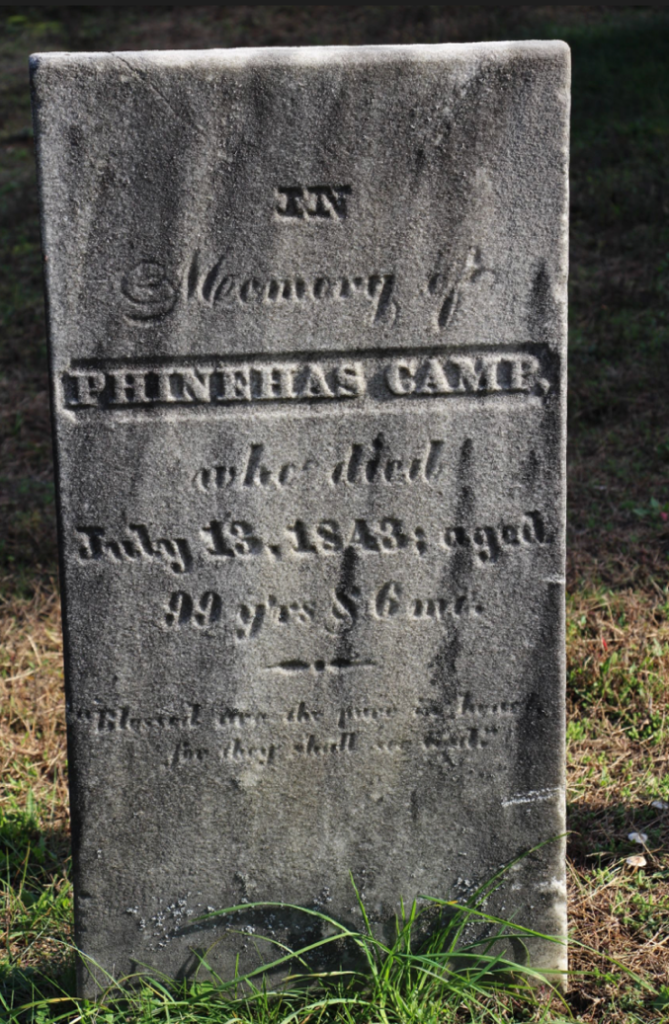
Spring is cemetery season for genealogists. Here are the field notes I wish someone had given me when I started.

Bring a kit, but keep it reasonable. You don’t need a backpack full of equipment you won’t use. My kit includes a wide-brim hat, water, sunscreen, and a soft natural-bristle brush. I also carry a spray bottle with distilled water, a rigid notebook, two pens, a small mirror, and a phone with a fully charged battery. I’ve stopped carrying chalk, shaving cream, and flour. Preservation professionals have been clear for over a decade: these substances damage stone.

Document the whole plot, not just the one stone. Family burials cluster. A single ancestor might share a plot with a sibling who died in childhood, a first wife you didn’t know existed, or a cousin whose name appears on no other record. Take a wide photograph of the plot before you zoom in. Note the stones on either side. Note the section and row if the cemetery is mapped.

Read light, not stone. A weathered inscription often reads better at dawn or late afternoon, when the sun strikes the surface at a shallow angle. If you can’t wait for the right time of day, bring a mirror. Stand with your back to the sun, hold the mirror at roughly 45 degrees, and bounce the light across the stone. The shadows in the carved letters will deepen. This costs nothing and harms nothing.

Photograph with care. Shoot straight on, not at an angle. Fill the frame with the stone and not much else. Take one shot for the dates and names, then take a wider shot that shows context, material, and condition. If the inscription is hard to read, take the same photo three times at different exposures. Modern phones do this automatically in HDR mode.

Record as you go. Memory is the least reliable field tool. Before you leave the cemetery, open your notebook. Write the cemetery name, the date of your visit, the weather, and the section if known. Sketch a rough map of where each photographed stone sits. Skip this step, and you’ll return to your desk with thirty-seven images of granite and no idea which one is your great-grandmother.

Respect the living, too. Small rural cemeteries often sit on private land or are maintained by township trustees. Check before you visit. FindAGrave and BillionGraves both list cemetery types and sometimes contact information. A phone call ahead is rarely refused and often rewarded; the person with the key frequently knows more about the cemetery’s history than anything written down.

Upload afterwards. If you photograph a stone that isn’t yet on FindAGrave or BillionGraves, consider adding it. Your picture becomes a permanent record accessible to researchers who may never visit the site. Stones weather. Cemeteries are lost to neglect, development, and flooding. Your image today may be the only image in fifty years.

One last thought. Cemeteries are not laboratories. The people buried there had names and faces and people who loved them. Walk gently. Leave nothing except footprints, and take nothing except photographs and field notes.  Join SGS Today

* to renew your membership: log in on the Members Home page
and click the green renew membership button.


DONATE TO SGS

Your donations represent a significant part of the SGS budget. Your continued generosity helps us increase our financial security and expand our services for everyone. We make it easy for you to contribute appreciated stock from your portfolio. We have a brokerage account established and ready to receive your donation from any firm. For details, write treasurer@seagensoc.org. For questions about our needs and our vision, write president@seagensoc.org
 

Seattle Genealogical Society May 2026

montage of a man looking at his family tree with the words Find Your Family's Story. Beginning Genealogy classes start May 20/21 NEW BEGINNING GENEALOGY CLASSES START SOONMorning Classes Begin Wednesday, May 20
Evening Classes Begin Thursday, May 21
Motivated to learn more about your family’s story? Want to learn how DNA can help? SGS will be offering a new beginning Genealogy class in May. This class fun, online and interactive will give you the tools to succeed in your research.
 
This class includes four weekly sessions online with a fifth, optional session in person at the SGS library. The class covers how to successfully conduct, organize, and record research for your genealogy. How to begin? How to evaluate evidence? What are the best sources? Where are the records–online and off? What can DNA tell us?

Start your journey on a foundation of good habits and best practices.  Participation will help you develop great genealogy skills.  The course finishes with a list of favorite sources for additional learning and an optional meet-up with a personal research session at the SGS library.

There are two options for class time, start on May 20 and 21, and both will be taught by Cecellia Rogers: Morning class, Wednesdays 10 a.m. Evening class, Thursdays 7 p.m. Weeks 1 – 4 will meet virtually and consist of lecture, discussion, and workshop for one-and-a-half-hours each session.

Week 5 (optional) includes a library tour and one-on-one research assistance.
 
There is a limit of 20 people per class. Class fee $80 (SGS members $60). Learn more. Join the Class!images courtesy of Michael Walk, Mike Tinnion, Johann Siemens, Jennie Razumnaya / Unsplash


image of an old photo album with the words: Cataloging digital images Second Saturday: May 9, 1:00 p.m.Tame your digital family photographs by adding names, dates, and other information to images to make them searchable. This presentation outlines a simple and effective process – from scanning, tagging, and saving images to organizing and backing up these image files – so you can do it once and do it right.

Nancy Loe, a professional genealogist and archivist with decades of experience, helps family historians search smart, find more, and stay organized. As a presenter, she specializes in search strategies, information management, and U.S. and European research and records, speaking at conferences and webinars in the U.S., Canada, and Australia.Sign Up Today!NEXT MONTH: DNA Case Study: Finding a Father. Sign up separately for this event held June 13. Stay after the presentation for the June membership meeting.
  photo courtesy of laura-fuhrman / Unsplash
 SGS ELECTIONS: BALLOTS DUE BY MAY 7;
RESULTS AT JUNE MEMBERSHIP MEETING
Let your voice be heard! SGS members can find an email dated April 14 which will contain a link to their ballot. Vote for SGS leaders for the coming year!

Election results will be shared at the June Membership Meeting.Membership Meeting: June 13, 2:30 p.m.Learn what is happening at SGS. Election results will be shared after the Second Saturday presentation June 13. Sign up for both the Second Saturday presentataion and membership meeting

 USE THE STORIED GENEALOGICAL TOOLKITVirtual Sunday, May 17Join SGS as we kick off The Genealogist’s Toolbox, a new Virtual Sunday series where we look at different tools available for genealogy, and discuss how they might fit into our own work.  

With so many programs available, it can be difficult to know what exists—or which ones might be useful. This series offers an opportunity to become more familiar with available tools together.

This session will feature Storied, a platform that combines family history research with tools designed to help bring our ancestors’ stories to life. We will watch a pre-recorded demonstration, followed by time for questions, discussion, and observations. Sign Up!LIBRARY NEWSFamilySearch AccessSome FamilySearch catalog records and details are only available to users when signed-in to their FamilySearch account.  This is due to record permissions, licensing agreements, or access restrictions set by the record custodians. These access requirements may change over time as records are updated or new agreements are established.

To ensure the highest level of website security and ensure proper access to records, beginning April 30, 2026  FamilySearch users will be required to sign in to their FamilySearch account in order to access the FamilySearch Catalog.

 Researching at the SGS LibraryBruce and Steve visited SGS library Tuesday April 7Melanie attending a SIG from the Lib and having a chance to implement what she is learning on a second screen!Above: Bruce and Steve visited the SGS Library Tuesday April 7.

Left: Melanie attending a SIG meeting from the SGS Library. She had a chance to implement what she was learning on a second screen.
courtesy Jill Morelli 

SGS VOLUNTEER OF WINTER QUARTER: HELEN SHAWCROFTHelen Shawcroft has been recognized as SGS’s Winter 2026 Volunteer of the Quarter for her valuable contributions as a Library Trustee over the past several years. She shared the following with eNews:Photo of Helen ShawcroftHelen Shawcroft My genealogy research journey started when I was a child. My father was into family history in the days before digitization of historical records. Everything came from family documents or a few census records. I was always fascinated by the family tree that he put together with his mother and the family history booklet he was given at a family reunion. He shared his love of family history with his favorite first cousin and I have continued that research with the daughter and granddaughter of that cousin.

I didn’t really start my genealogy research in earnest until I went on a business trip to the University of Iowa in my role as a senior executive at the University of Washington Medical Center. My father was born in Iowa and I took a vacation day to visit his hometown and its genealogical society. What a treasure trove I found! After that I was really hooked on genealogical research. I didn’t have much time to work on family history until I retired, although I did manage a trip to Tennessee to start my discovery of my mother’s family history. I didn’t know much detail about my mother’s family other than a few anecdotes (with no names attached) like one of my ancestors was a signer of the California State Constitution, someone fought in the Revolutionary War, some ancestors fought on both sides during the Civil War, my great-great grandfather drove 20,000 head of sheep from Chihuahua, Mexico to California, etc.

Since I retired I have visited Poland to see the area where some ancestors lived until the 1850’s. I’ve dragged my husband all over central California to see the places my mother’s ancestors lived starting in the 1840’s, including the foothills of the Sierras that the Mono Tribe calls home and the valley where my ancestors were the first white settlers, as well as records regarding my grandfather’s days as the sheriff of Madera County. And soon we will be going to Scotland to do the same. I’ve even found an ancestor in Tucson, Arizona where he was a businessman, philanthropist and governmental leader. That ancestor is related to my current brick wall. My research in Tucson didn’t provide a lot of information back in time, but I still consider it quite a success since it yielded some maps of where he lived and did business and a photo of my great great great grandmother.

While I have found lots of records on line and in the SGS Library and learned much about my ancestors that way, I have found that traveling to the places where my ancestors lived to be far more rewarding. Not only did I find new records from those travels, but I gained a greater understanding of their lives. I hope that SGS engenders in its members and visitors to our great library the same interest I have. There are so many resources there and our members are an even greater resource.

I found my time as a Library Trustee to be a way to give back to the wider Puget Sound community. I spent my career in health care, the last 35 years as a hospital administrator at the University of Washington. I always looked at my professional career as a way to help people in my community, however broadly one wanted to define it. In my retirement I knew I couldn’t sit still and knew I needed to give back to my community. The SGS gave me one more way to do that. SGS CALENDAR OF EVENTS Good Shepherd Center, Suite 302
4649 Sunnyside Ave N
Seattle, WA 98103
206 522-8658Hours :  Tuesday, Wednesday, Thursday, Friday, and Saturday   
** 10:00 a.m .- 3:00 p.m. **
 Always check the SGS Website Calendar of Events for the meeting links, registration, or for last minute updates or changes to the schedule. Be advised you may need to register in advance to join a meeting. Meeting content is for personal genealogy learning and may not be recorded or transcribed.   All times listed are Pacific Time unless otherwise noted 

Saturday, May 2, 2026, 10:00 a.m.- 12:30 p.m., FamilySearch SIG, Discover the many ways to use the FamilySearch website in your research. Meeting includes instruction and time for Q&A. Email SGSFamilySearchSIG@seagensoc.org to join the mailing list.
Sunday, May 3, 2026, 1:00 p.m.-3:00 p.m., DNA Workshop, with Cary Bright and Craig Gowens. To participate you need to be on the SGS DNA Interest Group email list. Contact Cary Bright at sgsdnasig@seagensoc.org to join.

Monday, May 4, 2026, 10:00 a.m.-11:30 a.m., Brags & Bricks Social Interest Group (Virtual), Join us for an informal social gathering. Share your recent genealogical successes and challenges, or just come to hang out with other genealogists. See SGS Calendar for more information.

Monday, May 4, 2026, 7:00 p.m.-8:30 p.m., Organizing for Genealogy SIG, Share information and discuss organization tips, techniques, and habits to enhance your genealogical journey. Contact Susan McKee at sgsOrganizingsig@seagensoc.org to join. 

Wednesday, May 6, 2026, 6:30 p.m.-7:30 p.m.,  Pacific Northwest Interest Group (Virtual), Share information and discuss Pacific Northwest genealogical research. Register on the SGS website.

Thursday, May 7, 2026, 6:30 p.m.-8:00 p.m., Artificial Intelligence (AI) for Genealogy SIG (Virtual), explore the intersection of artificial intelligence and genealogical research Email SGSAISIG@seagensoc.org.

Saturday, May 9, 2026, 1:00 p.m-2:30 p.m., Second Saturday, “Cataloging Digital Images” Presented by Nancy Loe. Register here.

Monday, May 11, 2026, 10:00 a.m.-11:30 a.m., Brags & Bricks Social Interest Group (Virtual), Join us for an informal social gathering. Share your recent genealogical successes and challenges, or just come to hang out with other genealogists. See SGS Calendar for more information. 

Tuesday, May 12, 2026, 10:00 a.m.-11:00 a.m., Tech Tuesday (Virtual), informal consultation time on DNA, genealogy software, or genealogy-related technical issues. All are welcome. No appointment necessary. Bring us your problem; we’ll try to help. NOTE: Zoom link alternates between 2nd and 4th Tuesday.
Tuesday, May 12, 2026, 6:30 p.m.-8:00 p.m., Ancestry Users SIG (Virtual), The Ancestry Users Special Interest Group is for people who use Ancestry.com (and AncestryDNA) to research their family histories. Email SGSAncestrySIG@seagensoc.org
Wednesday, May 13, 2026, 7:00 p.m.-9:00 p.m., MAC Computer SIG, Jointly sponsored by SGS and Fiske. Meetings address topics and resources for Macintosh (Apple) computers and the Reunion genealogy software program. A link to login will be sent to the MAC SIG email list. If you would like to join, send an email to macusersig@seagensoc.org to be added to the email list. 

Thursday, May 14, 2026, 7:00 p.m.-8:30 p.m., Publishing SIG, Participate in writing and publishing the SGS Journal twice a year. Email SGSPubSIG@seagensoc.org.

Friday, May 15, 2026, 10:30 p.m.–12:30 p.m. Family Tree Maker SIG, Join Eastside Genealogical Society and SGS to learn and share tips and tricks for using Family Tree Maker by Software MacKiev. The meetings open about 15 minutes in advance. You can join and/or leave whenever you have to, and you may email your question(s) in advance or bring them up during the meeting.

Saturday, May 16 2026, 10:00 a.m.-noon, Irish SIG (Virtual), with Susan McKee. Share information and discuss Irish ancestral research. View SGS calendar for details on joining this group.

Saturday, May 16 2026, 1:00 p.m.-3:00 p.m, German SIG (Virtual), topic: Friedrich Eiler, Building an Identity with Scant Clues. Jill Morelli will be telling you a fun story of researching a German rogue. Register on the SGS website.

Monday, May 20, 2026, 10:00 a.m.-11:30 a.m., Brags & Bricks Social Interest Group (Virtual), Join us for an informal social gathering. Share your recent genealogical successes and challenges, or just come to hang out with other genealogists. See SGS Calendar for more information.
Sunday, May 17, 2026, 1:00 p.m-2:00 p.m., Virtual Sunday, “Genealogist Toolkit: Storied.” Register here.

Monday, May 18, 2026, 10:00 a.m.-11:30 a.m., Brags & Bricks Social Interest Group (Virtual), Join us for an informal social gathering. Share your recent genealogical successes and challenges, or just come to hang out with other genealogists. See SGS Calendar for more information.

Monday, May 18, 2026, 1:00 p.m.-2:30 p.m., SGS Board of Directors Meeting (in-person at SGS Library this month), All SGS members are welcome to attend. SGS is an all volunteer organization. Please be involved. NOTE: New date and venue this month only!

Wednesday, May 20, 2026, 7:00 p.m.-8:30 p.m., Write It Up! SIG (Virtual), Join this group to share and discuss writing projects, resources, and ideas. To join or learn more, contact Sheyna Watkins at sgsWriteItUpSIG@seagensoc.org.

Monday, May 25, 2026, 10:00 a.m.-11:30 a.m., Brags & Bricks Social Interest Group (Virtual), Join us for an informal social gathering. Share your recent genealogical successes and challenges, or just come to hang out with other genealogists. See SGS Calendar for more information. 

Tuesday, May 26, 2026, 10:00 a.m.-11:00 a.m., Tech Tuesday (Virtual), informal consultation time on DNA, genealogy software, or genealogy-related technical issues. All are welcome. No appointment necessary. Bring us your problem; we’ll try to help. NOTE: Zoom link alternates between 2nd and 4th Tuesday.

Thursday, May. 28, 2026, 7:00 p.m.-8:30 p.m., Eastern European SIG, Learn about researching family history from the Balkans to the Baltics and in between. For more information email sgseasterneuropesig@seagensoc.org.

Monday, June 1, 2026, 10:00 a.m.-11:30 a.m., Brags & Bricks Social Interest Group (Virtual), Join us for an informal social gathering. Share your recent genealogical successes and challenges, or just come to hang out with other genealogists. See SGS Calendar for more information.

Monday, June 1, 2026, 7:00 p.m.-8:30 p.m., Organizing for Genealogy SIG, Share information and discuss organization tips, techniques, and habits to enhance your genealogical journey. Contact Susan McKee at sgsOrganizingsig@seagensoc.org to join. 

Wednesday, June 3, 2026, 6:30 p.m.-7:30 p.m.,  Pacific Northwest Interest Group (Virtual), Share information and discuss Pacific Northwest genealogical research. Register on the SGS website.

Saturday, June 6, 2026, 10:00 a.m.- 12:30 p.m., FamilySearch SIG, Discover the many ways to use the FamilySearch website in your research. Meeting includes instruction and time for Q&A. Email SGSFamilySearchSIG@seagensoc.org to join the mailing list.

Saturday, June 7, 2026,  1:00 p.m.-3:00 p.m., DNA Workshop, with Cary Bright and Craig Gowens. To participate you need to be on the SGS DNA Interest Group email list. Contact Cary Bright at sgsdnasig@seagensoc.org to join. NOTE the change of day due to the Easter holiday.

Monday, June 8, 2026, 10:00 a.m.-11:30 a.m., Brags & Bricks Social Interest Group (Virtual), Join us for an informal social gathering. Share your recent genealogical successes and challenges, or just come to hang out with other genealogists. See SGS Calendar for more information.

Tuesday, June 9, 2026, 10:00 a.m.-11:00 a.m., Tech Tuesday (Virtual), informal consultation time on DNA, genealogy software, or genealogy-related technical issues. All are welcome. No appointment necessary. Bring us your problem; we’ll try to help. NOTE: Zoom link alternates between 2nd and 4th Tuesday.

Tuesday, June 9, 2026, 6:30 p.m.-8:00 p.m., Ancestry Users SIG (Virtual), The Ancestry Users Special Interest Group is for people who use Ancestry.com (and AncestryDNA) to research their family histories. Email SGSAncestrySIG@seagensoc.org.

Saturday, June 13, 2026, 1:00 p.m-2:30 p.m., Second Saturday, “DNA Case Study: Finding a Father ” Presented by Patricia B. Coleman, Ph.D.. Register here.

Saturday, June 13, 2026, 2:30 p.m-3:00 p.m., Membership Meeting, Register here. One registration works for both the Second Saturday presentation and the Membership Meeting.

Monday, June 15, 2026, 10:00 a.m.-11:30 a.m., Brags & Bricks Social Interest Group (Virtual), Join us for an informal social gathering. Share your recent genealogical successes and challenges, or just come to hang out with other genealogists. See SGS Calendar for more information.

    OUR NEIGHBORS AND BEYOND       Fiske Genealogical Library Various Wednesdays, 10:00 a.m. (virtual)

May 6: Is it True? Using Manuscripts and Family Records for Genealogical Proof 
Speaker: Steven W. Morrison 

May 13: Moonshine & Coal Mines: Unraveling Stories & Secrets to Reconstruct a Family through Oral History documents and DNA 
Speaker: Lisa Vogele 

May 20: From Territory to State: Records you Might Miss 
Speaker: Sylvia Doolos 

May 27: Mapping your Migrating Ancestors 
Speaker: Tina Beaird

For more information and to register.


“Reading Bubbe’s Letters Using AI. Unlocking Jewish Historical Documents: AI-Powered Transcription of Yiddish and Beyond” with Edna Kalka Grossman, Hatte Rubenstein Blejer and Jan Gronski
Jewish Genealogical Society of Washington State

Monday, May 11, 7:00 p.m. (virtual)

The speakers showcase the power of AI-driven transcription and translation for handwritten Jewish historical documents, focusing on Yiddish as a primary example. Get more information.


“Just Because It Can Be Wrong Doesn’t Mean It Is,” with Paula Williams
Eastside Genealogical Society
Thursday, May 14, 6:30 p.m. (virtual)


Online trees, record hints, DNA predictions, and ethnicity estimates are often shunned, but can still provide valuable clues for our research and lead us to newly available record sets. We’ll discuss ways to evaluate the hints and determine which to use and which to lose! For more information and to register.

 TIP OF THE WEEK – SPRING IS CEMETERY SEASON
By Kate Penney HowardSpring is cemetery season for genealogists. Here are the field notes I wish someone had given me when I started.

Bring a kit, but keep it reasonable. You don’t need a backpack full of equipment you won’t use. My kit includes a wide-brim hat, water, sunscreen, and a soft natural-bristle brush. I also carry a spray bottle with distilled water, a rigid notebook, two pens, a small mirror, and a phone with a fully charged battery. I’ve stopped carrying chalk, shaving cream, and flour. Preservation professionals have been clear for over a decade: these substances damage stone.

Document the whole plot, not just the one stone. Family burials cluster. A single ancestor might share a plot with a sibling who died in childhood, a first wife you didn’t know existed, or a cousin whose name appears on no other record. Take a wide photograph of the plot before you zoom in. Note the stones on either side. Note the section and row if the cemetery is mapped.

Read light, not stone. A weathered inscription often reads better at dawn or late afternoon, when the sun strikes the surface at a shallow angle. If you can’t wait for the right time of day, bring a mirror. Stand with your back to the sun, hold the mirror at roughly 45 degrees, and bounce the light across the stone. The shadows in the carved letters will deepen. This costs nothing and harms nothing.

Photograph with care. Shoot straight on, not at an angle. Fill the frame with the stone and not much else. Take one shot for the dates and names, then take a wider shot that shows context, material, and condition. If the inscription is hard to read, take the same photo three times at different exposures. Modern phones do this automatically in HDR mode.

Record as you go. Memory is the least reliable field tool. Before you leave the cemetery, open your notebook. Write the cemetery name, the date of your visit, the weather, and the section if known. Sketch a rough map of where each photographed stone sits. Skip this step, and you’ll return to your desk with thirty-seven images of granite and no idea which one is your great-grandmother.

Respect the living, too. Small rural cemeteries often sit on private land or are maintained by township trustees. Check before you visit. FindAGrave and BillionGraves both list cemetery types and sometimes contact information. A phone call ahead is rarely refused and often rewarded; the person with the key frequently knows more about the cemetery’s history than anything written down.

Upload afterwards. If you photograph a stone that isn’t yet on FindAGrave or BillionGraves, consider adding it. Your picture becomes a permanent record accessible to researchers who may never visit the site. Stones weather. Cemeteries are lost to neglect, development, and flooding. Your image today may be the only image in fifty years.

One last thought. Cemeteries are not laboratories. The people buried there had names and faces and people who loved them. Walk gently. Leave nothing except footprints, and take nothing except photographs and field notes.  Join SGS Today* to renew your membership: log in on the Members Home page
and click the green renew membership button.

 DONATE TO SGSYour donations represent a significant part of the SGS budget. Your continued generosity helps us increase our financial security and expand our services for everyone. We make it easy for you to contribute appreciated stock from your portfolio. We have a brokerage account established and ready to receive your donation from any firm. For details, write treasurer@seagensoc.org. For questions about our needs and our vision, write president@seagensoc.org
 
May 1, 2026

SGS eNews! comes out the first of every month. contact eNews!

forward this email to a friend

Heritage Quest Research Library Military Appreciation Month

May Happenings 2026 National Military Appreciation Month American 250 Patriot Celebration Our major fund-raising event of the year is coming up on June 9th! There are many different tasks that need to be done with varying degrees of time and/or money commitment involved.
For the next six weeks we are putting all our effort into selling tickets to this event and soliciting items for the auctions (i.e. live, silent, dessert), as well as themed baskets and/or items for a raffle.
We need everyone to become involved in helping to ensure our success. Please ask your family, friends and the businesses you frequent if they would be willing to buy a ticket and/or donate an item or a basket for the auctions. I hope you see the need and will get involved.
You can purchase tickets online using the QR code on the image above, in person at the library. Our librarians can also process ticket purchases over the phone. You will need to give them your credit card information and email address to complete the transaction. Purchase tickets early to to reserve a place for this event as the price for tickets will go up after May 24. All tickets must be pre-purchased and cannot be purchased at the door. If you want to sit with family or friends, please note their names when you purchase your ticket.  You are the key to our success and the future of HQRL! Here’s How You Can Help Outreach Distributing Flyers and Posters Contacting potential donors Solicit local businesses for sponsorship opportunities Invitations to family and friends Donations Auction Items for live auction Baskets Theme basket for auction Items for theme baskets Gift Tickets Event Day Decorating Welcome table coverage Auction spotters Sell raffle tickets Setup and take down Upcoming Events Thursday, May 7 Beginning Your Family History   11:00 am to 12:00 pm Heritage Quest Research Library (Classroom & Zoom) This FREE class will be taught by our research librarians. Learn how the library can help you and how to start. Sign up in the HQRL Store so we know you are coming and we can send you handouts/or a zoom link.
Attend in-person at the HQRL classroom (limit of 8 persons), or via Zoom. A Zoom link will be sent to your email 1-2 days before the class along with any handouts. —– Wednesday May 20 HQRL Management Team Meeting HQRL Classroom 12 noon – 2 pm
Thursday, May 21 Unusual Places to Find Irish Births & Naturalizations in American Records   11:00 am to 12:00 pm Heritage Quest Research Library (Classroom & Zoom)
Debra M. Dudek explains how and where to widen your search for your Irish ancestors birth date, place of origin, and their American naturalization details from a variety of underutilized resources! In this lecture, you’ll learn how to utilize a combination of research methodologies and combine them with military rosters, sailing registers, professional registrations, and much more!
Register online using the HQRL Store link on the library website or in-person at the Library
Attend in-person at the HQRL classroom (limit of 8 persons), or via Zoom. A Zoom link will be sent to your email 1-2 days before the class along with any handouts. 
Sunday May 24 America 250 Patriot Celebration early ticket sales ends. Tribute to Carmen If you haven’t met Carmen McIntyre yet, you as missing out. Carmen’s friendly, energetic enthusiasm, and marketing skills makes her an excellent Promotions Coordinator.
Carmen is also very talented in creating graphics for posters. flyers and handouts. She is quick to offer help to others learn new skills.

Working with her is a pleasurable and worthwhile experience. Carmen McIntyre Promotions Coordinator Thank you Carmen for all you do and are!  Tips to Trace Your Roots Through American Independence The Legacy Tree Genealogists Blog Legacy Tree Genealogists, Inc. Rachel Whiting, Genealogist
The American Revolutionary War (1775–1783) was a turning point in the lives of countless families across the United States, Canada, and further abroad. If you’ve ever wondered whether your ancestors were involved in the fight for (or against) American independence, Revolutionary War genealogy can be an exciting journey! Tracing your roots back to the American Revolution requires a bit of creativity and an understanding of what records are available (and where to find them). This blog offers several resources to help you discover if your lineage includes Patriots or Loyalists who fought in the American Revolution.

#1: Start With What You Know: Family Lore and Documents As with other genealogical journeys, it is important to begin with your immediate family knowledge. Does your family have an old family bible, letters, or military relics? Have you heard your grandparents talk about an ancestor who “fought in the war” or received land from a military grant?
Participants in the Revolutionary War were often young men, typically born between 1730 and 1760. Women also played a role in the conflict (often as nurses, spies, or supporters); however, their contributions may be harder to identify in the surviving documentary record.
Continue to trace your lineage backward through the 1790 United States Federal Census. Can you identify an ancestor who was of military age between 1775 and 1783?

#2: Where to Find Revolutionary War Records Once you have identified a potential ancestor, the next step is to dig into the records that can confirm their involvement in the Revolutionary War. A number of lineage societies and online databases provide access to documents from this period. These resources can help you verify and explore your connection to the American Revolution: ·      Daughters of the American Revolution (DAR): The DAR maintains the Genealogical Research System (GRS), which includes verified lineages of Revolutionary War patriots, along with documents supporting each claim. The GRS is searchable online and offers an excellent starting point for discovering whether your ancestor has already been documented. ·      Sons of the American Revolution (SAR): The SAR also collects lineage records and maintains the Patriot Research System (PRS), which includes service information, applications, and source documentation. This database is also searchable online. ·     

 National Archives (NARA): NARA houses comprehensive Revolutionary War records, including pension and bounty-land warrant applications, compiled military service records, and muster rolls. Many of these collections are also available online via FamilySearch and Fold3. ·      Museum of the American Revolution: The Museum of the American Revolution houses the Patriots of Color Archive (available for free via Ancestry), which documents African American and Native American soldiers who served with the Continental Army. ·      Library of Virginia: The Library of Virginia offers online access to land grant files, public claims, and county court records that document military service and civilian contributions to the war effort. Other state archives may also house unique collections related to their local militia and war efforts. When searching these online databases, be mindful of spelling variations. Names were often written phonetically. First names may be abbreviated (e.g., “Wm.” rather than “William”) or may be anglicized versions of foreign names. Boundaries and place names also changed during this era—use the FamilySearch Wiki to determine the establishment year for individual counties.

#3: Where to Find Loyalist Records Not all residents of the American colonies fought for independence. It is estimated that approximately one third of the population was loyal to the Crown, and thousands of these early American families relocated to Canada’s eastern provinces following the Revolutionary War. If you believe your ancestor supported the Crown during the American Revolution, these resources can help you verify and explore your Loyalist connection:

United Empire Loyalists’ Association of Canada (UELAC): UELAC is the leading organization dedicated to preserving the history and legacy of the Loyalists. They also maintain the Loyalist Directory, which includes biographical details, military service records, and settlement information for over 15,000 Loyalists in Canada.
Library and Archives Canada (LAC): LAC maintains several collections of primary documents related to Loyalist history, including land grant petitions, muster rolls, and military service records. Researchers can also access claims submitted by Loyalists for losses sustained during the American Revolution. Many of these records have been digitized and are freely accessible through the LAC website.
Ancestry: Several Loyalist collections are also available from Ancestry, including biographical sketches for early settlers, regimental service records for the British Army, and other documents pertaining to Loyalists who fled to England. Many of these collections are also freely available via Family Search.

#4: Digging Deeper: Adding a Historical Context Military service records, pension files, or bounty land applications often list enlistment dates, unit designations, or even detailed accounts of service. If you are able to identify your ancestor’s regiment, you may be able to trace the unit’s movements using regimental histories, muster rolls, or regimental war diaries! By cross-referencing dates and locations with known Revolutionary War battles, you can piece together where your ancestor might have been during pivotal moments of the American Revolution. https://www.legacytree.com/blog/4-tips-to-trace-your-roots-through-american-independence?_gl=1*137fu55*_up*MQ..*_gs*MQ..&gclid=CjwKCAjwqazPBhALEiwAOuXqdF-N-SuFrWcqifj5BmQ2hWjAPHfyr6ry0E9lxEKhweabl9tI_S15YRoCiVUQAvD_BwE&gbraid=0AAAAADimC595rHGw4VALgWZ40lDqXJVOa
Unsubscribe | Update Profile | Constant Contact Data Notice Heritage Quest Research Library | 2102 East Main Ave Suite 105 | Puyallup, WA 98372 US

Heritage Quest Research Library America 250 Patriot Celebration Dinner Auction

TICKETS STILL AVAILABLE!  Come celebrate a very special night with us and help support our incredible genealogy library, a 501(c)(3) nonprofit. Come hear about finding the patriots in your family, enjoy a great dinner and fun auction!
PURCHASE YOUR TICKETS BY SCANNING THE QR CODE or CLICK THE LINK BELOW!
CLICK HERE to PURCHASE TICKET
If you need help purchasing a ticket or have questions, please call the library at 253-863-1806, Mon-Sat 10am to 4pm
We look forward to seeing you there!
Heritage Quest Research Library | 2102 East Main Ave Suite 105 | Puyallup, WA 98372 US

Heritage Quest Research Library Beginning Your Family History


JOIN US for our FREE CLASS May 7, 2026!
click here for class flyer
Don’t miss out, sign up today!
Click Here to See All of Our 2026 Classes! Visit our blog for great tips & hints exploring your family story! HQRL.com / Classes & Events / Contact
Heritage Quest Research Library | 2102 East Main Ave Suite 105 | Puyallup, WA 98372 US

Let’s Talk About: I Love Lucy

Did you grow up with I Love Lucy on TV? Perhaps watching it with your mother? Perhaps you still watch it today? And what does this TV show have to do with genealogy? Lots!

When you’re scribbling your memories, have you thought to include how these early TV shows impacted your life? The first TV show I remember watching (on our little B&W screen) was 1954-1955 series Flash Gordon……….. remember Ming, the evil emperor? That show planted the Sci-Fi seed in me and Star Trek still is my favorite. Shouldn’t I have written in my memories how these shows impacted me? 

I Love Lucy ran for six seasons, 1951-1957, 180 episodes, and has never been off the air since. The show’s syndication was the brainchild of Desi Arnaz. Getting money from re-runs of a TV show was a new concept pioneered by Desi Arnaz. 

A new book, Desi Arnaz, the Man Who Invented TV by Todd Purdun, was the topic of a video that I watched recently. The book tells the story of Desi, born in Cuba in 1917, and grew up in Florida when his parents emigrated. He struggled with his music career and his big break came only after his marriage to Lucy in 1940 (they eloped). Lucy was already a rising star, with a radio show “My Father’s House,” which was morphing into a TV show. They wanted Lucy to continue with the show but she would agree only if Desi were her husband. 

That presented a problem in those days. A white woman married to a Cuban? But this problem was overcome; the people loved the show. When their son, Desi, Jr, was coming, they wrote the pregnancy into the show. This was the first time “sex” had been hinted at and a pregnant woman featured. The show of “Little Ricky’s” birth in January 1953, was seen by 44 million Americans. 

Well, the couple had a volatile relationship even as their businesses and fortunes grew. They founded Desilu studios which still produces movies and TV shows. But apparently the strain was too much for Desi; they divorced in 1960 and Desi died in 1986 of lung cancer. Lucy died in 1989. 

What was the most memorable I Love Lucy show to you? To me, it was the “vitameggavegimine” show where Lucy became drunk during the many takes of the ad she was filming in her quest for her own stardom. Yes, I Love Lucy was part of my younger life. What about YOU? 

Lisa Battern Named One of WSGS’s Outstanding Volunteers in 2025

Since 2003, the Washington State Genealogical Society has recognized over 600 outstanding volunteers and teams, nominated by their local society or genealogical organization for their service and dedication. These volunteers are the backbone of their local society, giving their time and expertise, to the organization and the field of genealogy. In the coming months, you will be introduced to each of the 2025 award recipients and learn why they received they received a WSGS Outstanding Volunteer and Team Award.

Today we’re introducing Lisa Battern of Edmonds, Washington who was selected by the Sno-Isle Genealogical Society as its recipient of a WSGS Outstanding Volunteer Award.

Lisa spearheaded a project to scan and organize our extensive collection of marriage and anniversary announcements. Her rapid mastery of the scanning equipment was critical to the success of the project, but equally important was her ability to work through the logistical, organizational, and indexing challenges to make the collection more accessible. Lisa then shared her newly acquired knowledge about the book scanner by developing a presentation for members and guests on how to effectively use the tools for family history.

With that work complete, Lisa is now collaborating with a team to enhance the SIGS website, focusing on improving content and user experience. Lisa’s tireless work behind the scenes significantly benefits our community, enabling us to more easily pursue our mission of advancing genealogical research.

For more information on the WSGS Outstanding Volunteer Award program, visit the Recognition page of the WSGS website or contact Info@wasgs.org. Please type “Volunteer Award” in the subject line.

Important Deadlines for Society Awards

Local societies, don’t forget the following deadlines for Outstanding Volunteer/Team awards, Supportive Grants and the President’s Award for Outstanding Achievement.

  • Outstanding Volunteer/Team awardsDue July 1. Every year, WSGS supports the nominations of local society members and teams that make societies better.
  • Supportive GrantsDue July 1. Two grants for $250 each may be awarded to projects that support the work and mission of local societies.
  • President’s Award for Outstanding AchievementDue August 1. This award is given to single out that rare individual, society or organization who has demonstrated exemplary service above and beyond expectations.

Questions? Email Outreach@wasgs.org (Supportive Grants) or Info@wasgs.org (Outstanding Volunteer/Teams and President’s Award for Outstanding Achievement).

South King County Genealogical Society May 2026

Happy Summer! 

SKCGS Members will find the playback access code for [Elizabeth Swanay O’Neal’s presentation at the end of this email. *if you expected to find the code but do not see it, your SKCGS Membership has expired. Renew on our website: https://www.skcgs.org/support-skcgs/membership 

David Spangler has offered to take on the role of President, and the Board will officially appoint him at the May board meeting to finish out the current term. We’re grateful for his willingness to lead.

Since no one was nominated for Vice President or Secretary before nominations closed, the Board plans to appoint Valorie Zimmerman as Vice President and Tracy Arnold as Secretary beginning June 1, 2026. Thanks to all our new and continuing leadership.

Stay connected! Get updates on our virtual and in-person events, plus the latest genealogy news and tips, by subscribing (free) to the online group at https://skcgs.groups.io

Skcgs.groups.io is the SKCGS online platform for discussion and information sharing:

  • we communicate and share information with each other
  • other than your email, you are not required to provide personal information
  • you can unsubscribe or change your email format at any time

PROGRAM UPDATES

All meetings are online except the in-person Research Group and Genealogy Help at KCLS Auburn, Federal Way, and Renton Main library branches. 

Live transcription (captioning) is available during our Zoom meetings by request.

Online meeting participants need to register for SKCGS Zoom meetings. Upon registration, Zoom will send a confirmation email with instructions on joining the meeting. https://www.skcgs.org

MAY to Early JUNE 2026 MEETINGS & EVENTS

All meetings are Pacific Time (PT) zone

Register at https://www.skcgs.org for all meetings unless otherwise stated.

Friday, May 1, 12:30–2:30pm PT: German Interest Group (EGS)(Online). Topic: “Locating Records from Poland Online” by  Julie Roberts Szczepankiewicz. Visitors welcome and more information at https://gig.eastsidegenealogicalsociety.org/. Registration required:  https://tinyurl.com/rp2zubuw

Finding records from Poland for genealogical research is a critical step in exploring our Polish ancestry but Poland’s complex history and the language barrier can be confusing. After a brief overview of Poland’s changing borders and their impact on the languages in which historical records were created, Julie will explain the process of identifying one’s ancestral village and illustrate the use of gazetteers to determine the parish and civil registry offices. She will introduce key websites for locating historical records online and offline, with an emphasis on sites that offer indexed records and digital images. Julie will suggest strategies to help you get around the language barrier, and demonstrate how you can trace your Polish ancestry from the comfort of your own home. Julie Roberts Szczepankiewicz is a genealogist, writer, and speaker with nearly 30 years of experience in researching her family’s origins in Poland, Germany, the U.S., and Canada

Saturday, May 2, 10–11am PT: Family Tree Maker User Group (Online). Topic: General Q&A for the Family Tree Maker Program. Join our free SKCGS FTM email list for meeting reminders and discussion: https://skcgs.groups.io/g/FTMUG

Tuesday, May 5, 2pm PT: SKCGS Board Meeting. All interested Members are invited to; write Board@skcgs.org for the Zoom link. Note the new meeting time.

Monday, May 11, 1–2pm PT: Genetic Genealogy/DNA Interest Group (Online).Topic: Proving your Family Tree with DNA Evidence. See DNA in Action 1 of 6: Proving Your Pedigree with DNA: https://familytreewebinars.com/webinar/dna-in-action-1-of-6-proving-your-pedigree-with-dna.We are genealogists who use DNA data as part of their research. Join the free email group for meeting notices and discussion: https://skcgs.groups.io/g/Genetic-Genealogy

Wednesday, May 13, 2–3pm PT: WikiTree Users (Online). Topic: Powering Wikitree with your DNA data, easily & safely. Start here: https://www.wikitree.com/wiki/Help:DNA. Wikitree Users collaborate to create the best collaborative tree on Earth. Join our free online group: https://skcgs.groups.io/g/Wikitree-SIG

Thursday, May 14, 11am–1pm PT: Genealogy Help with SKCGS at Renton Main Library (In-person) Genealogy questions? SKCGS offers one-on-one help with a volunteer. 100 Mill Avenue S, Renton, WA. 

Friday, May 15, 1–3pm PT: Research Workshop. SKCGS Members only. In-person research at the Kent FamilySearch Center: 12817 SE 256th St, Kent, WA. RSVP in advance to Winona Laird (206-818-7610)

Saturday, May 16, 10–11:15am PT: SKCGS Speaker Series (Online):  Elizabeth Swanay O’Neal “Research at the library…without leaving home!”

Looking for books about your family history? You may be able to find them without leaving the comfort of home! Millions of books have already been digitized and are free to use and download to your personal library. Learn where to find the best digital book collections, how to search them strategically, and how to save your finds for later reference.

Elizabeth Swanay O’Neal, Certified Genealogist®, is a researcher, writer, educator, and national genealogical speaker. Her specialties include methodology, technology, and online research resources. Since 1987, Elizabeth has made it her goal to research, share, and preserve her family stories. She is a co-host of the Branching Out Genealogy Podcast (https://branchingout.show) and the author of the family history lifestyle website Heart of the Family™ (https://www.thefamilyheart.com). Her mission is to help others make the past part of their present.

Meeting opens at 9:30 am PT for social time.

Monday, May 18, 1–2:pm PT: Tech User Group (Online).Topic: What’s the Process? Analyzing  & improving work flows. Are you using new tools, new sites, AI, or some nifty gadgets to make your research more fun, accurate, or more foolproof? The Tech User Group share knowledge and learn about technology tools, media, apps and websites. Join our free email group for meeting information and discussion: https://skcgs.groups.io/g/TUG.

Thursday, May 21: Genealogy Help with SKCGS (In-person) Genealogy questions? SKCGS offers one-on-one help with a volunteer.

  • 11am–1pm PT: Auburn Library, 1102 Auburn Way S, Auburn, WA
  •  2 – 4pm: Federal Way Main Library, 34200 1st Way S, Federal Way, WA

Tuesday, June 2, 2pm PT: SKCGS Board Meeting. All SKCGS Members invited; write to Board@skcgs.org for Zoom link. Note that the time has changed.

Friday June 5, 12:30–2:30pm PT, German Interest Group (EGS)(Online). Topic: “Striking Gold: Using Cluster Research to Identify an Unknown Father by  Dana Palmer, CG®, CGL®  Visitors welcome and more information at https://gig.eastsidegenealogicalsociety.org/. Registration is required:   https://tinyurl.com/432j5fvu 

Blended ethnic families can be tough to trace. Be successful finding your German ancestor’s parents by using cluster research techniques and free online tools. This case study presentation will show how an unknown father of a German Catholic family who lived in Cincinnati was found by searching for others with the same name who were living in the same location and belonged to the same church.

Discussion will show how analyzing church records, obituaries, cemetery and other records led to the discovery of the unknown father and his origins in Germany. This is a great example of using cluster research to find elusive ancestors.

Presenter:  Dana Palmer, CG®, CGL.® Dana specializes in Midwestern research, lineage society applications, and publishing family books. In addition to her client work, she is part of the Mayflower Silver Books team, and lectures at RootsTech and the National Genealogical Society (NGS) conferences. Her book Ultimate Guide to Mastering Family Search was released in print and digitally in November 2025.

Saturday, June 6, 10–11am PT:Family Tree Maker User Group (Online). Topic: General Q&A for the Family Tree Maker Program. Subscribe to the free SKCGS FTM email list for meeting reminders and discussion: https://skcgs.groups.io/g/FTMUG

Monday, June 8, 1–2pm, PT: Genetic Genealogy/DNA Interest Group (Online). Topic: What’s New at Gedmatch? See Getting Started with GEDmatch Tier 1 Tools | One-to-Many Essentials & Match Strategies: https://youtu.be/8sgPRq_9ud0?si=3uWYnUC4U7AEOWjl. We are genealogists who use DNA data as part of their research. Join the free email group for meeting notices and discussion: ttps://skcgs.groups.io/g/Genetic-Genealogy

Wednesday, June 10, 2–3pm: WikiTree Users (Online). Topic: Tools to improve your WikiTree profiles and move your research forward. Wikitree Users collaborate to create the best collaborative tree on Earth. Join our free online group: https://skcgs.groups.io/g/Wikitree-SIG

Thursday, June 11, 11am–1pm PT: Genealogy Help with SKCGS at Renton Main Library (In-person). Genealogy questions? SKCGS offers one-on-one help with a volunteer. 100 Mill Avenue S, Renton, WA

Monday, June 15, PT: Tech User Group. Topic: Firm foundation for trees: Research notes. Strategies to create notes you will use, accessible everywhere. The Tech Users Group share knowledge and learn about technology tools, media, apps and websites. Join our free email group for meeting information and discussion: https://skcgs.groups.io/g/TUG.

June 20, 2026: Steven W. Morrison, MPA presents “Digging Up New Dirt – Part 1: Unearthing the REAL New England Immigrant; Part 2: Finding, Proving, and Publishing

*************

SKCGS Speaker Series: Monthly on the third Saturday, 10am. F 

  • September 20 2025: Roxanne Lowe “Write Your Own Obituary”
  • October 18 2025: Craig K Gowens “The Border Reivers: The Beginnings of America’s Scotch-Irish”
  • November 15 2025: Mags Gaulden “WikiTree’s DNA Features, With A Splash of mitoYDNA.org”
  • January 17 2026: Mary Kircher Roddy “Putting Your Learning to Work: Getting the Most From an Educational Opportunity”
  • February 21 2026: Robyn N. Smith “Cluster Research: Using Other People to Find Your People”
  • March 21 2026: Winona Laird “Publish Your Story using AI and Kindle Direct Publishing”
  • April 18 2026: Robbie Johnson “Writing for Relatives 101-–From Research to Family History” 
  • May 16 2026 Elizabeth Swanay O’Neal “Research at the library…without leaving home!”
  • June 20 2026:  Steven Morrison Part1, “Digging Up New Dirt:  Unearthing the Real New England Immigrant” AND Part 2, “Finding, Proving and Publishing”

*************

MEMBERSHIP:  We welcome guests to our meetings and special interest groups, which are free. Naturally we hope that visitors will want to become members. Support like yours helps us to educate and engage with our community to foster interest in family and local history. You can find more information about membership at our website at https://www.skcgs.org/support-skcgs/membership.

You are receiving this email because you have attended a SKCGS meeting and indicated you would like to receive periodic notice of events. If you would like to be removed from our list and stop receiving emails from us, send an email to skcgsfriends+unsubscribe@skcgs.org.

Like – Facebook :: Blog :: Website – SKCGS.org :: Member support – info@skcgs.org

SOUTH KING COUNTY GENEALOGICAL SOCIETY