SIRI NELSON,
VOLUNTEER OF THE SUMMER QUARTER
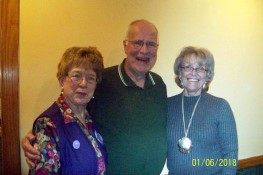
Each quarter, the Seattle Genealogical Society recognizes one volunteer as our Volunteer of the Quarter. Our Summer Volunteer of the Quarter is Siri Nelson, Chair of our Nominating Committee.
Siri Nelson has been a member of the Seattle Genealogical Society for several years, but her interest in genealogy and family history goes back to her childhood. She learned much about her family history from her parents. In 2013, Siri completed the Genealogy and Family History program at the University of Washington. This experience inspired her to deepen her research and led her to SGS. Siri’s research focuses upon Ireland, Norway and New England. Siri takes full advantage of SGS offerings – attending the Second Saturday Speaker Series, Fall and Spring Seminars, Special Interest Group Meetings, and using the online and in-library resources. She also enjoys the camaraderie of the other members, including sharing of information, tips and resources, and occasionally breaking through that brick wall.
A little over two years ago, Siri was asked to join the Nominating Committee. The Nominating Committee creates the slate of candidates for our April Board elections. This involves reaching out to members by phone, email and in-person to recruit our new Board members each year. Serving as the Chair of our Nominating Committee is a challenging role – Siri contacts many people to find the right match for each critical leadership position. She hopes more people will step up. Although demanding, volunteering on the Board does not have to be all-consuming. The benefits of serving in a leadership role at SGS are rewarding. Siri hopes people using SGS resources will continue to support the organization. If you are interested in serving on the Nominating Committee with Siri, or discussing a position on the Board next year, you may contact Siri at nominations@seattlegenealogicalsociety.org.
In addition to her time volunteering for SGS and attending our events, Siri takes classes in history and other related fields at the University of Washington. She enjoyed the course on Northwest history since her ancestors traveled along the Oregon Trail to settle in the Pacific Northwest. This summer she is taking Colonial American history.
Siri has a yellow lab puppy, Skadi (Norse goddess of hunting, winter and snow), keeping her busy. Siri also enjoys skiing.
Before retiring and devoting more of her time to genealogy, history and SGS, Siri worked for the US Army Corps of Engineers.
Thank you Siri, for your active involvement in the Seattle Genealogical Society and for your leadership role on our Nominating Committee.
SGS AND FAMILYSEARCH
SGS library just become an Affiliate Library for FamilySearch.org. Ann Wright began working toward this goal in February, and it is now a reality! What this means is when you are inside our library, using either your own computer or our patron computers, you will be able to access the “locked” records on FamilySearch.org. Just sign into your FamilySearch.org account. If you don’t have an account at FamilySearch.org, sign up for one; it’s free.
SGS FALL SEMINAR IS COMING SOON!
“Sharpening Your Online Genealogy Sleuthing Skills” featuring Cyndi Ingle, genealogist and owner of the popular Cyndi’s List, is coming your way October 20, 2018. It will be held at Fairview Christian School, 9:00 am – 4:00 pm. Brochures are going out in the mail shortly. Online registration will begin September 1, 2018.
THE RAFFLE IS BACK!!
We heard your requests to get the raffle back on the schedule for the Fall Seminar, October 20, and we are now accepting donations of goods or services. In the past, we have gratefully received items such as DNA kits, genealogy books, ballet tickets, quilts, and genealogy tools. Use your imagination. Proceeds from the raffle support the SGS library, and donations are tax deductible. Donated items can be brought to the SGS library or mailed to :
Seattle Genealogical Society
Attn:Ceil
PO Box 15329
Seattle, WA 98115-0329
Also please send an email message to :
seminar@seattlegenealogicalsociety.org so we know when to expect your donation.
SAVE THE DATE
Unlock the Past in Seattle, the “land conference”
Seattle Public Library,
1000 4th Ave, Seattle, WA
Thursday, September 6, 2018
Have you heard of Unlock the Past Cruises, genealogy on the high seas? Their 14th conference cruise will be to Alaska, Sept 7-14, and sail out of Seattle. They have put together an all day, companion “land conference” for September 6. It will be held at the downtown Seattle Public Library and it is open to all – whether on the cruise, or not. Blaine Bettinger, Maurice Gleeson, Cyndi Ingle, and Wayne Shepheard will be the presenters.
If you are interested, see their website :
https://www.unlockthepastcruises.com/
“A Day of Discovery with Lisa Louise Cooke”,
Puget Sound Genealogical Society,
4131 Pine Rd NE (at the Bremerton Elks),
Bremerton, WA
Saturday, September 22, 2018
8:30am – 3:30pm
Cost is $50 for PSGS members / $55 for non-members. Lunch is included and will be catered by the Bremerton Elks. For more information and the registration form see www.pusogensoc.org/psgs/seminar2018
SGS CALENDAR OF EVENTS
Unless otherwise indicated all programs will be at the SGS Library, 6200 Sand Point Way NE, Seattle. Check the SGS Web Site for additions, changes, and corrections. Programs may be canceled or postponed because of inclement weather. The SGS Library will closed September 2-4 for Labor Day.
SEPTEMBER
Saturday, September 8, 10:15 am – 12:15 pm, (FTM) Family Tree Users Group, Reiley Kidd & Jess Ramey co-leaders, this group will begin meeting on the 2nd Saturday of every odd month (Sept 2018, Nov 2018, Jan 2019, Mar 2019, May 2019). Family Tree Maker is the genealogy software long associated with Ancestry.com
Saturday, September 8, 1:00 pm-3:00 pm, Beyond the Pie Chart: Making the Most of Autosomal DNA, our Second Saturday Series starts up again with Karin Borgerson presenting this program.
Sunday, September 9, 1:30 pm – 3:30 pm, Scandinavian SIG, with Karen Knudson, Swedish and Norwegian Workshop – bring your laptops and your research. We will have resources available to help you with your hunt for your Scandinavian ancestors.
Wednesday, September 12, 1:00pm – 3:00pm, Ask the Genealogist, Have you hit a brick wall? SGS and Shoreline Library teamed up for a new program. A volunteer genealogist from SGS will be available to answer your questions at the Shoreline Library located at 345 NE 175th St., Shoreline, WA.
Wednesday, September 12, 7:00pm – 9:00pm, MAC SIG, Sponsored by SGS and Fiske, this group meets at the Fiske Library in Madison Park. Meetings are open to the public and will address topics and resources meant for those using MacIntosh (Apple) computers and the Reunion program in their genealogy research. $3.00 library use fee applies.
Saturday, September 15, 10:15am – 12:15pm, Irish SIG, with Jean A Roth
Saturday, September 15, 1:00pm – 3:00pm, German SIG, with Jean A Roth
Monday, September 24, 10:30 am – 7:00 pm, SGS Volunteer Recognition Day, the Board of Directors will host a Volunteer Appreciation Day for all 2017-2018 volunteers. Refreshment and a raffle. Stop by for an hour, or stay for the whole day! No need to RSVP.
Saturday, September 29, 10:00 am – 12:30 pm, DNA SIG, this group meets quarterly at the Wedgwood Presbyterian Church, 8008 35th Ave NE, Seattle. Co-chaired by Cary Bright and Herb McDaniel. For more information
contact SGSDNASIG@gmail