Substitute Senate Bill 5332 on Vital Records

The Senate passed the substitute bill and sent it to the house Health Care and Wellness Committee: Copy of the bill the house received. If you click on the names of the committee members it brings up their phone number and E-Mail address

Cody, Eileen (D)
Chair
303 John L. O’Brien Building(360) 786-7978
Macri, Nicole (D)
Vice Chair
311 John L. O’Brien Building(360) 786-7826
Schmick, Joe (R)
Ranking Minority Member
426B Legislative Building(360) 786-7844
Caldier, Michelle (R)
Assistant Ranking Minority Member
122H Legislative Building(360) 786-7802
Chambers, Kelly (R)426 John L. O’Brien Building(360) 786-7948
Davis, Lauren (D)369 John L. O’Brien Building(360) 786-7910
DeBolt, Richard (R)425A Legislative Building(360) 786-7896
Harris, Paul (R)426A Legislative Building(360) 786-7976
Jinkins, Laurie (D)320 John L. O’Brien Building(360) 786-7930
Maycumber, Jacquelin (R)425B Legislative Building(360) 786-7908
Riccelli, Marcus (D)434A Legislative Building(360) 786-7888
Robinson, June (D)332 John L. O’Brien Building(360) 786-7864
Stonier, Monica Jurado (D)331 John L. O’Brien Building(360) 786-7872
Thai, My-Linh (D)424 John L. O’Brien Building(360) 786-7926
Tharinger, Steve (D)314 John L. O’Brien Building(360) 786-7904

SENATE BILL REPORT ESSB 5332 As Passed Senate, March 4, 2019 Title: An act relating to vital statistics. Brief Description: Concerning vital statistics. Sponsors: Senate Committee on Law & Justice (originally sponsored by Senators Pedersen, Rivers, Wilson, C., Walsh, Randall, Cleveland and Liias; by request of Department of Health). Brief History: Committee Activity: Law & Justice: 1/31/19, 2/07/19 [DPS-WM, w/oRec]. Ways & Means: 2/19/19, 2/25/19 [DPS (LAW), w/oRec]. Floor Activity: Passed Senate: 3/04/19, 33-15. Brief Summary of Engrossed First Substitute Bill Ÿ Ÿ Ÿ Ÿ Limits access to certified copies of birth and death records to qualified applicants. Authorizes the Department of Health to amend specified vital records and transfer custody of them to the state archives. Updates references and definitions to reflect the Uniform Parentage Act and electronic registration. Allows the state archives to recover costs through its central services billing model. SENATE COMMITTEE ON LAW & JUSTICE Majority Report: That Substitute Senate Bill No. 5332 be substituted therefor, and the substitute bill do pass and be referred to Committee on Ways & Means. Signed by Senators Pedersen, Chair; Dhingra, Vice Chair; Kuderer and Salomon. Minority Report: That it be referred without recommendation. Signed by Senators Padden, Ranking Member; Holy and Wilson, L.. –––––––––––––––––––––– This analysis was prepared by non-partisan legislative staff for the use of legislative members in their deliberations. This analysis is not a part of the legislation nor does it constitute a statement of legislative intent. Senate Bill Report – 1 – ESSB 5332 Staff: Melissa Burke-Cain (786-7755) SENATE COMMITTEE ON WAYS & MEANS Majority Report: Do pass. Signed by Senators Rolfes, Chair; Frockt, Vice Chair, Operating, Capital Lead; Mullet, Capital Budget Cabinet; Braun, Ranking Member; Honeyford, Assistant Ranking Member, Capital; Billig, Carlyle, Conway, Darneille, Hasegawa, Hunt, Keiser, Liias, Palumbo, Pedersen, Rivers, Van De Wege, Wagoner, Warnick and Wilson, L.. Minority Report: That it be referred without recommendation. Signed by Senators Brown, Assistant Ranking Member, Operating; Bailey, Becker and Schoesler. Staff: Julie Murray (786-7711) Background: History of Recording Vital Statistics. Before 1900, maintaining vital records was a state and local responsibility. Before 1900, the United States Census Bureau developed the first standardized reporting form for vital statistics, known as the U.S. standard certificate of death. The census bureau recommended all local vital records registrars to adopt the form by 1900. By 1902, federal legislation directed the Census Bureau to collect copies of records filed in vital statistics offices of those states and cities having adequate death registration systems. Beginning in 1891, Washington State’s laws required each county to keep vital records. In 1907, the state assumed responsibility for collecting birth and death records. In 1968, the state assumed responsibility for collecting marriage and divorce records. Depending on the date of a vital record, the records may be located in different places. The Washington State Library, under the Office of the Secretary of State, maintains a web page to assist persons searching for genealogical records. Current Vital Statistics Program at the Department of Health. Washington’s Department of Health (DOH) collects and stores all reports of specific vital life events in the state. These vital life events are births, deaths, fetal deaths, marriages, marriage and domestic partnership dissolution’s, marriage and domestic partnership annulments, and legal separations. Under current law, DOH retains permanent custody of all vital records in its statewide vital records system. The state registrar of vital statistics oversees the system and is responsible for the system’s operations and integrity. The state registrar also develops uniform vital statistics reporting requirements and forms for local registrars across the state. Access to Birth and Death Records. Washington’s vital records certificates contain all the information required by the federal Centers for Disease Control and Prevention’s National Center for Health Statistics (NCHS), including social security numbers. Under Washington’s current vital statistics law, the state Board of Health may require additional information in a confidential section of the birth certificate. The confidential section is not publicly available unless (1) a member of the public obtains a court order, or (2) the person who is the birth Senate Bill Report – 2 – ESSB 5332 certificate’s subject, where it is limited to the information about the child, but not the child’s parents. The state has both a long form and a short form death certificate. The short form death certificate and informational copies of death certificates are not publicly available. DOH releases the long form death certificate to anyone who has the decedent’s name, date and county of death. The long form includes such information as the decedent’s social security number, residence and address, marital status and spouse, cause and manner of death. DOH sends a monthly death index to the state archives. The death index contains the decedent’s full name, county of death, county of residence, sex, age, and date of death. DOH sends its vital statistics data to NCHS. Contracts between NCHS and each jurisdiction’s vital records office set mutual responsibilities, uniform standards and procedures for reporting vital statistics. Centers for Disease Control and Prevention Model Vital Statistics Act. NCHS operates and maintains the national vital statistics system as the official source for national vital statistics data. NCHS compiles, analyzes, and disseminates vital statistics from all 50 states, New York City, the District of Columbia, and five United States territories. NCHS provides data on health indicators to support public health policy work at the national, state, and local levels. For example, the system provides data on risk factors for adverse pregnancy outcomes, life expectancy, and leading causes of death. NCHS develops a model state vital statistics law and regulations to promote uniformity among the states in the definitions, registration practices, data disclosure, and other functions of state vital statistics systems. The federal government developed its first model act in 1907 and produced revised versions in 1941, 1959, 1977, and 1992. NCHS proposed its most recent version in 2011. The National Association for Public Health Statistics and Information Systems endorsed the 2011 model act. NCHS’s purpose in developing its 2011 version is to address system security, the electronic information environment, continuity of operations planning, data confidentiality and disclosure, and changes to the scope of vital statistics data, for example assisted reproduction and same-sex marriage. The 2011 NCHS model state vital statistics law provided the framework for this proposed vital statistics bill. Summary of Engrossed First Substitute Bill: DOH may only release a certified death certificate to a qualified applicant. Qualified applicants include the decedent’s spouse or domestic partner, child, parent, stepparent, stepchild, sibling, grandparent, great grandparent grandchild, legal guardian immediately prior to death, legal representative, authorized representative with a notarized statement from a qualified applicant, next of kin, funeral director within 12 months of the date of death, or a government agency or court for its official duties. A short form death certificate does not display information related to cause and manner of death. The DOH may release a short form certificate to a qualified applicant. Additionally, DOH may release a short form certificate to a title insurer or title insurance agent handling a real property transaction involving the decedent, or a person who shows the short form is necessary for a determination related to the death or the protection of a personal or property right related to the death. DOH may only release a birth certificate to the subject of the record or the subject’s spouse or domestic partner, child, parent, stepparent, stepchild, sibling, grandparent, great grandparent, Senate Bill Report – 3 – ESSB 5332 grandchild, legal guardian, legal or authorized representative, or a government agency or court for official duties. Informational copies of vital records are available to the public. Informational copies only contain the information allowed by rule. Informational copies are derived from the original document but cannot be used for legal purposes. Access to vital records is not governed by the Public Records Act, but is governed under this vital records chapter in the RCW. DOH is authorized to investigate fraud including periodic testing and auditing of the vital records system to detect fraud. The DOH will provide adjudicative proceedings for certain adverse actions. The state registrar must transfer custody of records to the state archives. The transfer applies to: Ÿ Ÿ Ÿ birth records, 100 years after the birth date; death records, 25 years after the death date; and marriage, divorce, dissolution of marriage or domestic partnership, declaration of invalidity of marriage or domestic partnership, or legal separation, 25 years after the event. The state archives may provide noncertified copies of original vital records in its custody to the public. The state archives may charge for the cost of operating the state archives through the central services billing model. Sealed records must remain sealed and in DOH custody. DOH may retain records for the purpose of providing certified copies. Appropriation: None. Fiscal Note: Available. Creates Committee/Commission/Task Force that includes Legislative members: No. Effective Date: The bill contains several effective dates. Please refer to the bill. Staff Summary of Public Testimony on Original Bill (Law & Justice): The committee recommended a different version of the bill than what was heard. PRO: The coroners need this bill because it provides a fee increase for death investigation accounts. Because of the limited funding we have for training medical examiners, coroners, and their staff the forensic investigation council has not been able to update its training curriculum since the 1990s. The training no longer meets national accreditation standards. The autopsy costs and laboratory fees including those for toxicology laboratories are all increasing. The coroners’ and medical examiners’ want to achieve the goal that all the work is done by qualified, accredited professionals. The fee increase is important for rural counties. Our investigators must have regular continuing education to maintain their accreditations. Right now only 40 percent of staff attend the continuing education training. The state association and counties have a limited capacity for training. The fee increase will allow more staff members to become certified or retain certification. We need to update the training so that the staff members we train are qualified to go out on death investigations on their own. No one is ready to go out alone after they finish the training now. Because our work is not always part of a criminal Senate Bill Report – 4 – ESSB 5332 investigation our laboratory specimens are sent to the state toxicology tab. In one case our office has been waiting a long time for toxicology results. Because of the delayed results the surviving family cannot go forward to obtain the death benefits the family is entitled to receive. This bill modernizes the state law. The state vital records system is fully electronic. The bill gives DOH authority to support a fully electronic system including fraud protection activities. Fraud prevention includes limiting certified records to persons who have legal relationships with the record’s subject. The bill allows for informational copies of birth records and death records to remain publicly available as they are now, except for the cause of death. The purpose of the change is to protect certified copies from misuse. DOH will still provide annual indices to the archives, and to private institutions and other agencies. We intend to provide informational copies of death, marriage and divorce records. DOH has worked on this bill for four to five years. The rulemaking authority is broad, but necessary because there is a lot of detail that goes into rule. DOH will follow the public rulemaking requirements. From the counties’ viewpoint this update to the law is long overdue. King County is the busiest local vital records office in the state. Even though records may be obtained on line there is still a strong demand for in-person, same day certified copies so that persons may apply for social security, enroll in school, or obtain passports. The vital records, such as the certified birth certificate, are still the base document for proving identity. The local fee increase in the bill will improve service delivery and help monitor drug overdose deaths in real time. This bill is the result of longstanding stakeholder discussions. The bill provides for bifurcation of certified versus informational copies; this change is long overdue. With the certified copies people can, and do, create false identities. From the media’s perspective we understand the family sensitivity to having the cause of death publicly available. As media, we would prefer it if the cause of death would be available, but a balance needs to be made between privacy and availability and we understand that. CON: I have taken classes on genealogical research. As a member of the genealogical societies, I am able to put the skills to use right away while working on family genealogy because everyone has a family. We need access to death records to better understand our family’s story. The bill does not address on line access to records. I have family in Oklahoma who want to work on our genealogy. Online access is very important and should be available at remote sites; not everyone is able to travel to Olympia to research family genealogy. Genetic genealogists have an important role in identifying genetic issues in families. Families want to know about these potential issues so that they are able to identify medical investigations that may prevent a disease or allow someone to recognize a disease at an early time. OTHER: On behalf of the many professional and hobby genealogists across the state, access to vital records is very important to our genealogy work. Our organization supports open records, but we understand the bill attempts to address the genealogists’ needs. Our concern is that the definition of qualified applicant in the bill is too narrow. We would like to see other relatives included who are not direct line family members such as step children, half children, and first cousins. The problem we see with the informational copy of the death certificate is without the cause of death information, the certificate is not as useful for forensic and genetic genealogists. I hope that we can work to resolve these concerns. Persons Testifying (Law & Justice): PRO: Senator Jamie Pedersen, Prime Sponsor; Dr. Timothy Davidson, Cowlitz County Coroner and Washington Association of Coroners and Senate Bill Report – 5 – ESSB 5332 Medical Examiners (WACME) President; Warren McLeod, Lewis County Coroner; Dan Blasdel, WACME; Tesia Forbes, King County; Jean Remsbecker, DOH/State Registrar; Rowland Thompson, Allied Daily Newspapers of Washington. CON: Diane Huckabay, citizen. OTHER: Virginia Majewski, Washington State Genealogical Society. Persons Signed In To Testify But Not Testifying (Law & Justice): No one. Staff Summary of Public Testimony on First Substitute (Ways & Means): PRO: We largely resolved the concerns from the genealogy community in the substitute bill, but there are still some with concerns. The basic purpose of the bill is to modernize the vital records statute. It has been many years since it was updated; things have gotten badly out of date and out of sync with other statutes, particularly family law. People will still have access to birth and death information. However, not everyone with a name, day of death, and county of death will not be able to access certified copies of death certificates. They will get access the informational copies, which carry a significant amount of information, but not a certified copy for legal purposes. Unrestricted access to certified copies creates a greater possibility that someone could steal your identity. I support section 24 to include a $3 fee increase, which is much needed by the county coroners and medical examiner’s offices statewide. Basic training for coroners has not been updated since the early 1990’s and no longer meets the national accreditation standards. We need more persons trained; we need to use expensive private labs due to the backlog. Timely death investigations are crucial to surviving family members awaiting the results of investigations to access to insurance funds or other survivor benefits. Persons Testifying (Ways & Means): PRO: Senator Jamie Pedersen, Prime Sponsor; Warren McLeod, Lewis County Coroner and Washington Association of Coroners and Medical Examiners. Persons Signed In To Testify But Not Testifying (Ways & Means): No one. Senate Bill Report – 6 – ESSB 5332

Wednesday Nostalgia

Ah, the smell of a warm chocolate cake. Grabs your nose and causes the mouth juices to start running, right?

Today is Part 3 of what I learned about chocolate.

On our trip in the West Indies, and visiting a working farm where they grow cacao and turn it into chocolate, our guide picked up one of those 8″ cacao pods, whacked it with his machete and held up what was left. (Compare the size to his hand.) Looks rather like corn kernels, right? They were whitish and a bit sticky, and he pulled them off and handed them out to us to SUCK. “Do not chew up the seed, it’s too hard and too bitter,” he counselled us. So we sucked and spat. There was a faint sweetness but no chocolate flavor.

Next week, Part 4.

Whatcom Genealogical Society Spring Seminar

Whatcom Genealogical Society Spring Seminar
Despite the fact that we have a registration deadline of February 25th on our Whatcom Genealogical Society Spring Seminar Registration form, there is still some leeway in that respect.  We know you won’t want to miss seeing Cyndi Ingle for an educational and fun experience.  We look forward to seeing you there!

Register Here

Monday Mystery

It’s a mystery to me and perhaps to you too?

Last week, sitting in my home in Spokane, I listened to a live webinar where the moderator was in Texas* and the speaker was in Israel*. And we were all “talking” together!

It’s a wonderful “mystery” to me and I’m just glad I’m alive in these days to benefit from such advancements.

  • Geoff Rasmussen, Legacy Webinars
  • Daniel Horowitz, MyHeritage

Tuesday Trivia

Do you use a Bluetooth device? Do you know what that is? Most fun, do you know where that name/term came from??

Well now you know. At least you know where the name came from. How it works is a question you’ll have to ask somebody else. (smile)

Clark County Genealogy Society March Activities

LEGACY FAMILY TREE GENEALOGY SOFTWARE USER GROUP

Mon, 4 Mar 2019: 9:30-11:30 am

CCGS Library

If you use Legacy Family Tree Software for tracking your genealogy research, there is a Legacy Users Group that meets monthly to discuss tips, tricks and problems. You will always come away with some new ideas. The meetings are held regularly on the first Monday of the month. Members and non-members are welcome.

GENEALOGY RESEARCH BOOK CLUB

Mon, 4 Mar 4 2019: 12-1:30 pm

CCGS Library

There are many “research rich” books of genealogical historical collections, as well as “how to” books on methods, collection and data storage of genealogy research. This group delves into one book at a time and discusses how to make the best use of it. Join this casual group as they delve into their favorite topic of books on family history discovery and sleuthing. (Brown baggers welcome!)

GETTING STARTED TRACING YOUR FAMILY ROOTS

Tues, 5 Mar 2019: 10 am – 12 noon

CCGS Library

FREE CLASS

This class starts your family tree research with a begin at the beginning strategy.  Topics will include collecting information from the family, family group sheets, pedigree charts, genealogy database programs, and best research practices. Taught by highly regarded genealogist and CCGS member, Elsie Deatherage.

WEBINAR: A GUIDE TO THIRD PARTY TOOLS FOR DNA TESTING

Wed, 06 Mar 2019: 11 am-12:30 pm

CCGS Library

DNA testing companies boast helpful internal tools, but there are many excellent third party tools that can help provide answers. This Legacy Family Tree webinar will provide an overview of all the available third party tools as well as practical hints and tips on how to get the most out of them.

UNFOCUSED GENEALOGY DISCUSSION GROUP

Thu, 7 Mar 2019: 1-3 pm

CCGS Education Center

There’s no meeting agenda, no special topic, just a group of curious people bringing genealogy research notes, questions, brick walls, etc. to share with the group. Get ideas for the next steps you should take in your research.

WHAT’S NEW ON THE FAMILY SEARCH WEBSITE?

Tues, 12 Mar 2019: 10 am-12 pm

CCGS Library

Join Alice Allen to learn about the constantly changing and improving FamilySearch.org website.  Find out what’s new and pick up tips and tricks to make your own Family Searching experience a successful one! Advance registration requested as class may be canceled with insufficient registrations. Walk-ins are accepted subject to available seating.

SCANDINAVIAN ROOTS FOCUS GROUP

Mon, 18 Mar 2019: 2-3:30 pm

CCGS Library

If you want to discover your Scandinavian roots, attend this monthly meeting and learn how to conduct your research. Meet with other like-minded individuals who have discovered their ancestors going back many generations. Geographic areas include Norway, Sweden, Denmark, Finland, Iceland, and the Faroe Islands. This group meets regularly on the second Thursday of the month, September-May. Members and non-members are welcome.

RESEARCHING ANCESTORS IN TENNESSEE RECORDS

Tue, 19 Mar 2019: 10am – 12 pm

CCGS Library

If you looking for ancestors in Tennessee records, ace genealogist Bea Ritter will tell you how to conduct a search. For illustration, she uses examples from visits she made to 10 counties on behalf of her own family search effort. You’ll take away guidelines to search for your own Tennessee ancestral roots. Advance registration is requested to guarantee reservation. Walk-ins subject to available seating.

WEBINAR: ONE AFRICAN-AMERICAN FAMILY’S STORY OF MIGRATION FROM THE SOUTH

Wed, 20 Mar 2019: 11 am – 12:30 pm

CCGS Library

African-Americans throughout the South moved to Midwestern cities in search of opportunities and work. This Legacy Family Tree webinar will help researchers understand how to look for clues in both places and with all connected family members.

THIRD THURSDAY EVENING HOURS

Thurs, 21 Mar 2019: 6-9 pm

CCGS Library

Do you find it hard to get to the Clark County Genealogical Library during daytime hours? Come in on Third Thursday to tap into our richest resource: knowledgeable librarians who can help you with your family history search. We won’t do it for you, but we will provide guidance. One librarian has Scandinavian research expertise. The library has over 10,000 books and resources, and free access on our computers to Ancestry.com and AmericanAncestors.com. Bring your own computer and use our free wifi.

GENEALOGY ENTHUSIASTS GENERAL MEMBERSHIP MEETING

Tue, 26 Mar 2019: 10 am to noon

Fort Vancouver Visitor Center, 1501 E. Evergreen Blvd., Vancouver, WA

At the height of activity for the Hudson’s Bay Company at Fort Vancouver, American wagon trains began rolling west. At Fort Vancouver, the Native American and Hawaiian populations were permanent residents with fur traders, clerks and officers of the HBC. Mary Rose, executive Director of the Friends of Fort Vancouver, will talk about the changes that took place at the Fort and the community. Internationally, “Oregon” would be declared a U.S. Territory up to the 49th Parallel. By 1849, the U.S. Army was at Vancouver to reinforce America’s claim.

WEBINAR: FREE GENEALOGY TOOLS FOR YOUR IPAD/IPHONE

Wed, 27 Mar 2019: 11 am -12:30 pm

CCGS Library

There are several new applications and a few old ones which can help you capture, reference, and share your family history on the go. Come find out how to use the latest and greatest tools for your preferred Apple mobile device at this Legacy Family Tree webinar.

Genealogical Forum’s Thursday E-News

THE GENEALOGICAL FORUM’s Thursday Evening E-News Edition February 28, 2019
Curious about the status of your GFO Membership? We’d love to have you as a GFO Member!
For more information visit www.gfo.org.
Contact us at info@gfo.org or 503-963-1932.
Be sure to check the complete GFO CALENDAR.
Also, don’t miss the current issue of The Forum Insider During inclement weather this winter, please be sure to check our Facebook Page, website, or local TV & Newspaper closure web pages to see if we’re open! Or, call the library at 503-963-1932 to insure someone is here.
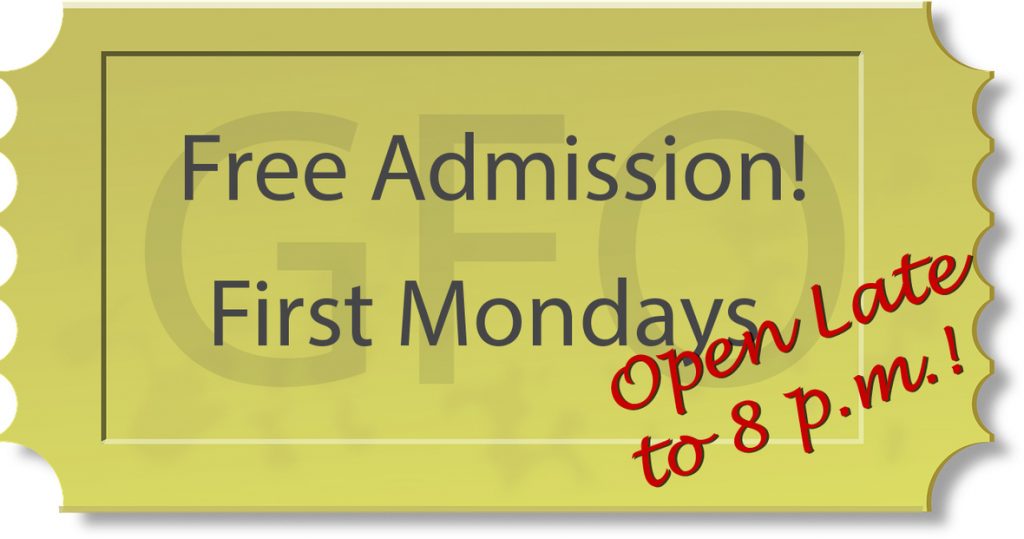
NEW! Free First Monday Hours Extend to 8 O’clock! 
We’re making it just a bit easier to see everything the GFO Library has to offer. The First Monday of each month has long been free to everyone. For the next three months, we are extending our hours until 8 p.m. that day so you can come after work or when parking space may be easier to find. So, on March 4th, April 1st, and May 6th, come stay late with us! And please, be sure to share this with friends who are not members of the GFO.
Are you ready for this year’s Open House at GFO?
Check out the full 9-day Open House schedule here!
Barbara Rae-Venter. Photo by Brian L. Frank. You have a chance to hear directly from the genetic genealogist who cracked the Golden State Killer case. Barbara Rae-Venter is coming to speak at the GFO during our DNA Days. On Saturday, March 30th, she will talk in the afternoon about DNA genealogy research techniques. On the morning of Sunday, March 31st, she’ll speak about the Golden State Killer case itself. This will be popular so you must register for these limited seats. Registration for Barbara’s sessions opens on Friday, March 1st at 9:00 a.m., at our website. 67 seats are available for each session. Do not wait to sign up. They will fill fast. Many thanks to Emily Aulicino for arranging this rare opportunity. Barbara’s sleuthing has been profiled in the New YorkTimes and she was named one of the 10 People Who Mattered most in 2018 by Nature magazine. Also, Laurel Smith’s all-day Beginning Genealogy class on March 24 requires advance registration. 30 seats are available. This registration also opens Friday, March 1 at 9:00 a.m. at the same web link above.
Have you read GFO’s most recent Bulletin yet?
Inquisitive Bulletin editors want to know … What was your favorite article in the March 2019 Bulletin?
Take the survey now!
If you haven’t looked at the March issue of The Bulletin yet, well, now’s the time! Please click on the link above to cast your vote. Results will be shared in next week’s E-News. If you’re not yet a current GFO member, you can get a free copy of the March issue of The Bulletin, on the house! Simply click the blue button link directly below.
Complimentary issue of The Bulletin, March 2019
New Records at the GFO: Obits from Oregon and West Point
Don’t let the name “Data Extraction” cause your eyes to glaze over. Our dedicated volunteers who perform this task are unlocking records by creating indexes. Without them, it’d be next to impossible to locate the records you need. Our latest records include half a dozen binders and several CDs of obituaries collected in sets. They include:
* Oregon Obituaries 1958 – 1962 (newspaper clippings) indexed: Some 1907-1952.
* Newspaper Clippings – 1937, 1938, and 1939: Mostly obituaries, but some anniversaries and family reunions.
* Southwest Oregon obituaries from 1953-1958.
* West Point Assembly obituaries of graduates of USMA: scans from 1968, 1969, 1984, 1986. We’ve been preserving heritage since 1946 and the job never ends. Come check out our perpetually improving collections at the GFO Library.
Featured Book: Cyclopedia of Current History – 1890-91
This week’s surplus book of the week is an original printed in 1892. The Cyclopedia Review of Current History, Vol. I, 1890-91 could provide you valuable historical context for your writing or research in this era. It covers both U.S. and international current events, noting the fifth session of Queen Victoria’s twelfth Parliament, predicting that Russia is ripe for Revolution, and in the U.S., marking the death fo General Tecumseh Sherman. Publication is listed as by The Evening News Association of Detroit, Michigan. This 127-year-old slice of history can be yours for just $20. If interested, email booksales@gfo.org.
RootsQuest 2019 in Forest Grove
You’re invited to the Forest Grove Oregon Stake Family History Conference annual conference! WHEN? March 16th, 9 a.m. – 4 p.m.
WHERE? This year’s Roots Quest is at 3600 Brooke Street, Forest Grove.
WHAT? They have promised to have many wonderful instructors including Crista Cowan – Ancestry Corporate Genealogist. Thank you, Forest Grove, for putting together this wonderful annual event!
Lost & Found Corner
Feeling inexplicably thirsty while simultaneously soaked through from the rain? Please come see one of our Research Assistants at GFO’s library to reclaim your lost items. Some are featured in the image here, while we also have a plethora of other items crying for their homes. If you think you left an item at our library, call the front desk at 503-963-1932, we’ll check the lost & found box for you.
This week at GFO …


SATURDAY, March 2nd
Virginia Group 12:30 – 2:30 p.m.
Have you ever wondered if your ancestor was a Mason or Elk or Odd Fellow? Our first hour features guest speakers Dale and Elsie Deatherage who will discuss techniques for researching the records of fraternal organizations. It is an interesting topic that might shed some light on your family’s history.
For more information see our blog: “Virginia Roots and Vines.”
There will also be time each meeting for discussion, suggestions, and perhaps research on individual research. We’ll also explore the settlement of Kentucky, the Carolinas and Tennessee.
Questions? Contact Judi Scott and Carol Surrency at Virginia@gfo.org.
German Group 1 – 3 p.m.
“Footprints of Your Ancestors” presented by Gerry Lenzen
Use a multitude of records and sources to trace your ancestors back to their origins in Europe.
The German Interest Group was formed in the spring of 2011. It is intended to be a source of information and inspiration for anyone with German speaking ancestors. One goal is to provide information on a variety of topics related to Germanic history and migration. We also will provide time for members to share their research journeys and connect with others who may be researching the same region or time period.
SUNDAY, March 3rd
Manuscripts Work Party 9 a.m. – noon
Explore our manuscript, personal papers and Bible collection while we organize, scan and create finding aids. Drop by at the time that works for you. Questions? Send a note to manuscripts@gfo.org.
MONDAY, March 4th
Free First Monday! 9:30 a.m. – 8 p.m.
Please note! We’re open late (until 8 p.m.) for this month’s Free First Monday. Stop by after work!
Come visit our research library each first Monday of every month and splurge on all GFO’s wonderful resources for FREE. Explore our online databases like Fold3, Ancestry World Library Edition, Newspapers.com, and many more. Our analog and microfilm collections total over 50,000 items. Don’t miss out!
WEDNESDAY, March 6th
Library Open Late Until 8 p.m.
Learn & Chat 10 a.m. – noon
When he skedaddled: Dissolution of marriage in Ohio, West Virginia, and Virginia, 1845 – 1875. Presented by Nancy Methany.
Dissolution of marriage in 19th century Ohio, West Virginia, and Virginia, seemed like a blood sport at times, with barbs flying, blistering accusations, and searing insults. But the legal process to end a marriage can help us a great deal in uncovering valuable evidence of our ancestors with some terrific backstory. Come learn about the laws, records, and customs surrounding the dissolution of marriage in Ohio, West Virginia, and Virginia, 1845 – 1875, to help you on your research journey.
Questions? Please reach out to Jeanne Quan and Sandy Alto at learnandchat@gfo.org.
Family Tree Maker Road Show – 2 Sessions: 1 – 3 p.m. & 4 – 6 p.m.
The first session has sold out, but a few seats remain for Session 2. You can also sign up for the Wait List as sessions fill at website just incase seats open up.
The folks behind FTM are coming to the GFO library for two, 2-hour interactive presentations! (It’s not just a lecture – plenty of Q&A)
Mark Olsen is the Family Tree Maker Ambassador to historical and genealogical societies around the world working to support their members as they use Family Tree Maker.He’ll show new features in Family Tree Maker, moving to its current version and how to get a free update.
Also, do you know about FTM’s DNA charting features? Kiara Neilsen teaches classes regarding the use of Family Tree Maker, DNA, and how to use DNA results to further genealogical research.
“If you have received your DNA results and are thinking ‘now what?’ Charting Companion 7 is a great place to start. Pierre Clothier is the creator of Charting Companion and will join in with us to show off the amazing DNA edition charts both those tied to your DNA findings and your Family Tree Maker trees.”

Seattle Genealogical Society Tip of the Week

TIP OF THE WEEK – LARGE GERMAN GENEALOGY
CONFERENCE IN CALIFORNIA

The 2019 International German Genealogy Conference, to be held June 15-17 in downtown Sacramento at the Hyatt Regency Hotel, will offer three days of German-centric presentations in multiple tracks –Geographic, Technology, Advancing Your Research, and more. Attendees will learn from genealogists, authors, historians, and archivists who are top presenters with advanced proficiency in their fields of study.

This is the 2nd international conference of the International German Genealogy Partnership, a federation of German genealogy organizations whose mission is to facilitate German genealogy research globally. The first was in Minnesota in 2017.  

The  local sponsor for this 2019 conference is the Sacramento German Genealogy Society. This is billed as the largest worldwide gathering on the specific topic of German genealogy this calendar year; 700+ attendees are expected.

Use either organization’s website for more information or registration:

https://iggpartner.org/index.php

www.sggs.us