| THE GENEALOGICAL FORUM’s Thursday Evening E-News Edition October 17, 2019 |
| Curious about the status of your GFO Membership? We’d love to have you as a GFO Member! |
| gfo.org | 503-963-1932 | info@gfo.org Be sure to check the complete GFO CALENDAR. Also, don’t miss the current issue of The Forum Insider |
| Genealogy Boot Camp for Beginners |
| Ever been squeezed out of Boot Camp because the class was full? Hate being in large classes? Worried about finding parking? Then this may be your best opportunity to attend. |
| Laurel Smith will cover how to get started, organization, online trees and database programs, the census, and vital records — all geared toward beginners — but basic computer skills are a prerequisite. All communications are done via email, and you must be able to download and print the class notes. Bring a sack lunch, snacks, and a beverage so you can keep going as the class does. GFO members may attend for free, non-members $20. Genealogy Boot Camp for Beginners on October 27th has lots of seats still available. Please register today! |
| Register Now |
| Free GenTalk: Life in the Records of Death |
| Mark your calendars. Professional genealogist Pam Vestal returns on Saturday, October 19 with a free GenTalk from 2 – 3 p.m. called Discovering Your Ancestor’s Life in Records of Death. Sometimes the best way to learn about an ancestor’s life is to dig into the mountain of paperwork created by his death. We’ll explore the surprisingly abundant information that is collected when a death occurs and glimpse just how much these records can reveal, not only about our ancestors’ deaths, but also about their lives. Pam Vestal entered the field of genealogy after a 21-year career as a professional writer. She does genealogical research for clients, has articles published in the Association of Professional Genealogists Quarterly, and lectures up and down the West Coast. All GenTalks are free and open to the public at the GFO Library. |
| Immediate Opening: Editor Needed for The Forum Insider |

| Would you be willing to help share vital information about the GFO and genealogy with our subscribers? This key position will be vacant soon. We need someone (or a team) who can compile, layout, and distribute eight Insiders per year. Helpful skills: Intermediate-level computer software skills; writing and editing skills a plus; clear communication skills, both written and verbal; ability to interact with GFO’s Board Members, patrons, committee members, and affiliate organization representatives. The editor edits and lays out articles using Microsoft Word, and ultimately, Adobe Acrobat. We will provide the software, training, and a team of editors and proofreaders to help. Work follows a strict schedule so that distribution deadlines are met. Please contact our president, Vince Patton, at president@gfo.org if you can help! |
| Save the date: December 3rd is Giving Tuesday |
| What if all GFO’s members came together on just one day to give? For GFO, GivingTuesday isn’t about fundraising. It’s about banding together to accomplish one large task. |
| Please save the date: December 3rd and come to the GFO all or part of the day to help. GFO will provide pastries, fruit, and coffee in the morning, pizza and pop in the afternoon. You provide the people power. Please help. |
| Seminar Tables For Sale |
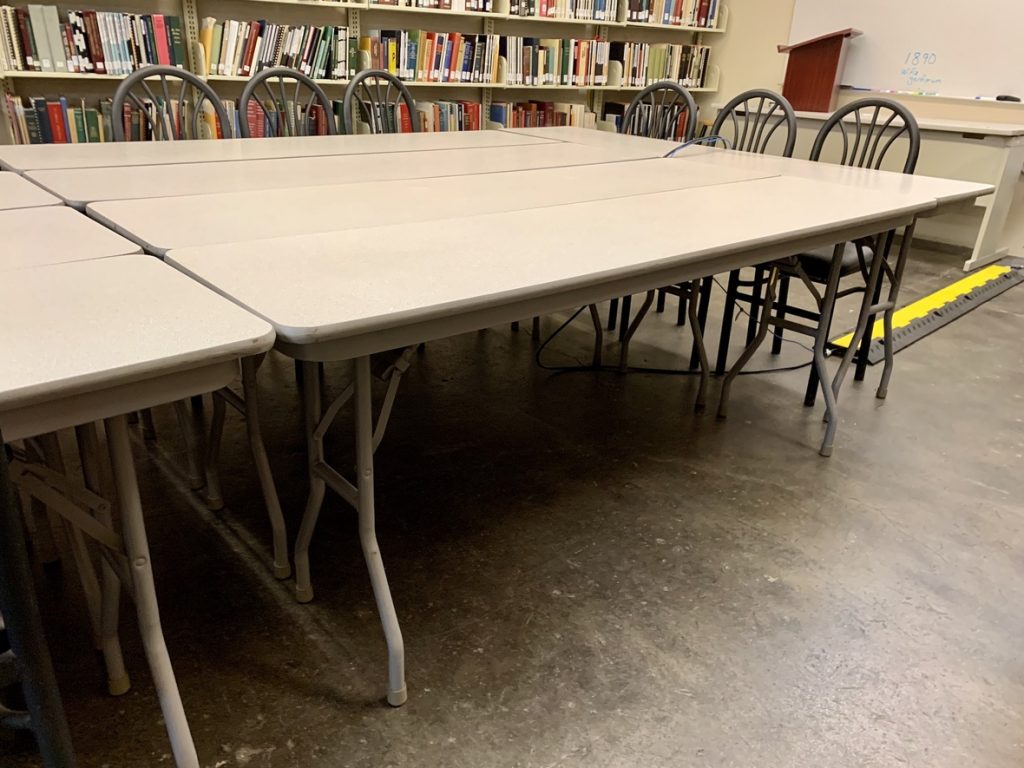
| The GFO recently replaced its classroom tables with ones that weigh less and will be easier to move when reconfiguring the room. Our old tables are still in great shape. Do you know anyone who could use them?These “Seminar Tables” are 72 “ (6-feet) long and 18” deep. They stand 29 inches high. |
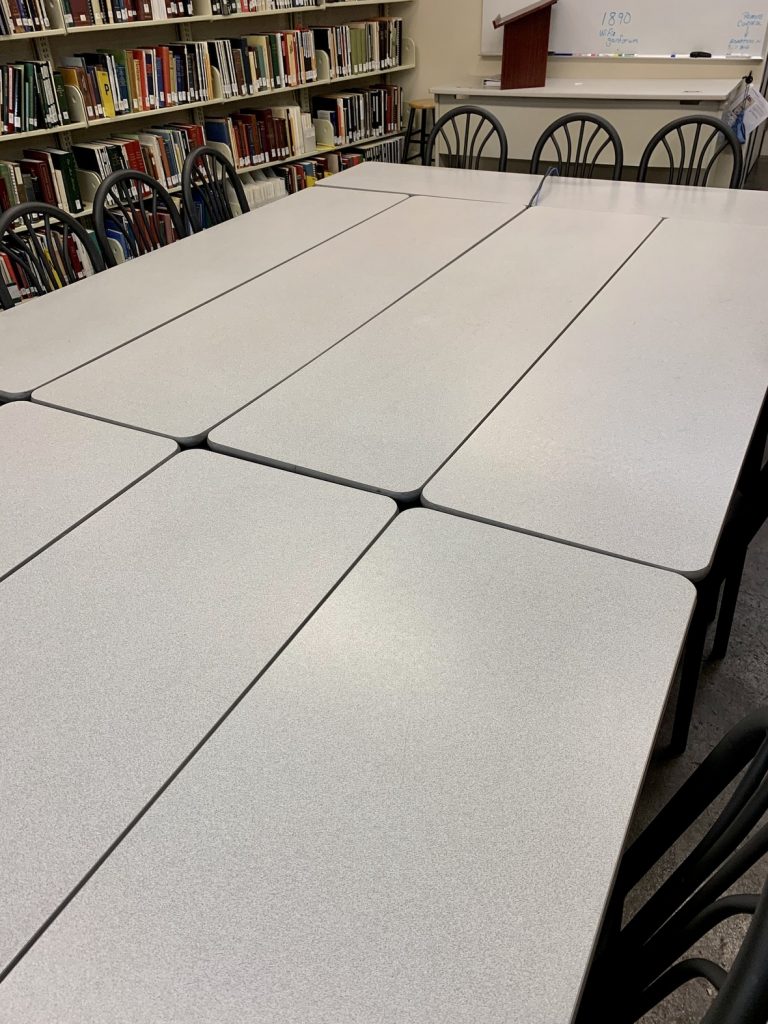
| Their strong legs are metal and the table tops are laminated wood with rubber edges. All fold-flat when not in use. We have 10 of these tables for sale: $20 a piece, or $175 for the set of 10. Please contact library@gfo.org if you are interested. Pickup is required at the GFO library. |
| PCS Offers GFO Discount to New Play “Redwood” |
| We are delighted that Portland Center Stage is offering friends of GFO two special offers for an upcoming play that happens to revolve around genealogy! Redwood
is billed as “a beautiful, humor-filled excavation of our shared
history. When Steve Durbin sets out to chart his Black family’s ancestry
online, his revelations unwittingly throw his entire family into
turmoil.” On
October 26, GFO President Vince Patton and Director at Large Julie
Ramos, will speak before the performance, at about 6:45 p.m., about all
the GFO offers and why we find building personal links to history so
valuable. Redwood runs from October 26 through November 17 at Portland Center Stage at the Armory. PCS has two offers for friends of the GFO: October 26: Use promo code “GFO” for $25 tickets. October 27-November 17: Use promo code “COMMUNITY” for $10 off tickets. Get tickets here. |
| Surplus Book: Kegley’s Virginia 1840-1785 |
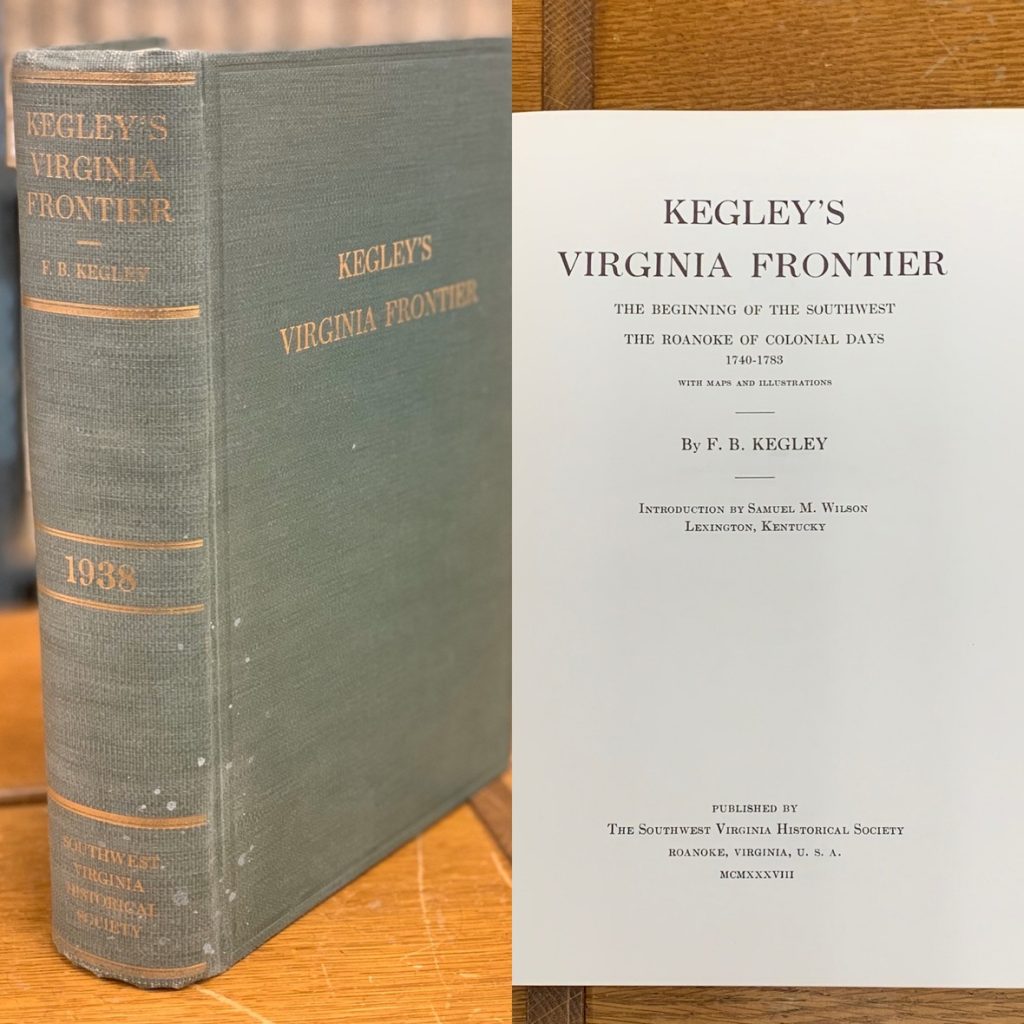
| Do you remember when Virginia was the southwest edge of the American frontier? No, we don’t either. But your ancestors might well have been part of the early colonial settlements. This 786-page book could be a treasure trove for those with Virginia roots. Kegley’s Virginia Frontier, The Beginning of the Southwest, The Roanoke of Colonial Days, 1740-1783, with Maps and Illustrations by F. B. Kegley was published in 1938 by The Southwest Virginia Historical Society. |
| “The
arrival of each newcomer with his place of settlement is chronicled and
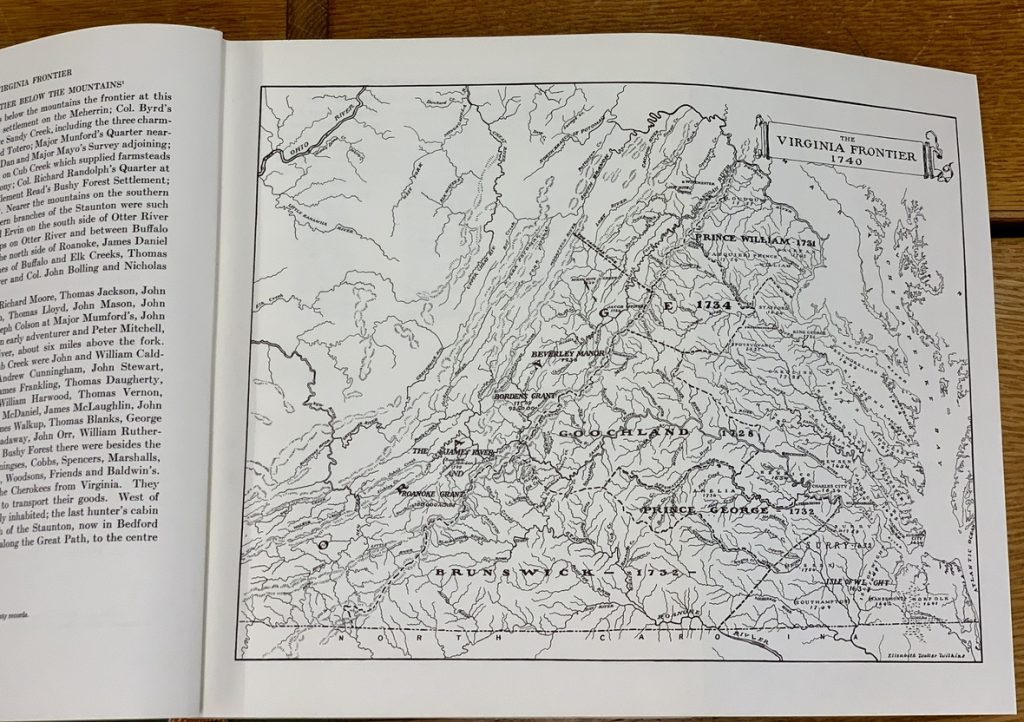
his experiences and subsequent movements appropriately recounted,” wrote F. B. Kegley in the preface. This
book is full of wonderful fold-out maps, and the pages are are as crisp
and readable as the day they were printed. The binding is starting to
come loose at the rear cover. Otherwise, it’s in very good shape. Pickup at GFO Price – $45 Ship to You Price – $52 If you’re interested in buying it, contact booksales@gfo.org. |
| Survey Results: Using the GFO Online Catalog |
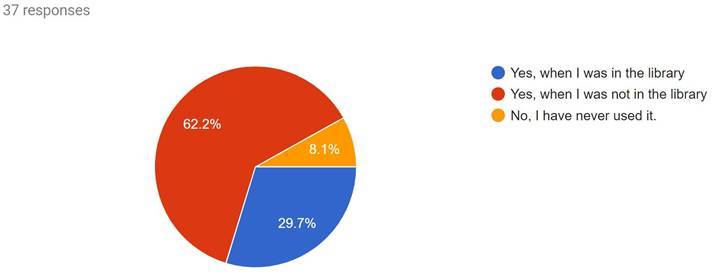
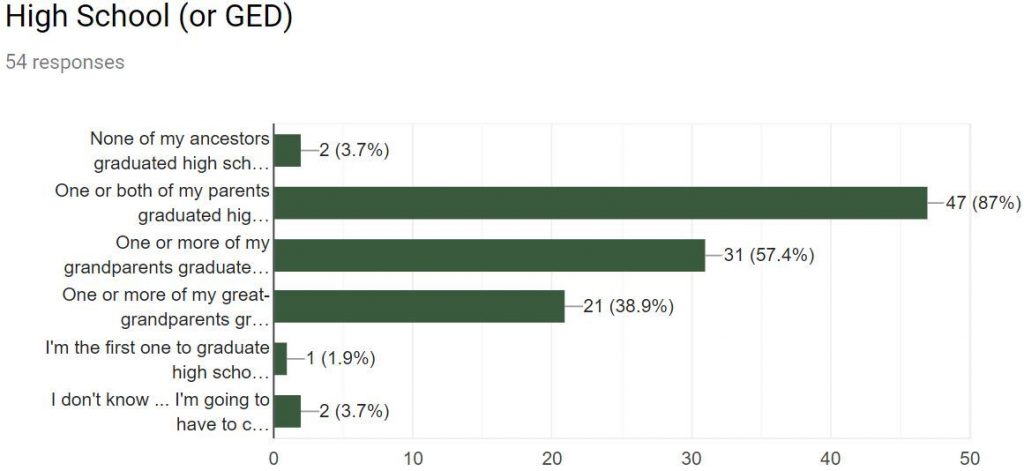
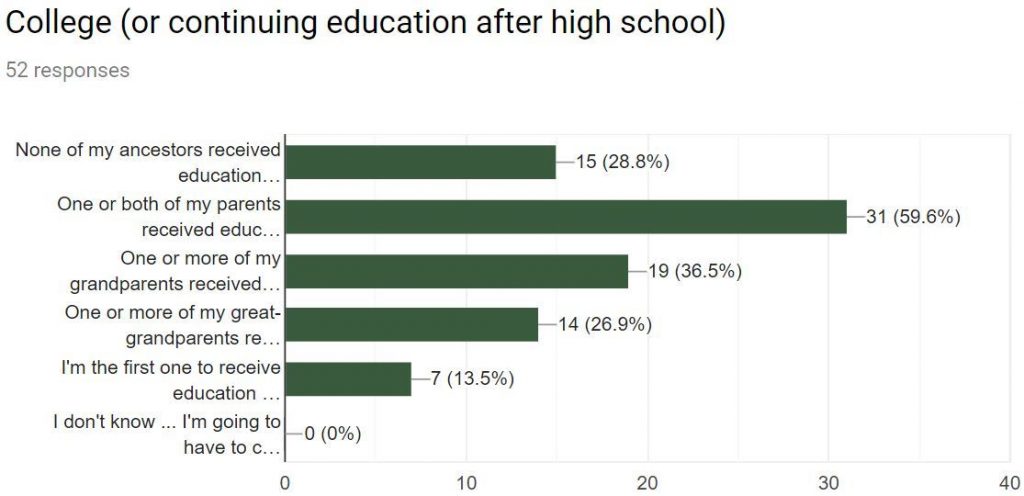
| There were 37 responses to last week’s survey which asked about using GFO’s online library catalog. We hope those of you who haven’t checked out the catalog will do so soon. |
| Most of the comments indicated that respondents have used the online catalog BOTH at home and at the library. One person said, “It’s really handy to look up books at home then go to the library prepared with a list,“ and we couldn’t agree more. It’s a fabulous tool. |
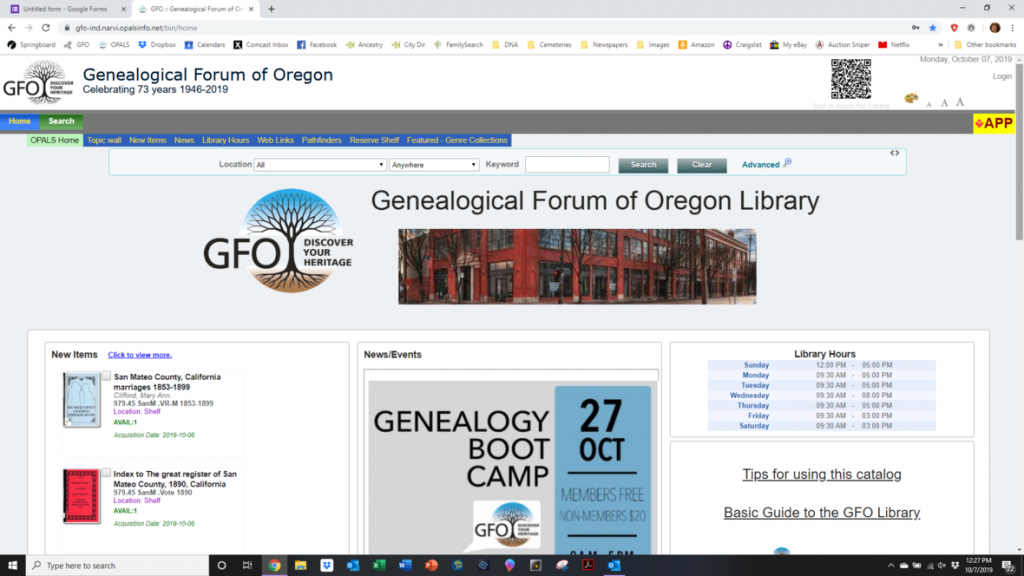
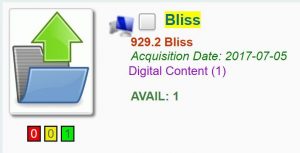
| And for the person who said, “Have not yet used the library – live too far – so I do not use the catalog,” we’d like to encourage you to check out the catalog no matter how far away you are. We may have a resource that would help your research. Our research team (for a small fee) can copy a small portion of a book or check our resources for you. Also … some content in the catalog is available wherever you are. And that content is growing all the time. Look up Bliss or Idaho Newspaper Clippings to see a sample of what’s available from your home. |
| New Survey: |
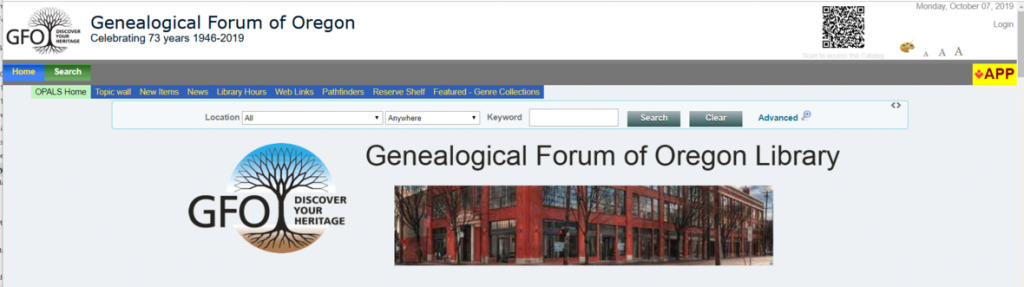
| For those who’ve used GFO’s online library catalog, we’d like to know what features you’ve used and what you like best or find most helpful. |
| Take the Survey |
| This week at GFO … |
| Saturday, October 19th Genealogy Problem Solvers 9:30 – 11:30 a.m. Martha Ellen Adams was born in 1839 in Mississippi and had FOURTEEN brothers and sisters. But the ancestral trail back into history stops there. Who were her parents, especially the rugged woman who was mother of these fifteen children? Please join us as we plunge headlong into 1800 Tennessee, the brick wall state, to determine a GFO member’s 3rd great grandparents. Beginners and intermediate researchers are encouraged to submit problems to work on at future meetings. For questions or more information contact Katie Daly at GPS@gfo.org. African American Ancestry Group 12:00 – 2:00 p.m. “Bring Your Own Brick Wall.” Bring your problems, questions, and documents (copies, please, no originals), and we will brainstorm to come up with information and suggestions that can direct your next steps and may help you solve some of your family mysteries. For more information, contact us at african_american@gfo.org. GenTalk: Records of Death 2:00 – 3:00 p.m. Join Pam Vestal as she presents Discovering Your Ancestor’s Life in Records of Death. We’ll explore the surprisingly abundant information that is collected when a death occurs and glimpse just how much these records can reveal, not only about our ancestors’ deaths, but also about their lives. GenTalks are free to the public. Sunday, October 20th Library Work Party 9:00 a.m. Noon There’s another work party at the GFO library today for those of you who can come. There’s lots to do and we’d love to have your help. Doors open at 9 and work usually wraps up around noon. Some people come for just an hour or so; others work the full time. You are welcome to do either. Any time you can share is valuable. Hope to see you there. Family Tree Maker for Beginners 1:00 – 3:00 p.m. This is a beginning class for Family Tree Maker users and for those considering a purchase of the software. This class is offered quarterly. Questions? Or if you have Family Tree Maker topics you’d like covered, email Joyce and Laurel at FTM@gfo.org. French Canada Group 3:30 – 5:00 p.m. Share stories of our history. Come and join this group to learn more about French Canadian ancestry and Acadia. The group leader is Bob LaMarche and you can email him at FrCan@gfo.org. Wednesday, October 23rd PMUG College (Mac Users) 6:00 – 8:00 p.m. Portland Mac Users Group College features: Getting Creative with Apple’s Free Apps • See how Pages Templates assist your creativity • Amaze your friends with Keynote Slideshows • …. and much more! Bring your Mac/iPad to participate with instruction. To register: Call 503-228-1779; Email: college@pmug.org. If you would like additional info for attending this class, please email us. This is free for GFO members. GFO Library Open Late to 8:00 p.m. |