The Italian Interest Group (IIG) of the Eastside Genealogical Society (EGS) is hosting a Free Webinar on both genealogical research in Italy and dual US/Italian citizenship. Please share this information with your members. If you have any questions, you can contact me at the email address below. Mille Grazie, Stephen email@egs-iig.com
********** FREE **********Italian Genealogy Webinar direct from Italy
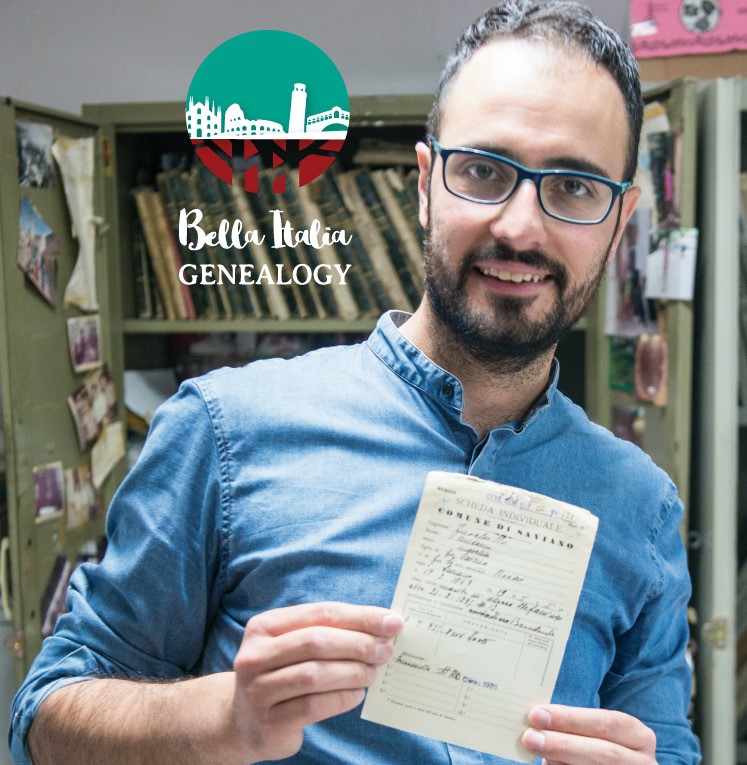
Welcome to Italian Genealogy Let’s explore the world of Italian genealogy together, one person at a time.
ZOOM Meeting Topic: Hands-on Italian Genealogy & Dual Citizenship: Digging roots on the ground in Italypresented by Allesandro Bovino (Bella Italia Genealogy)When: 20-Jan-2023, Saturday Time: SPECIAL TIME 10:00 AM – 12:00 PM (PST)
Description This workshop might be the right fit for all whose roots stem from Italy and who are serious about genealogy and Dual Citizenship. Italian-native professional genealogist Alessandro Bovino from Benevento, Campania, Italy, will share details about how your Italian family tree can be brought up to the next level when using on-site records that remain yet unexplored, like notarial documents, military files, or dowry records. Open to the expert as to the novice alike, the lecture will let you understand the invaluable worth of Italian local records – right from an on-site Italian professional’s perspective. A detailed insight into how to go about qualifying for Dual Italian Citizenship will also be offered as the final part of the program to make for any specific questions the audience may want to pose in that regard.
Presenter: Alessandro Bovino
Biography Alessandro Bovino is a native Italian professional genealogist and family history speaker. He is a member of the Association of Professional Genealogists and was once a Host/Genealogist on the renowned series “Who do You Think You Are?” for the Swedish TV format. He is also the president and founder of the family history firm ‘Bella Italia Genealogy’ based in his native town Benevento, Southern Italy. Everything started back in 2006, when he suddenly got very curious about certain family lines he had never thought much about. It was then that his father told him about a great-uncle who came to America through Ellis Island and this spurred him on to discover who he is and where he comes from. Since then, as an Italian-born researcher, he has been thrilled to meet second cousins in the States who had waited for decades to greet their Italian family. It is with this spirit of curiosity and adventure that Alessandro decided to found Bella Italia Genealogy as an exclusively Italy-based genealogy research, ancestral tour, and Dual Citizenship company. By using records and documents available only through on-site research, he aims to make yours a one-of-a-kind genealogy experience.
Who isn’t in line for FREE stuff? To those of EWGS members who have been in my genealogy classes in the past, haven’t I taught you “that if it’s free, take two?” 👵 Well, it’s true; everybody checks out “free stuff.” It’s human nature.Thomas MacEntee is the genius behind this website (www.genealogybargains.com) and the links at the top of his site are:
Home
Genealogy Webinars
FREE Genealogy Stuff
Store
Connect with me
Under the “FREE Genealogy Stuff,” Thomas (in his newsletter) mentions what’s free today or this month in the genealogy world. (Click to his website to sign up for his free newsletter.) Under the “Store” you’ll find over a dozen pages of cheat sheets or how-to sheets that he’s created and offers mostly for free …… but some are $1.99. By now (late in December) your “extra” spending money is running low, so having freebies offered to you right now is a December gift to you for sure! Enjoy.
When we see, hear or read “December 7th,” we likely immediately think of the 1941 attack on Pearl Harbor. I thought you might like to learn of other events throughout history that also happened on December 7th:
1696 – Connecticut Rt 108, one of the oldest highways in America is completed to Trumbull
1732 – The Royal Opera House opens at Covent Garden, London, England
1787 – Delaware is the first state to ratify the U.S. Constitution
1808 – James Madison elected 4th U.S. President
1842 – New York Philharmonic’s first concert
1868 – Jesse James gang robs bank in Gallatin, Missouri
1872 – HMS Challenger sets sail on 3 1/2 year world oceanographic cruise
1891 – the 52nd U.S. Congress was first to appropriate $1,000,000,000
1909 – Inventor patents Bakelite, sparking birth of the plastics industry
1912 – Bust of Queen Nefertiti found in El-Amarna, Egypt
1917 – The USA’s 42nd “Rainbow” Division arrives in France (with Col. Douglass MacArthur among its ranks)
1917 – U.S. becomes 13th country to declare war on Austria during WW I
1926 – Gas refrigerator patented
1937 – Dutch Minister Romme proclaims married women are forbidden to work
1937 – Red Sox acquire the contract of 19-year-old Ted Williams
1941 – Adolf Hitler issues first anti-Jewish proclamations
1967 – Otis Redding records “Sittin on the Dock of the Bay”
1972 – Apollo 17 launched; crew takes famous “blue marble” photo of Earth
1979 – Star Trek: The Motion Picture, first movie from the TV series
1992 – Galileo spacecraft passes the North Pole of the Moon; 1995 heads to Jupiter
2020 – Coca-Cola named the world’s No. 1 plastic polluter
2021 – Chile becomes the 31st nation to legalize same-sex marriage
There was a L-O-N-G list of events that happened on December 7th, in several categories. Ask Google to read the entire list….
TIP OF THE WEEK – CREATE UNIQUE FAMILY GIFTS FROM FREE PRINTABLES
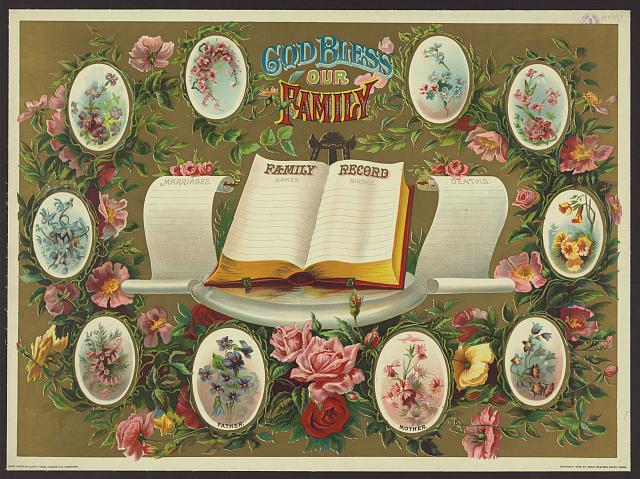
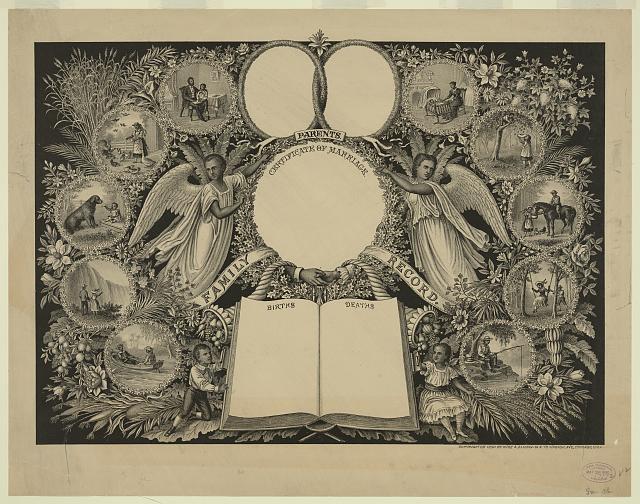
Need an inexpensive, but personal gift idea? The Library of Congress has dozens of blank and adaptable antique family record sheets. The images are in the public domain. You can print them off on good paper, paste in photos and create a memorable gift for each family member. Search for “family record” on the Library of Congress website. Here are a couple examples.
Word of the passing of Bernadette Laqueur was received recently. She died earlier this year at the age of 72.
Laqueur was born May 24, 1950, in San Francisco, to Gert and Mary Alice Murphy. She grew up near Washington, D.C. and graduated from the University of Indiana. She worked in Los Angeles in legal administration before moving with her family to Seattle in 1989. She was an active voice in community, political, conservation and education work. In addition to her passion for genealogy, Laqueur enjoyed skiing, kayaking and playing the piano.
Laqueur joined the Seattle Genealogical Society in 2011 and actively participated in the society’s programs and special interest groups. A regular donor, she also volunteered in the SGS library. In 2020, Laqueur stepped up to serve as a trustee for the SGS library and did so until her health failed. She died Jan. 21, 2023. Survivors include husband Paul Herstein, and sons Andrew and Richard. She is buried at Lake View Cemetery on Capital Hill in Seattle.
WHERE’S PERSI?
The Periodical Source Index (PERSI) is the premier subject index for genealogy and local history periodical articles. Although PERSI has had a few different homes over the years the index is now available through the Allen County Public Library’s (ACPL) website. Seattle Public Library owns many of the indexed periodicals. Articles can also be requested from ACPL. The SGS catalog also includes a link to the website.
THANKS TO FLIER VOLUNTEERS!
Thank you to all those who volunteered to locate living relatives of the fliers of the first circumnavigation of the world. Each flier has been matched with a volunteer and the search is on.
IT’S THE GIVING SEASON As 2023 wraps up and we reflect on our centennial year, we also want to look forward to the future. Please consider making a tax-deductible contribution to support the work of the Seattle Genealogical Society and Library.
Your support helps us keep membership dues low and allows us to serve the our community in more meaningful ways.
The celebratory news on 11 November 1923, was “MERCER ISLAND CELEBRATES OPENING OF BRIDGE, Residents See Dreams and Plans of 45 Years Realized”. The headlines further explained “New Structure 1,200 fee Long Reaches from Barnabee Point to Enatai on Eastern Shore of Lake Washington.”
Barnabee Point is on the east side of Mercer Island with Enatai located on the eastern shore of Lake Washington between Newport and Bellevue. The bridge gave Mercer Island its first land communication with Seattle and the rest of the mainland. The article touted the fact that it allowed one to now drive from Mercer Island to Seattle via Renton. The celebration included a 20 piece band of the Boys Parental School of Mercer Island. The article also noted that a bridge on the western side of Mercer Island to Seattle is a possibility in the future but would cost hundreds of thousands of dollars.
— “MERCER ISLAND CELEBRATES OPENING OF BRIDGE, Residents See Dreams and Plans of 45 YearsRealized”, The Seattle Daily Times, 11 Nov. 1923, p. 14, col 3.
* Thanks for celebrating this centennial year with us!
SAVE THE DATE
Jewish Genealogical Society of Washington State, usually 2nd Monday meetings usually 6:30 pm – 8:00 pm Pacific Time
JGSWS meets on the second Monday of each month, from Sept-June. Doors open at 6:30 pm unless noted otherwise. The next meeting is Dec. 11, 2023, “‘Illegitimacy’ in the Jewish Communities of Galicia,” presented by Janette Silverman. For more information see http://www.jgsws.org/meetings.php
Free webinars from American Ancestors by NEHGS Events are all noon to 1:00 pm Pacific Time
• “Applying to Revolutionary War Lineage Societies,” Dec. 7, 2023, Join Vice President of Research and Library Services Lindsay Fulton for a step-by-step look at applying to Revolutionary War lineage societies. Register in advance.
• “Family History Roundtable: Getting Family Involved in Your Research,” Dec. 12, 2023, Finding ways to get our relatives interested in family history is almost as much of a challenge as the research itself! Join us for this engaging panel discussion with our genealogists as they discuss their tips for getting family involved in your research. Register in advance.
• “What’s New at American Ancestors,” Dec. 14, 2023, Stay up to date with what’s new at American Ancestors with this webinar series! Register in advance.
SGS CALENDAR OF EVENTS
Good Shepherd Center, Suite 302 4649 Sunnyside Ave N Seattle, WA 98103 206 522-8658
Hours : Tuesday, Wednesday, Thursday, Friday, and Saturday ** 10:00 am – 3:00 pm **
Masks are recommended inside the Good Shepherd Center. Always check the SGS Website Calendar of Events for the meeting links, registration, or for last minute updates or changes to the schedule. Be advised you may need to register in advance to join a meeting.
All times listed are Pacific Time unless otherwise notedSaturday, Dec. 2, 2023, 10:15 am-12:15 pm, FamilySearch SIG (Virtual), with Lou Daly. Discover many ways to use the FamilySearch website in your research. Meeting includes instruction and time for Q&A. Email Lou to get on the email list: loudaly@nwlink.comSunday, Dec. 3, 2023, 1:00 pm-3:00 pm, DNA Workshop, with Cary Bright and Craig Gowens. To participate you need to be on the SGS DNA Interest Group email list. Contact Cary Bright at SGSDNASIG@gmail.com to join.
Monday, Dec. 4, 2023, 10:00 am-11:30 am, Brags & Bricks Social Interest Group (Virtual), Join us for an informal social gathering. Share your recent genealogical successes and challenges, or just come to hang out with other genealogists.
Saturday, Dec. 9, 2022, 1:00 am-2:30 pm, Second Saturday: City Directories (Virtual or at the SGS library), Learn how to leverage city directors in your research: To view at the library, register here. To view from home online register here.
Monday, Dec. 11, 2023, 10:00 am-11:30 am, Brags & Bricks Social Interest Group (Virtual), Join us for an informal social gathering. Share your recent genealogical successes and challenges, or just come to hang out with other genealogists.
Monday, Dec. 11, 2023, 1:00 pm-3:00 pm, SGS Board of Directors Meeting (Virtual), All SGS members are welcome to attend. SGS is an all volunteer organization. Please be involved. Members must sign in to website to see Zoom link.
Monday, Dec. 11, 2023, 7:00 pm-8:30 pm, Write It Up! SIG (Virtual), Join this group to share and discuss writing projects, resources, and ideas. To join or learn more, contact Alaine Keisling at keisling@gmail.comTuesday, Dec. 12, 2023, 10:00 am-11:00 am, Tech Tuesday (Virtual), informal consultation time on DNA, genealogy software, or genealogy-related technical issues. All are welcome. No appointment necessary. Bring us your problem; we’ll try to help. Saturday, Dec. 16 2023, 10:00 am-12:00 pm, Irish SIG (Virtual), with Susan McKee. See the SGS website Calendar of Events for further information.
Saturday, Dec. 16, 2023, 1:00 pm-3:00 pm, German SIG (Virtual), Bring your favorite German research resource to share with the group. Carolyn Schott is the facilitator. Get the new Zoom link. Register on the SGS website.
Monday, Dec. 18, 2023, 10:00 am-11:30 am, Brags & Bricks Social Interest Group (Virtual), Join us for an informal social gathering. Share your recent genealogical successes and challenges, or just come to hang out with other genealogists.
Tuesday, Dec. 19, 2023, 1:00 pm-3:00 pm, Family History Writers’ Group (Social Interest Group), Create your family history and share with others in an effort to improve your writing. Please note: The Writers’ Group is at the maximum number of participants and is not currently accepting any new members.Tuesday, Dec. 26, 2023, 10:00 am-11:00 am, Tech Tuesday (Virtual), informal consultation time on DNA, genealogy software, or genealogy-related technical issues. All are welcome. No appointment necessary. Bring us your problem; we’ll try to help. Saturday, Jan. 6, 2024, 10:15 am-12:15 pm, FamilySearch SIG (Virtual), with Lou Daly. Discover many ways to use the FamilySearch website in your research. Meeting includes instruction and time for Q&A. Email Lou to get on the email list: loudaly@nwlink.comSunday, Jan. 7, 2024, 1:00 pm-3:00 pm, DNA Workshop, with Cary Bright and Craig Gowens. To participate you need to be on the SGS DNA Interest Group email list. Contact Cary Bright at SGSDNASIG@gmail.com to join.
Wednesday, Jan. 10, 2024, 7:00 pm-9:00 pm, MAC Computer SIG, Co-chaired by Lisa Marker and Diane Hettrick. Jointly sponsored by SGS and Fiske. Meetings address topics and resources for Macintosh (Apple) computers and the Reunion genealogy software program. Meetings are on the second Wednesday of alternating months. A link to login will be sent to the MAC SIG email list. If you would like to join, send an email to macusersig@seagensoc.org to be added to the email list.
December 1, 2023
SGS eNews! comes out the first of every month. contact eNews!
Be in the know! Receive notices for our virtual meetings, as well as the latest genealogy news and tips, by subscribing (free) to the online group at https://skcgs.groups.io
Skcgs.groups.io is the SKCGS online discussion and collaboration arena where:
we communicate and share information with each other
other than your email, you are not required to provide personal information
you can unsubscribe at any time
PROGRAM UPDATES
All meetings are online via Zoom
In-person Research Group, in-person Genealogy Help at the Auburn Library, 4th Monday of the month online Chat, and online Study Group are canceled for December.
No General Membership Meeting/Speaker in December
Live transcription (captioning) is available during our Zoom meetings by request
Online meeting participants need to register for SKCGS Zoom meetings.Register at our website skcgs.org or use links below. Upon registration, Zoom will send a confirmation email with instructions on joining the meeting.
DECEMBER 2023 – EARLY JANUARY 2024 MEETINGS & EVENTS
Tuesday, December 5, 2023, 6:30pm PT SKCGS Board of Directors Meeting (online) All SKCGS members are invited to attend; only Officers and Directors may vote. Write to Board@skcgs.org for the meeting link. Wednesday, December 6, 2023, 7:00pm PT Beginning Genealogy Class: Immigration, Emigration, and Naturalization Records (online) Repeat of the December 4th class More details at https://www.skcgs.org/meetings-events/classes/bgc Monday, December 11, 2023 ⋅ 1:00pm – 3:00pm PT Genetic Genealogy/DNA Interest Group (online) Topic: Most Useful Testing Companies & Third-Party DNA Websites Please come ready to discuss what you find most useful and how those features help you answer your research questions. Register in advance for this meeting: https://us06web.zoom.us/meeting/register/tZIucuCvqTsqHNcN7wBEC0fB_3-TRYD1rZLm After registering, you will receive a confirmation email containing information about joining the meeting. Subscribe to the free SKCGS Genetic-Genealogy email list for meeting reminders and discussion: https://skcgs.groups.io/g/Genetic-Genealogy Monday, December 18, 2023 ⋅ 1:00pm – 3:00pm PT Technical User Group (online) Topic: New Ways to Use Artificial Intelligence in Genealogy Research. Watch in advance: You CAN use ChatGPT for genealogy (with accuracy)! Here’s how: https://youtu.be/LnBKjprPTPo?si=wohtHb4pss-7be-H (13 mins) Register in advance for this meeting: https://us06web.zoom.us/meeting/register/tZAucuigqj4uH92bWWD2uycX9Z1uSsRLY4K6 After registering, you will receive a confirmation email containing information about joining the meeting. Subscribe to the free SKCGS Technical User Group email list for meeting invitations and discussion: https://skcgs.groups.io/g/TUG
Wednesday, December 20, 2023, 7:00pm PT Introduction to Genealogy Class: Research Techniques (online)
Hosted by King County Library
Join professional genealogist, Winona Laird, from South King County Genealogical Society for the last class in a series of programs to help you along on your genealogical journey. King County Library will email a Zoom link no later than 24 hours before the program start time. If you do not see an email, check your Junk or Spam folder. If you need assistance, please contact Jennifer at jwooten@kcls.org.
Tuesday, January 2, 2024, 6:30pm PT SKCGS Board of Directors Meeting (online) All SKCGS members are invited to attend; only Officers and Directors may vote. Write to Board@skcgs.org for the meeting link. Friday, January 5, 2024 ⋅ 12:30-2:30 PM PT EGS German Interest Group (online) Topic: The Best Websites for German Genealogy presented by Dan JungclasFor meeting registration, visit https://egsgermangroup.wordpress.com/
Saturday, January 6, 2024, 10:00am – 12:00pm PT Family Tree Maker Users Group (online) Question & Answer. Each month, we will learn about using the features of FTM. Register in advance for this Zoom meeting: https://us06web.zoom.us/meeting/register/tZYsdu6uqzgiGdDn7eCsOAgkvdOXktX127sz After registering, you will receive a confirmation email containing information about joining the meeting. Subscribe to the free SKCGS FTM email list for meeting reminders and discussion: https://skcgs.groups.io/g/FTMUG
PLAN AHEAD:
Saturday, January 20, 2024, 9:30am PT social time; 10am – 11:30am PT program (online) South King County Genealogical Society & Eastside Genealogical Society present Angela Packer McGhie “Document Analysis: Digging into the Details” Learn to analyze documents by studying the background and context. Assess the reliability of the source and the information it contains. Compare the information with details from other records. See these principles in action as we look at two different documents and analyze them using a set of questions provided. Use your knowledge and the questions provided to assess the documents you are researching. This session will walk step-by-step through analyzing two documents to: • assess the characteristics affecting the reliability of documents • demonstrate detailed background analysis • seek the law that influenced the creation of the document • look at the legal terminology used in the document • compare to other documents of the same type • investigate the provenance of a document • determine who the informant was and if they provided primary information
Angela Packer McGhie, CG, FUGA has a passion for teaching genealogy. She is the Education Director of the National Genealogical Society and a trustee of the Board for Certification of Genealogists. Angela enjoys teaching at the Salt Lake Institute of Genealogy and the Institute of Genealogy and Historical Research, as well as other genealogy conferences and institutes. Angela serves as trustee for the BCG Education Fund and was the first administrator of the ProGen Study Program. The program will be recorded for playback by SKCGS Members. Guests are welcome! Register at https://www.skcgs.org
——————
MEMBERSHIP: We welcome guests to our meetings and special interest groups, which are free. Naturally we hope that visitors will want to become members. Support like yours helps us to educate and engage with our community to foster interest in family and local history. Regarding our programs, even if and when we can meet again in person, we will continue with some virtual programs. You can find more information about membership at our website at https://www.skcgs.org/support-skcgs/membership.
You are receiving this email because you have attended a SKCGS meeting and indicated you would like to receive periodic notice of events. If you would like to be removed from our list and stop receiving emails from us, send an email to skcgsfriends+unsubscribe@skcgs.org.
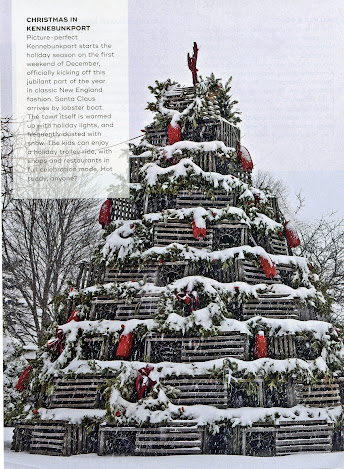
This is, I’m 100%, a Christmas tree the likes of which you’ve never seen. This was a page in the L.L. Bean catalog, a clothing company based in Maine. And in case you cannot tell, it’s a tree built by stacking lobster traps!! Way cool and most unusual, no?Now for some December chuckles:
What do you call an elk that can sing & dance? ELFIS!
What do you get when you mix a Christmas tree with an iPad? A PINEAPPLE!
What is the Grinch’s least favorite band? THE WHO!
What goes Ho-Ho-Whoosh, Ho-Ho-Whoosh? SANTA CAUGHT IN A REVOLING DOOR!
What kind of photos do elves take? ELFIES!
Why was the snowman looking through the carrots? HE WAS PICKING HIS NOSE!
What did the reindeer sing to Santa on his birthday? FREEZE A JOLLY GOOD FELLOW!
Knock, knock. Who’s there. Dexter. Dexter who? DEXTER HALLS WITH BOUGHS OF HOLLY.
Yes, these are pretty cheesy but you laughed, didn’t you? Took me a minute to get the iPad one……….
You are free to copy articles to any non-commercial web site or message board or printed publication you wish. Don’t bother to ask permission, just do it.
 Welcome to Italian Genealogy Let’s explore the world of Italian genealogy together, one person at a time.
 Days Hours Minutes Seconds