Let’s Talk About….. Unwelcome Americans


I just finished a great read: Unwelcome AmericansLiving on the Margin in Early New England, by Ruth Wallis Herndon, 2001. I had no clue about this part of Colonial history!  Here’s what I learned:

In 18th century America, there was no Social Security, Medicaid, unemployment insurance or old age pensions, no welfare of any sort…… “no colony or state created and maintained a safety net for those unable to support themselves.” Thousands of our ancestors living on the margins due to injury, health, discrimination, or poor choices had an extremely rough time just staying alive.” Each local government administered “poor relief” to its own inhabitants and almshouses or poorhouses were constructed so that needy people could be grouped together and helped.

In New England, town officials met regularly to raise taxes due to the high cost of poor relief. This was especially true when the Revolutionary War, with tremendous expenses, loomed.  One method sought to resolve this tension was the “warning-out” system. This was the way town authorities sent away from their towns those people who had no legal claim on the town treasury. Through warnings-out, towns avoided the greater costs of supporting frail, ill, or injured people long term.

One facet of this system was that such needy people were shunted back to the town of their birth; being born in XX town, it was XX town’s responsibility to care for them. Sometimes this meant dividing up families! If a family of five were all needy and candidates for being sent elsewhere, they could be sent to five different towns, regardless of the children’s ages.

The book is 200 pages of carefully researched case studies that really brought this situation, this problem, to life for me. Cost for the paperback was under $7 via Amazon books. If you have New England ancestry who were not among the well-off, this might be good history for you.

Heritage Quest Research Library Beginning DNA

Thursday, July 6, 2023

Beginning DNA for Genealogists
Getting back to the basics. In this presentation, we will look at all types of DNA that are currently being used for genealogical purposes. The inheritance pattern of each will be reviewed.  Identify basic information that should be provided by all testing companies.  The purpose of the “admixture” will be explained.  Also explained will be why your admixture percentages change from time to time. 
Any time remaining will be open for questions.    Judy Line has been doing genealogy off and on for thirty years. She has completed several formal education programs.  She holds certificates from the National Institute for Genealogical Studies, Boston University and holds a business degree from Washington State University.  Thursday: July 6, 2023
ZOOM
11:00 AM to 12:00 PM Sign up by going to the HQRL Store at https://www.hqrl.com
  Thursday, July 20, 2023

Beginning Your Family History
Part A: Getting Started
What is it?
Why do it?
Where to begin?
How to get organized?

So you want to start a little project?
How can Heritage Quest Research Library Help YOU?
Start with a free beginning class taught by our very own research librarians.  Thursday, July 20, 2023
ZOOM
11:00 AM to 12:00 PM Sign up by going to the HQRL Store at https://www.hqrl.com.
  A link will be sent to your email 2 days before the class.
Copyright © 2023 Heritage Quest Research Library, All rights reserved.
You have told us that you want to receive our news and updates from our library.

Our mailing address is:
Heritage Quest Research LIbrary
1007 Main St
Sumner, WA98390-1412

Let’s Talk About: What’s In A Name

June is my only daughter’s birthday month. She was born in June and I remember well her naming story. Looking through a women’s magazine, I spotted an ad for Ivory Soap. It was not this exact one (below) but I could not find “the real” one. It showed a baby in a bubbly bath and the words were something like “Jane Elizabeth enjoys her Ivory soap bath.”  Well!  Husbnd’s mother was Esther Mary, so we quickly fell in love with Jane Esther and that’s what she became. And that’s how we found her name.

My name is Donna Ruth; I was named after my Aunt Ruth. Four years earlier, Aunt Ruth had a daughter she named June Ellen, after my mother, June.  And the Donna part? From a 1942 novel by Daphne du Maurier, Frenchman’s Creek. How do I know? I asked mom!


My dentist used to be Frank Vedelago. His partner dentist in the same building was Stephen Carnell. They were brothers! Deciding to go into dental practice together but with separate practices in the same building, they realized that with two Dr. Vedelagos there would be confusion. So they tossed a coin and Stephen took their mother’s maiden name, Carnell. And his children all went by that surname too. 


Years ago, in one of my classes, a young woman had a seriously difficult family history problem. The family looked every bit Italian, dark hair and eyes and beautiful olive skin. But the great-grandfather’s name was Lars Swenson. What? (This was obviously before DNA.) On his deathbed, Grandpa Lars told the truth: When he was a newly arrived immigrant, he got drunk, was rolled and his money and papers stolen. Realizing the situation, and seeing another fellow drunk in the corner, “Lars” took that fellow’s papers and became in name, if not in fact, Lars Swenson. And on the point of death, he could not remember his real, Italian, surname. True story.


How did your parents pick your name? If you have folks to ask, ASK! And realize, when researching your family tree and come up against a seemingly impossible brick wall, remember that our ancestors were survivors……..and that’s why we’re here today.

Tacoma Pierce County Genealogical Society DNA Special Interest Group Meeting

Tacoma-Pierce County Genealogical Society DNA Special Interest Group Meeting

Tuesday, June 27 at 7:00 pm via Zoom

We will continue studying Genetic Genealogy in Practice by Blaine Bettinger and Debbie Parker Wayne.

This month we will discuss Chapter 6: Genealogical Applications for X-DNA.

This book is available from The National Genealogical Society (the publishers,  Amazon, or perhaps through your local public library or via Inter-Library Loan.

Check WorldCat to see what libraries may have copies.

Tacoma-Pierce County Genealogical Society is inviting you to a scheduled Zoom meeting.

Topic: TPCGS DNA Special Interest Group Meeting

Every month on the Fourth Tue beginning at 7:00 PM Pacific Time

Please download and import the following iCalendar (.ics) files to your calendar system.

Monthly: https://us02web.zoom.us/meeting/tZYqdeyrrz0iEtx-c_J3gNfcI8mebT1zajLo/ics?icsToken=98tyKuGqqTkvGdWTuBGPRpwQB4joZ-nzmCFHj7dF0RzaKXNUTAX1H7pPN7BLQcLR

Join Zoom Meeting

https://us02web.zoom.us/j/82725316888?pwd=MDc3UEZrUVJNbmxmK2ZORmw5YzdDdz09

Meeting ID: 827 2531 6888

Passcode: 811780

One tap mobile

+12532050468,,82725316888#,,,,*811780# US

+12532158782,,82725316888#,,,,*811780# US (Tacoma)

Dial by your location

        +1 253 205 0468 US

        +1 253 215 8782 US (Tacoma)

Meeting ID: 827 2531 6888

Passcode: 811780

Find your local number: https://us02web.zoom.us/u/kIKCyZLQy

Pioneer Pursuit Progress

Many of you have embraced the Pioneer Pursuit contest with enthusiasm and vigor. We’re very excited about all the submissions (more than 1,500 so far!). It’s hard to know exactly how many people lived In Washington Territory, but there are estimates that about 350,000 individuals were here in 1889, so we have a ways to go.

We acknowledge we’re a little behind on posting the submissions in the index, but we’re working hard to get caught up. Thanks for your patience.

Even though we’re still posting your submissions, don’t let that slow you down. We’re still looking to document every man, woman and child who lived in Washington Territory on or before 11 Nov 1889. And don’t forget there are prizes for every individual and genealogical society that submits a Pioneer.

The submission form, instructions, examples, frequently asked questions and research hints are all available here. If you have other questions, don’t hesitate to contact us at Info@wasgs.org. We’re here to help!

Imminent Deadline for Recognition Awards

Nominations from local societies for the Outstanding Volunteer and Outstanding Team awards are almost due. The deadline to send your nominations to Info@wasgs.org is Saturday, July 1, 2023. The forms are available here. The virtual announcement will be made Thursday, August 31, 2023.

A few FAQs about the Recognition program:

  • Local societies can submit up to two individuals or one team/project for recognition.
  • The Outstanding Volunteer/Team Award program is not a competition – it is locally driven. All nominees from local societies will be honored with an Outstanding Volunteer/Team certificate, but we want these awards to be special, so please don’t nominate your whole society (even though they are outstanding!).
  • Posthumous awards are, of course, acceptable.
  • Nominees may have received an Outstanding Volunteer award previously. Click here for a cumulative list of awardees (alpha by name and by society).

For more information about the awards, check out the Recognition page of the website. For more information, email Info@wasgs.org.

Meet the Board: Roxanne Lowe

Do you know who’s running the show at the Washington State Genealogical Society? Who are these people? In the coming months, we’ll introduce them to you, so you can say “hi” the next time you see them. (Note: a variation of Roxanne’s story was published in September 2017.)

Roxanne in 1958, age 3

In today’s “Meet the Board” series, we’re introducing you to Roxanne Lowe. Roxanne lives in McCleary (Grays Harbor County) and is WSGS’s secretary, web manager and on the blog team. She’s also in charge of the Recognition program. She has been a member of the WSGS since 2008. She was named as a WSGS Outstanding Volunteer in 2010. She’s a proud, long-time member of the Grays Harbor Genealogical Society, serving as president and newsletter editor of the GHGS Family Tree Searcher newsletter.

Roxanne was born in Aberdeen, Washington in January 1955, the first child of George and Patricia (Murphy) Ferbrache. She is the great-granddaughter of Patrick Murphy and Mary Donovan who moved to the Chehalis River Valley in the spring of 1888 from New Brunswick, Canada.

Patrick Murphy, Roxanne’s great-grandfather

Roxanne’s interest in genealogy began as a child. Her paternal grandmother gave her a written family history, loaded with names, dates and locations. It was many years, however, before Roxanne learned enough about genealogy to realize that:

• Ferbrache can be spelled a multitude of ways.
• There may be more than one (or two or 10) Daniel Murphy’s, Lawrence Ryan’s – and even Thomas Ferbrache’s.
• Middle names are not a big deal in her family (Roxanne doesn’t even have one).
• Her descendants moved around – a lot – with little or no regard to leaving a paper trail.
• Whoever wrote that family history was a creative writer.

Fortunately for Roxanne, she joined the Grays Harbor Genealogical Society who taught her a thing or two about genealogy research. She’s attended many conferences, workshops and seminars – learning something new at each. She’s even traveled to Ireland and New Brunswick, Canada looking for Murphy’s and Ryan’s. Next on her travel wish list is to go to Guernsey in the Channel Islands (with a side stop in London) to visit her Ferbrache ancestral land.

Roxanne retired a few years ago from the Washington State Auditor’s Office in Olympia. She had previously worked for Governors Gregoire and Locke as a project manager on the welfare and performance measure programs. When not searching for her family history, she enjoys scrapbooking, quilting, sewing, machine embroidery and just about every other paper and fabric art. She and her husband Gary have five children and nine adored grandchildren. You can often read about Roxanne’s fun-filled adventures with her grandchildren on her Facebook page.

Roxanne on Stanserhorn Mountain in Switzerland, June 2023.

A few more interesting tidbits about Roxanne:
• Favorite genealogy websites: Ancestry, MyHeritage and Google
• Favorite color: Red
• Favorite dessert: Apple pie
• When asked for one word that described her, she replied, “Busy!”

Now you know a little more about another of the WSGS Board members. The next time you see Roxanne say hello and thank her for her service to WSGS.

French Canadian and New England Books for Sale

The French-Canadian Genealogical Society of Connecticut (FCGSC) is a small society that operates a genealogical research library focused primarily, though not exclusively, on French Canadian and New England ancestry.  During the past several years they have received a large number of donated books, many of which either duplicate current holdings or do not fit into the scope of their collections. With limited storage space in their 200-year-old building, they are offering these excess books for sale. Most are used, many out of print and difficult to obtain. The majority are library copies that have been on their shelves or in donors’ collections, though some are new and unused.

A list that is being updated frequently can be found on their website at  https://www.fcgsc.org/books-for-sale. Please contact then at info@fcgsc.org, ATTN: Library Director for additional information.

Let’s Talk About: Periodicals..A Treasure Trove

Picture this scenario, if you will please.  James Brown is 55 years old and a Methodist circuit rider in very rural Wisconsin in about 1870. He felt “called” and loaded up his saddle bags on Old Nellie and set off to preach the gospel.  When Grandpa James was 75, and was a widower and getting somewhat feeble, he went to live with his daughter in St. Louis, Missouri. He had kept all his saddle-bag-books of his sermon notes and the baptisms and marriages he performed.  When he died, Daughter gathered up all his stuff (at his insistence) and carted them off, along with him, to her home in St.Louis. Years pass, James’ books and papers get “lost” in a box somewhere. Finally in about 1995, a granddaughter, who is very interested in her family history, stumbled upon the box and is delighted beyond words! Records written in her gggg-grandfather’s own hand! 

After the gggg-daughter enjoys and extracts information from Grandpa Brown’s records, she realizes the importance of them. They must be preserved and made available, she reasons. Ans she’s right. So she gives them to her local genealogical society and they publish abstracts from the records in their (Missouri) periodical. Obviously, far from Wisconsin! 

Why am I sharing this scenario/story? Because if James Brown was YOUR ancestor and you never knew where he died, and, more importantly, what happened to his religious records, you would be so happy to find out, wouldn’t you? 

The above image is from a family surname periodical, the Adams Agenda, this issue published in 1979. This publication contained mostly Adams-surname information but there were other goodies. I know you cannot read it, but catch this: “Genealogy of Capt. John Johnson,” or “Norris, Hackett, Prescott & Allied Families.” Or “Some Descendants of Philip Sherman.”

While a surname-oriented periodical might not be your best “bingo,” I know there is a St. Louis Genealogical Society which has a periodic publication. Might/could have James Brown’s Wisconsin records be published there, in St.Louis, Missouri? And, most importantly, would you think to look there for that information?

I really urge you to learn about PERSI (Periodical Source Index) and use it. This is where you’ll find indexed all the genealogy-related periodicals that the Allen County Public Library (aka Fort Wayne) could/can locate. Click to the FamilySearch.org/WIKI and ask for PERSI. Self-education will bring great rewards, I guarantee. 

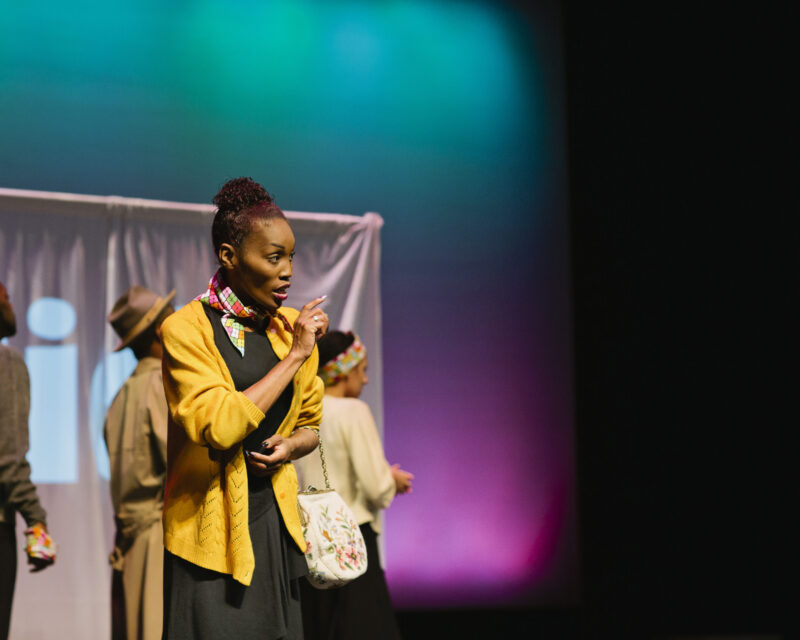
Yakima Valley Genealogical Society Revolutionary War Stories

Yakima Valley Genealogical Society General Meeting

When:  July 1, 2023

Time:  10:00 am – 12:00 noon

Where:  1901 S 12th Ave, Union Gap, WA  98903 – Yakima Valley Genealogical Society Library

General meeting followed by presentation from Susan Maza – Revolutionary War Stories:  Susan is a member of D.A.R. Narcissa Whitman Chapter.  She had an interest in educating herself about the time period and is now sharing what she has learned.  Step back in time as she, in costumed character, shares Colonial America with us through her stories she has discovered.