Let’s Talk About: Two Towns, Two Churches

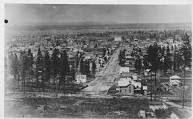
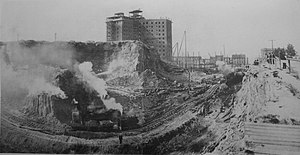
Did you realize that the lovely old church in Port Gamble, Washington (which you see on your way to Port Townsend or Port Angeles), was built in 1870 by two homesick Bostonians? They patterned their church after the 1836 church in Machias, Maine (lower). See the similarities?

The Straits of Juan de Fuca. You’ve read about it, been on it and been by it many times, no doubt. But ever wondered where such a Spanish-sounding name got tagged onto this body of water?  In 1592 (100 years after the discovery of the New World by Columbus) the entrance to Puget Sound was first seen by Juan de Fuca, a Greek mariner in the service of the Viceroy of Mexico. De Fuca had been commissioned in that year to explore the west coast of the New World and claimed that he sailed along the California coast until he came to the latitude of 47 degrees and there, finding that the land tended north and northeast with a broad inlet of sea, he entered and sailed for more than twenty days. De Fuca was firmly convinced that he had discovered the “fabled Straits of Anian,” the connecting link between the Pacific and Atlantic oceans.

The explorers who came after, the English especially, sought to discredit the performance and claims of de Fuca. He was pronounced a myth…his discovery a fable. Even Capt. Cook, while attempting to discover the illusive passage to the Atlantic Ocean entered this notation in his log book: “It is in the very latitude where we now are, that geographers have placed the pretended Strait of Juan de Fuca. But we saw nothing of it nor is there the least possibility that any such existed.”

The Green mariner was vindicated after all; the strait now bears his name even if it is not the “Strait of Anian.”

*******************************************************************************************************
What is a “megacity” would you guess? The answer is: any city with a population of over 10,000,000 people.  And how many are there? You’d be amazed.  Asking Goggle’s help for “world most populous cities,” I browsed through a list of 1000 cities from all around the world.

Most populous city in the world? Tokyo, Japan. Followed by Delhi, Shanghai, Dhaka (in Bangladesh), Sao Paulo, Mexico City, Cairo, Beijing, Mumbai and Oskaka.  It makes sense that the majority of bigger cities are in China and India which are the two most populous countries.

The U.S. doesn’t make the list until #41: New York City. Next after that is Los Angeles, Houston, Phoenix, Philadelphia………. And that last is #323!  Seattle is #750. Frankly, I’m glad that we don’t have “megacities” in America.

China has six megacities; India has five. The source found by Google stated that “of nearly 8 billion people on Earth, 7% live in megacities (where population exceeds ten million).”

Point of the story: Be thankful for where you live. Not in a million-people megacity!

Let’s Talk About: Shackleton Crew Desdendants

Are You A Descendant?

Of one of the men who sailed to Antarctica with Ernest Shackleton?

By Donna Potter Phillips, 2023

Might you possibly be a descendant of a member of The Imperial Trans-Antarctic Expedition, 1914-1916, led by Sir Ernest Shackleton?


The story of the ship Endurance and her 28 brave crewmen is well known. Multiple books, movies, TV specials and YouTube videos can be accessed to learn the full (and horrifying) story of the unspeakable trials these men lived through. (For instance, marooned on ice, they survived eating seal and seaweed.)

My interest was piqued and I asked Google for information on each and every one of those 28 men with Shackleton. Many never married or had no children. But some did:

Crewman name                   Wife                            Children                   

Ernest Shackleton              Emily Dorman           Edward, Cecily, Raymond

Thomas Crean                     Ellen Herlihy             Mary, Eileen, Kate (d. young)

Alfred Cheetham                 Eliza Sawyer             “13 children”

Lewis Rickinson                 Margaret Snell          Lewis, Betty

Alexander Kerr                    Lillian Mitchell          Jack, Eileen

Alexander Macklin              Jean Hanton             Alexander, Richard

Reginald James                  Annie Watson          John, David, Margaret

George Marston                  Hazel Roberts           Heather, Bevis

Thomas Orde-Lees             Rhoda Musgrove     Grace

Harry McNish                       Lizzie Littlejohn        Thomas

William Stephenson           Edith Binks               Doris, Mellie, Gladys (d.y.)

Ernest Holness                    Lillian Bettles                        Lillian, Renee, Stanley, Ernest (d.y.)

Walter How               Helen Varey                          “2 daughters”

John Vincent           Alice Parker                          “4 children”

Perce Blackborow  Kate Kearns                          Jim, Peggy, Joan, Kenneth, (2sons d.y)

Daniel Gooch          Mary Munro                           Lancelot, Phyllis, Robert, Daphne

So do you carry one of those sixteen surnames? Or do those surnames appear on your family tree? Is your interest piqued?

Disclaimer:  I did not do extensive research for this bit. And I only was looking at the 28 men with Shackleton and not the other 28 men comprising the Ross Sea party. And admitting that Grandma Google furnished my information, I admit to any mistakes!

P.S. Did you know that in March 2022 the ship Endurance was found? She rests upright nearly 10,000 feet deep in the Weddell Sea. Ask Grandma Google for images!

Let’s Talk About: First U.S. Navy Death in Pacific


1856: First U.S. Navy Death in the Pacific

“Curiosity got the better of Gus Englebrecht. He poked his head above a log to view a Brave just fired upon and wrote himself into history.”

Thus, Gustavus/Gustave Englebrecht became the first U.S. Navy casualty in the Pacific. He died on 21 November 1856 during the Battle of Port Gamble.

The Battle of Port Gamble is an isolated engagement between the U.S. soldiers and the Tlingit native peoples. A minor incident, it is historically notable for the first U.S. Navy battle death in the Pacific Ocean. Here’s the story:

In November 1856, a Tlingit party of about 100 warriors and their families, in a fleet of canoes, entered Puget Sound in what was then Washington Territory. Why they came was never asked; their presence spooked the alarm among the white folks. When the fleet of canoes approached Steilacoom, the residents alerted the U.S. Army garrison at Fort Steilacoom who, in turn, sent word to the nearby U.S. Navy gunboat, the U.S.S. Massachusetts.

On November 20th, the Tlingit approached the logging community of Port Gamble and the nearby band of S’Klallam Indians. (Note: The Tlingit were likely on a slave raiding party a most common custom then.) The superintendent of the logging mill blew the mill’s whistle prompting the community to evacuate to the nearby blockhouse.

The U.S.S. Massachusetts arrived at Port Gamble soon thereafter and finding the natives landed and camped at the edge of town, put ashore an armed force of 18 sailors. The Massachusetts’ skipper had twice sent messengers to the Tlingit chief with offers to tow them to Victoria but both offers were refused. The next morning, the captain began shelling the native camp, inflicting heavy casualties. During this melee, small arms fire was exchanged between the war party and those 18 sailor/soldiers resulting in the death of Cosxwain Gustave Englebrecht.

Donna’s note:  I searched all the “low-hanging” fruit for more information on Gustave/Gustavus but found hardly anything. His official military death notice said he enlisted 15 June 1855. He is buried in a lovely fenced plot in the little hilltop cemetery in Port Gamble. Most information for this bit came from www.historylink.org, the free Washington history website.

Was he the Gustave Englebrecht, age 18, born 1832 in town of Heiligenstadt (Bavaria), and who left Bremen on 22 May 1850 bound for Baltimore, Maryland, on the ship Rebecca??

Guess it’s up to somebody else to solve the mystery of Gus Engelbrecht, the man “who wrote himself into history.”

Information and images below are from www.findagrave.org

“United States Navy Sailor. He was serving as a Coxswain on board the wooden steamer warship “USS Massachusetts” when it was part of the United States Navy’s Pacific Squadron in 1856. He was killed in a minor engagement between the ship and the Native American Tlingit people at Port Gamble, Kitsap County, Washington Territory on November 21, 1856, making him the first Navy combat death in the Pacific. A historical marker that was erected near his burial site reads: “1856. National Historic Site. First U. S. Navy man to die in action in the Pacific. During the Indian depredation, Port Gamble was attacked. Mill workers hoped for relief from a U. S. Navy Warship the ‘Massachusetts’. The ship arrived, and the skirmish resulted in this American casualty. Curiosity got the better of Gus Englebrecht. He poked his head above a log to view a brave just fired upon, and wrote himself into history.”

Let’s Talk About: Newspapers, Community Voice

FIND 2-Inch Nail In Baby’s Throat – Spokesman Review, 5 Nov 1921

Cut Child’s Windpipe and Use Magnet With Success

A nail two inches long as been removed from the lung of a 15-month-old baby at the Deaconess hospital. The child, who is the son of Mr. and Mrs. Leo Dahlin of Nine Miles, swallowed the nail October 29th, and the mother did not discover the trouble until X-rays four days later disclosed the nail.

At the time the child choked (sic) until it was black in the face, but when Mrs. Dahlin was ready to start for town the trouble seemed to depart and the baby appeared normal. Later the lungs of the baby began filling with mucus and the mother brought the child to Dr. T.E. Hoxsey. On October 24 the child’s condition seemed alarming and an operation was decided upon. Dr. O.M. Rott, a through specialist, assisted Dr. Hoxsey.

An incision was made in the neck through which the windpipe was cut. But inserting a powerful magnet the nail, which was two inches long, was drawn out. The parents of the baby report that it is well on the road to recovery. 

Let’s Talk About: Bits & Pieces, This ‘N That

 Who has not seen this fantastic image of the Titanic’s bow as she rests nearly a mile deep in the Atlantic:

Bet you did not know:

  • She was the largest moving man-made object until 1912.
  • Some 4000 workers took 2 years to build her in Belfast, Ireland
  • She cost $10,000,000 in 1912 dollars (about $322,000,000 today)
  • The 4-day, one way, first-class passage cost about $80,000 in 1998 dollars
  • Lifeboat requirements were based on tonnage, not passenger count
  • New York Evening Sun ran a headline: ALL SAVED FROM TITANIC
  • The 1997 movie, Titanic, cost 24 times what the ship itself cost to build in 1911 (you do the math!)
  • One body, still floating in its life vest, was found 2 months la
  • More than 3000 books have been written about the Titanic
  • The last funnel on Titanic was  “dummy” for ventilation and aesthetics and no smoke came out of it
  • The Titanic Historical Society, founded in 1963, has 5000 members; PO Box 5153, Indian Orchard MA  01151

********************

August, 2023: Miami, Florida:  Archaeologists have found a submerged gravestone in Dry Tortugas National Park near the Florida Keys and they say the discovery could also mean there’s a cemetery and hospital in the area. The site could have been used for quarantined yellow fever patients on a small island that has since eroded into the sea.

*********************

Jeanne Coe, a longtime member of EWGS, does indexing under the SCRIBE project for the Washington State archives. She notes odd and unusual names………. like these:

  • America Jane Chamberlain, b. Oregon
  • Ralph Oregon Dunbar, b. Illinois
  • Mary Nevada Kiner, b. 1877 in Iowa
  • Nevada Melvina Cameron, b. 1901 in Washington
  • Hazel Inez Price, b. 1892 in King County, WA; her father was Lake Erie Price, b. Minnesota and her mother was Capitola Albatross Fuller, b. Kansas.
  • Denver Colorado Sayler, b. 1906 in Kansas

********************

From Kenneth Roberts’ book, “Trending Into Maine,” published in 1938, I learned that the Salish word for white person was soo-yap-ee, which meant “upside down face.” This happened because most 19th century Euro-American men wore beards. 

Let’s Talk About: Comic Strips

 
What would you guess was the longest running newspaper comic strip in the U.S.?? A strip most like your grandparents laughed over? 

If you guess the Katzenjammer Kids, you win a prize! This strip ran from 1897 t0 2006. 
Next in order were…… do you read any of these today? Which ones might you remember your parents, or grandparents, chuckling over?  P.S. They’re not all carried in our local newspaper. Makes one wonder how they can still be relevant today…… Prince Valiant?

  • Gasoline Alley – 1918 to now
  • Barney Google & Snuffy Smith – 1919 to now
  • Little Orphan Annie – 1924 to 2010
  • Popeye – 1929-1994
  • Blondie – 1930 to now
  • Dick Tracy – 1931 to now
  • Prince Valiant – 1937 to now
  • Brenda Starr, Reporter – 1940 to 2011
  • Beetle Bailey – 1950 to now
  • Dennis the Menace – 1951 to now
  • B.C. – 1958 to now

Since we’re enjoying humor today, here’s a “Chuckleberry” for you (from the Huckleberry Press):
“Okay, so a Texan rancher comes upon a farmer from Maine. The Texan looks at the Mainer and asks, “Say, how much land you think you got here?” The Mainer answers, “Bout 10 acres, I’d say.”  The Texan (boasting), “Well, on my lot, it takes me all day to drive completely around my property.” The Mainer (doubtless with a straight face) replies, “Yep, I got one of them trucks too.” 

Let’s Talk About: Grave Blankets


What Is a Grave Blanket?

A grave blanket is a handmade or commercially made evergreen arrangement that covers the ground of the grave. They are made of evergreen boughs and can be decorated with ribbons, bows, flowers, pine cones or baby’s breath and are available in a variety of styles and sizes. Grave blankets are most often found in colder, northern regions of the country where traditional flower arrangements would not withstand the cold temperatures or snow. There are many reasons why grave blankets are placed on the graves of loved ones. The symbolic meaning is that the blanket will keep your deceased loved one warm for winter. Another reason is to honor and remember your beloved family member or friend.

** To Forget Is Vain Endeavor. Love’s Remembrance Lasts Forever. 

Let’s Talk About…. Bridge Connecting Canada

 In April 2023, I was blessed to take a deep dive into the history, geography, geology and culture of the far northeast corner of America,  the Canadian Maritimes and the St. Lawrence River and Seaway. Con su permisio, as they say in Spanish, I would like to share with you some of what I learned in these blog posts over the next couple of months. Hope you benefit and enjoy!

The Confederation Bridge was and is a very big deal for the Canadian Maritimes. Under the terms of Prince Edward Island’s entry into the Confederation in 1873, the Government of Canada was obligated to provide “continuous” and “efficient” year-round transportation for people, goods and services between P.E.I. and the mainland.  Before the bridge, ferries were the only transportation to the island.
Completed in 1977, the 12.9 km (just over 8 miles) bridge was built by 2500 men and women, most having no experience to work on a project of this size in such often often harsh, frigid weather. 
It took our bus about ten minutes to cross the curved 8-mile bridge; curved “to ensure that drivers remain attentive and reduce the potential for accidents that experts believed happen more often on straight bridges.”

The red (iron-rich) soil of Prince Edward Island (named for the son of King George III) is known world-wide for potatoes. Over 80 different potato varieties of spuds are grown on over 800 acres. The residents of P.E.I. are nicknamed “Spudheads” for good reason. 


F.Y.I. Spokane County is 1781 square miles; P.E.I. is 2185 square miles. “Our island has 200 churches, many big stone churches built in the 18th century. We either are very good or very bad,” quipped the tour guide. 


YES, Anne of Green Gables is a premier tourist attraction on P.E.I. but I opted for the bridge.  

Let’s Talk About….. Lobsters By Degree

In April 2023, I was blessed to take a deep dive into the history, geography, geology and culture of the far northeast corner of America,  the Canadian Maritimes and the St. Lawrence River and Seaway. Con su permisio, as they say in Spanish, I would like to share with you some of what I learned in these blog posts over the next couple of months. Hope you benefit and enjoy!

“Everything about lobsters depends on temperature!” taught David, the history presenter on our ship. He then explained that in the day, lobsters were so plentiful off the coast of New England that prisoners complained that they not be fed lobster more than three times a week! William Bradford wrote: “The best dish they present to us was a lobster without bread or anything and only a glass of spring water.” But they soon became looked down upon and fed to prisoners. By the mid-1800s, lobster in New England was cheaper than chicken so the turn-around began. 

Lobster must be cooked in boiling water, 212o F.  The perfect temperature for a cooked lobster tail is 140o. 

Lobsters must be kept alive for once dead they spoil rapidly. Temps between 32o and 40o is the water temp ideal for keeping lobsters alive during shipment. And they are shipped around the world. (And you wonder why lobster is so expensive?)

Optimal seawater temp for lobsters is 59o; waters of this temp are found in the Atlantic from Labrador to Cape Cod. Lobsters are cold blooded and lobster larvae grow proportional to temperature. If the temp is just right, they grow rapidly and when mature enough the floating larvae sink to the bottom to grow up. It takes 7-8 years to grow a mature lobster. They are cannibalistic so farming them does not work. (And you wonder by lobster is so expensive?)

If the water temp rises to 68o (or above) the lobster experiences “psychological stress” (taught David). The Gulf of Maine has warmed faster lately than 99% of the world’s waters (taught David). So as the southern water warms, the lobsters migrate north into colder water and the fisherman must move with them.  David said that a 7.7o temperature rise in bottom ocean waters is expected by the year 3000…………what will Maine do?

Anyone who visits Maine likely craves Lobster Roll sandwiches the rest of their life; I know I do. Fairly expensive, a typical “roll” contains one pound of lobster meat. I can taste it even now!!