Paola Aguilar and Florida Memory / Unsplash
and Library of Congress
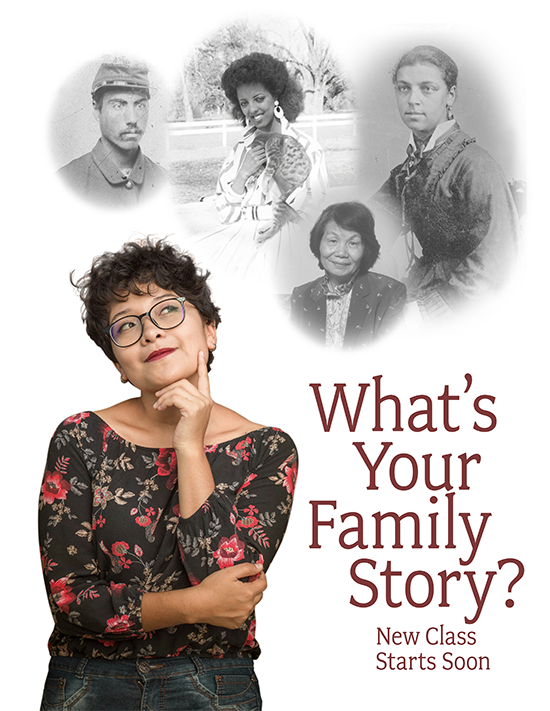
BEGINNING GENEALOGY CLASS STARTS
TUESDAY, MAY 13
Motivated to learn more about your family’s story? Want to learn how DNA can help?SGS will be offering a new beginning Genealogy class in May. This class fun, online and interactive will give you the tools to succeed in your research.
This class includes four weekly sessions online with a fifth, optional session in person at the SGS library. The class covers how to successfully conduct, organize, and record research for your genealogy. How to begin? How to evaluate evidence? What are the best sources? Where are the records–online and off? What can DNA tell us?
Start your journey on a foundation of good habits and best practices. Participation will help you develop great genealogy skills. The course finishes with a list of favorite sources for additional learning and an optional meet-up with a personal research session at the SGS library.
There are two options for class time, both start on May 13, and both will be taught by Kathy Weber and Cecellia Rogers:
- Afternoon class, Tuesdays 1:00-2:30 p.m.
- Evening class, Wednesdays 7:00-8:30 p.m.
Weeks 1 – 4 will meet virtually and consist of lecture, discussion, and workshop for one-and-a-half-hours each session.
Week 5 (optional) includes a library tour and one-on-one research assistance.
There is a limit of 20 people per class. Class fee $80 (SGS members $60).
Stock image by Rochelle Lee / Unsplash
TWO EXCITING TOURS FROM SGSJoin SGS Tour of UW Special Collection April 8
Join a private tour of University of Washington Archives and Special Collections. See what’s in the Special Collections and hear how this unique collection was built. Gain first-hand perspective on how to access these records of original Pacific Northwest sources for your genealogical research. SGS Vice President Lisa Oberg, Director of Special Collections of the UW Library, will share insights into the resources available in this fascinating collection.
Exact details about when and where to meet will be delivered several days in advance to those who register for the field trip. The tour will start around 10:30 a.m. Optional lunch on campus to follow.
Registration fee: $20 (SGS Members $10)
Lisa Oberg received her Master of Librarianship degree from the University of Washington, where she is the Director and History of Science and Medicine Curator for Special Collections in the UW Libraries. Lisa regularly gives genealogy-related lectures at the Seattle Genealogical Society, across the country virtually, and teaches an online course aimed at library staff serving genealogists through the University of Wisconsin’s School of Library and Information Studies.
Explore the Secrets of Seattle’s
Disappearing Denny Hill May 14
Between 1898 and 1930, Seattle completed its most audacious engineering change by eliminating Denny Hill at the north end of downtown. By the end of the project, Seattleites had washed and scraped more than 11 million cubic yards of landscape, reducing the previously 240-foot-high mound to its present pancake topography. Join author-naturalist David B. Williams on May 14 as he guides attendees on this walking tour of this historic part of Seattle. Williams will discuss the full scope of this massive regrade project, point out often overlooked but still existing evidence of the topographic changes, and explain how this reshaping of the Seattle’s landscape continues to shape Seattle and those who call it home.
The walk covers about two miles of flat terrain and lasts between 90-120 minutes, depending on how many questions we ask.
Registration fee: $40 (SGS Members $30)
David B. Williams is an author, naturalist, and tour guide whose award-winning books include Homewaters: A Human and Natural History of Puget Sound and Too High and Too Steep: Reshaping Seattle’s Topography, as well as Seattle Walks: Discovering History and Nature in the City. His newest book, Wild in Seattle: Stories at the Crossroads of People and Nature is a best of collection from his free weekly Substack newsletter, the Street Smart Naturalist.edc.
FAMILY HEIRLOOMS SHED LIGHT ON
A FAMILY’S FRIENDSHIP WITH THE LINCOLNS
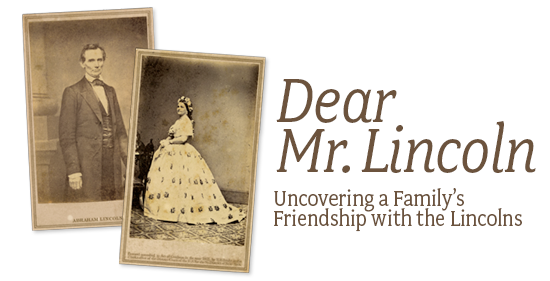
This April is the 160th anniversary of Abraham Lincoln’s assassination. Join Caroline Van Deusen for Second Saturday April 12 at 1 p.m. as she explores how family heirlooms rediscovered in attics, archives, and personal collections helped piece together a fascinating story of a family’s enduring friendship with the Lincolns. She will read excerpts from her great-grandmother’s diaries and letters, offering a firsthand account of her friendship with Mary Todd Lincoln.
Caroline Welling Van Deusen specializes in custom curatorial services, preservation, project management, and digital stewardship. She is the Private Archivist and Project Director for the E-Archives-Collection of Henry Austin Clark Sr. and has worked with multiple repositories. Caroline is a contributor to the Armchair Historians Podcast and an author and contributing editor for the White House Historical Association. Her blog is Lost + Found History.
NEXT MONTH’S SECOND SATURDAY: “Jewish Genealogy 101,” presented by Rhoda Miller. Sign up separately for this event held May 10.
Photos courtesy of Library of Congress
SGS MEMBERS – VOTE!
The annual election is upon us! SGS Members, please check your email for your election letter, sent April 1, 2025 (members without an email on file will receive their ballot by postal mail). It has all the information you’ll need to vote for the officers and directors who will lead the society during 2025-26, as well as a proposed change to our bylaws. If you can’t find your election letter, go to the SGS website Members Home area and log in. Look for the link “SGS 2025 Election – Vote!”. All ballots must be submitted by April 30th, 8:00 pm.
SIG HIGHLIGHTS:AI and Organizing SIG Start This Month
SGS had been starting up a lot of new Special Interest Groups in the past year. In April two more groups will join the line up:
- Artificial Intelligence (AI) for Genealogy will have its first meeting April 3 at 6:30 p.m.
The explosive growth in AI has lead to many applications for it in genealogical research. Do you use AI in your research or want to learn more about how to do so? Email: SGSAISIG@seagensoc.org (Subject: AI SIG).
- Organizing for Genealogy will kick off Monday, April 7 at 7 p.m.
Get out from under that pile of papers and digital files associated with your research. Share information and discuss organization tips, techniques, and habits to enhance your genealogical journey.
Learn about the many SIGs offered by SGS on our webpage. These include the recently added groups focused on Eastern European genealogy and Mexican ancestry, as well as the Pacific Northwest interest group formed last spring.SGS SIG Leader Advices Backing Up 23andMe Data
The SGS DNA Interest Group advises all members that are 23andMe customers to promptly save their raw DNA file[if not done previously] and any important DNA match information. Given recent financial and leadership challenges within the company, it is always wise to safeguard DNA Test information for future reference.
Misinformation is circulating, often from sources unfamiliar with genetic genealogy. We encourage you to stay informed, avoid unnecessary concern, and focus on preserving your data.
Discoveries Made at SGS Library
courtesy Jill Morelli
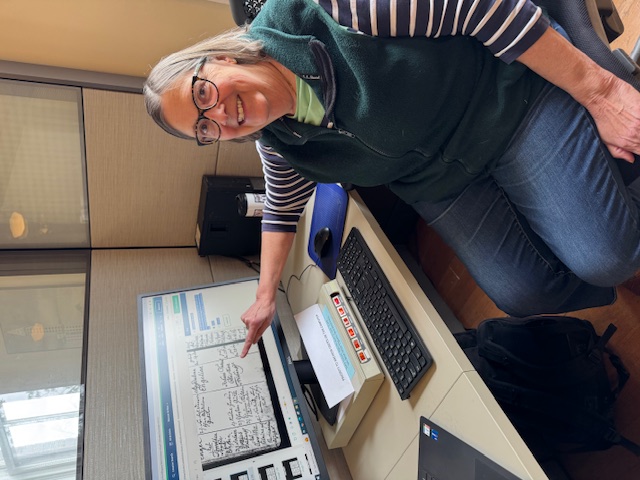
Mary Roddy, CG, CGG discovered the baptismal record of her 3rd great grandfather in the SGS library, using our newest database, Archion. As a bonus she got the next generation as well! Congratulations.
LOOKING FOR MEMBERS TO SHARE THEIR EXPERIENCE
Do you use a software program on your computer or tablet to record your family tree (e.g., Family Tree Maker, Roots Magic, Legacy Family Tree)? Would you be willing to share with others information about the program you use? We’re looking for answers to simple questions such as: cost ease of use, learning curve does it interface with online sites such as Ancestry or FamilySearch? what features you like best what it does NOT do so well anything else significant to you as a user. We’d like to put together a panel of 4 or 5 genealogists like yourself for a virtual (Zoom) meeting to present a brief summary — just 10 minutes or so–and then answer questions from viewers. If you would be willing to do this, please email Education@seagensoc.org and tell us what software and what device (e.g., laptop, phone, tablet) you usually use. This would probably be on either a Second Saturday or a Virtual Sunday (3rd Sundays of the month), so let us know if you have any conflicts with those dates in the next 3 or 4 months.
SGS LIBRARY NEWS:
Library Evening HoursLooking for a quiet, friendly place to spend an evening doing research? Look no further — the SGS library is open on the third Wednesday of the month from 6PM to 8:30 PM. Evening hours will continue through June.
Hidden Gems in the LibraryHave you explored our collection of the Postmarked Washington books by Guy Reed Ramsey? In his position as a salesman in the lumber industry, Mr. Ramsey traveled throughout the state compiling historical information on the post offices and the communities served by the post offices. Although some of Mr. Ramsey’s manuscripts were published, the unpublished manuscripts, which were gifted to the Washington State Library for preservation microfilming, are being made available through a State Library project. Find out more about the project here.
SGS CALENDAR OF EVENTS Good Shepherd Center, Suite 302
4649 Sunnyside Ave N
Seattle, WA 98103
206 522-8658
Hours : Tuesday, Wednesday, Thursday, Friday, and Saturday** 10:00 a.m .- 3:00 p.m. **
Always check the SGS Website Calendar of Events for the meeting links, registration, or for last minute updates or changes to the schedule. Be advised you may need to register in advance to join a meeting. All times listed are Pacific Time unless otherwise noted Wednesday, April 2, 2025, 6:30 p.m.-7:30 p.m., Pacific Northwest Interest Group (Virtual), Share information and discuss Pacific Northwest genealogical research. Register on the SGS website.Thursday, April 3, 2025, 6:30 p.m.-8:00 p.m., NEW! Artificial Intelligence for Genealogy SIG (Virtual), Join this dedicated community for exploring the intersection of artificial intelligence and genealogical research. For more information or to express interest in this SIG, email SGSAISIG@seagensoc.org.
Saturday, April 5, 2025, 10:15 a.m.- 12:15 p.m., FamilySearch SIG, Discover the many ways to use the FamilySearch website in your research. Meeting includes instruction and time for Q&A. Email SGSFamilySearchSIG@seagensoc.org to get on the email list
Sunday, April 6, 2025, 1:00 p.m.-3:00 p.m., DNA Workshop, with Cary Bright and Craig Gowens. To participate you need to be on the SGS DNA Interest Group email list. Contact Cary Bright at sgsdnasig@seagensoc.org to join.
Monday, April 7, 2025, 10:00 a.m.-11:30 a.m., Brags & Bricks Social Interest Group (Virtual), Join us for an informal social gathering. Share your recent genealogical successes and challenges, or just come to hang out with other genealogists. See SGS Calendar for more information.Monday, April 7, 2025, 7:00 p.m.-8:30 p.m., NEW! Organizing for Genealogy SIG, Share information and discuss organization tips, techniques, and habits to enhance your genealogical journey. Contact Susan McKee at sgsOrganizingsig@seagensoc.org to join.
Tuesday, April 8, 2025, 10:00 a.m.-11:00 a.m., Tech Tuesday (Virtual), informal consultation time on DNA, genealogy software, or genealogy-related technical issues. All are welcome. No appointment necessary. Bring us your problem; we’ll try to help.
Tuesday, April 8, 2025, 10:30 a.m., Tour of UW Special Collections, Tour of University of Washington Special Collections with SGS Vice President Lisa Oberg, Director of Special Collections of the UW Library. Register here.
Tuesday, April 8, 2025, 6:30 p.m.-8:00 p.m., NEW! Ancestry Users SIG (Virtual), The Ancestry Users Special Interest Group is for people who use Ancestry.com (and AncestryDNA) to research their family histories. Email SGSAncestrySIG@seagensoc.org.
Thursday, April 10 2025, 7:00 p.m.-8:30 p.m., NEW! Publishing SIG, Participate in writing and publishing the SGS Journal twice a year. Email SGSPubSIG@seagensoc.org.
Saturday, April 12, 2025, 1:00 p.m.-2:30 p.m., Second Saturday, “Lost + Found Friendship” Presented by Caroline Van Deusen. Family heirlooms rediscovered in attics, archives, and personal collections helped piece together a fascinating story of a family’s enduring friendship with the Lincolns. Register here.Sunday, April. 13, 2025, 1:00 p.m.-3:00 p.m., Scandinavian Interest Group SIG (Virtual), Share information and discuss Scandinavian ancestral research. This month will feature two case studies: A Journey to Norway and Finding Gustaf Malmgren’s Parents (Sweden). Register here.
Monday, April 14, 2025, 10:00 a.m.-11:30 a.m., Brags & Bricks Social Interest Group (Virtual), Join us for an informal social gathering. Share your recent genealogical successes and challenges, or just come to hang out with other genealogists. See SGS Calendar for more information.Monday, April 14, 2025, 1:00 p.m.-2:30 p.m., SGS Board of Directors Meeting (Virtual), All SGS members are welcome to attend. SGS is an all volunteer organization. Please be involved. Members must sign in to website to see Zoom link.
Tuesday, April 15, 2025, 10:00 a.m.-noon, “Pass It On” Writers’ Group, Create your family history and share with others in an effort to improve your writing. This group is currently accepting new members. Send queries to SGSPassItOn@seagensoc.org.
Wednesday, April 16, 2025, 6:00 p.m.-8:30 p.m., SGS Library Evening Hours, Looking for a quiet, comfortable place to work on your genealogy research? Join us on the 3rd Wednesday of the month during our evening hours.
Saturday, April 19, 2024, 10:00 a.m.-noon, Irish SIG (Virtual), with Susan McKee. Share information and discuss Irish ancestral research. View SGS calendar for details on joining this group.
Saturday, April 19, 2025, 1:00 p.m.-3:00 p.m, German SIG (Virtual), Share what you know OR get help with problems in your own research. Register on the SGS website.
Sunday, March 16, 2025, 1:00 pm- 2:30 pm, Virtual Sunday: Something Old, Something New, Topic TBD. See the SGS website Calendar of Events for further information. Please register in advance.
Monday, April 21, 2025, 10:00 a.m.-11:30 a.m., Brags & Bricks Social Interest Group (Virtual), Join us for an informal social gathering. Share your recent genealogical successes and challenges, or just come to hang out with other genealogists. See SGS Calendar for more information.Monday, April 21, 2025, 7:00 p.m.-8:30 p.m., Write It Up! SIG (Virtual), Join this group to share and discuss writing projects, resources, and ideas. To join or learn more, contact Sheyna Watkins at sgsWriteItUpSIG@seagensoc.org.
Tuesday, April 22, 2025, 10:00 a.m.-11:00 a.m., Tech Tuesday (Virtual), informal consultation time on DNA, genealogy software, or genealogy-related technical issues. All are welcome. No appointment necessary. Bring us your problem; we’ll try to help.
Wednesday, April 23, 2025, 7:00 p.m.-8:30 p.m., Mexican SIG (Virtual), Share information and discuss Indigenous North American, Spanish, Cuban, and Hispanic genealogical research. Email Diane Hughes-Hart at SGSMexSIG@seagensoc.org to join.
Saturday, April 26, 2025, 10:00 a.m.-12:30 p.m., DNA SIG, Join our quarterly meetings to discover what’s new in genetic genealogy and learn more about select, in-depth topics. Email SGSDNASIG@seagensoc.org to join.
Monday, April 28, 2025, 10:00 a.m.-11:30 a.m., Brags & Bricks Social Interest Group (Virtual), Join us for an informal social gathering. Share your recent genealogical successes and challenges, or just come to hang out with other genealogists. See SGS Calendar for more information.Thursday, May 1, 2025, 6:30 p.m.-8:00 p.m., NEW! Artificial Intelligence (AI) for Genealogy SIG (Virtual), At this first meeting, we will get acquainted, discuss ideas and goals for this new SIG. Topic: “AI and genealogy. What?”, Email SGSAISIG@seagensoc.org.
Saturday, May 3, 2025, 10:15 a.m.- 12:15 p.m., FamilySearch SIG, Discover the many ways to use the FamilySearch website in your research. Meeting includes instruction and time for Q&A. Email SGSFamilySearchSIG@seagensoc.org to join the mailing list.
Sunday, May 4, 2025, 1:00 p.m.-3:00 p.m., DNA Workshop, with Cary Bright and Craig Gowens. To participate you need to be on the SGS DNA Interest Group email list. Contact Cary Bright at sgsdnasig@seagensoc.org to join.
Monday, May 5, 2025, 10:00 a.m.-11:30 a.m., Brags & Bricks Social Interest Group (Virtual), Join us for an informal social gathering. Share your recent genealogical successes and challenges, or just come to hang out with other genealogists. See SGS Calendar for more information.Monday, May 5, 2025, 7:00 p.m.-8:30 p.m., NEW! Organizing for Genealogy SIG, Share information and discuss organization tips, techniques, and habits to enhance your genealogical journey. Contact Susan McKee at sgsOrganizingsig@seagensoc.org to join.
Wednesday, May 7, 2025, 6:30 p.m.-7:30 p.m., Pacific Northwest Interest Group (Virtual), Share information and discuss Pacific Northwest genealogical research. Register on the SGS websiteThursday, May 8 2025, 7:00 p.m.-8:30 p.m., Publishing SIG, Participate in writing and publishing the SGS Journal twice a year. Email SGSPubSIG@seagensoc.org.
Saturday, May 10, 2025, 1:00 p.m.-2:30 p.m., Second Saturday, “Jewish Genealogy 101” Presented by Rhoda Miller. Register here.Monday, May 12, 2025, 10:00 a.m.-11:30 a.m., Brags & Bricks Social Interest Group (Virtual), Join us for an informal social gathering. Share your recent genealogical successes and challenges, or just come to hang out with other genealogists. See SGS Calendar for more information.Monday, May 12, 2025, 1:00 p.m.-2:30 p.m., SGS Board of Directors Meeting (Virtual), All SGS members are welcome to attend. SGS is an all volunteer organization. Please be involved. Members must sign in to website to see Zoom link.
OUR NEIGHBORS AND BEYOND Family Tree Maker SIG
Eastside Genealogical Society
Friday, April 18, 2025, 10:30 p.m.–12:30 p.m. Join Eastside Genealogical Society and SGS to learn and share tips and tricks for using Family Tree Maker by Software MacKiev. The meetings open about 15 minutes in advance. You can join and/or leave whenever you have to, and you may email your question(s) in advance or bring them up during the meeting.
When Hell Came to Sharpsburg: The Battle of Antietam and its Impact on the Civilians Who Called it Home (Virtual)
North Hills Genealogists
Monday, April 21, 2025, 4:00 p.m.—6:00 p.m.
Join North Hills Genealogists and author Steven Cowie as he discusses his book on this Civil War battle. Cowie dedicated fifteen years to researching the Battle of Antietam for this book. Get more information on the website and register here.
Jumping the Pond: Connecting Immigrants to Their Homeland
Lower Columbia Genealogical SocietyThursday, April 10, 2025, 6:45 p.m.
Join speaker Mary Kircher Roddy as she helps make connections between immigrants and the old country. Sign up for Zoom link on their website.
Researching Your War of 1812 Ancestor
Olympia Genealogical Society
Thursday, April 10, 7:00 p.m. (Zoom opens at 6:30 p.m.)
Researching a War of 1812 Ancestor can involve a set of interesting records. Join Craig R. Scott as he examines types of service, compiled military service records, how to compile your own service record, pension applications, settled accounts, and where other records can be found. For more information visit their website.
Join SGS Today* to renew your membership: log in on the Members Home page
and click the green renew membership button.
April 1, 2025
SGS eNews! comes out the first of every month.