Please join us on Tuesday, December 10th for our Holiday Gala, beginning at 6 pm.
This is always a “fun” event. A chance for us to socialize, share some
great snacks, and maybe even play some genealogy games. Bring a friend
— or two! This is a great way to introduce family and friends to
TPCGS.
Bates Technical College South Campus,2201 S 78th St, Building E, Tacoma, WA.
Take exit 129 onto Tacoma Mall Boulevard; Turn left and go to 78th Street; Turn right into the college: 2201 S 78th St.We look forward to seeing you there!
TIP OF THE WEEK – DIGITAL LIBRARY AT FamilySearch
Thanks to Dick Eastman and his free online genealogy newsletter for
reminding us about the FamilySearch Digital Library and its collection
of more than 440,000 digitized genealogy and family history books and
publications right at our fingertips.
At the Digital Library, you can dive into family histories, county and
local histories, genealogy magazines, gazetteers, and even medieval
histories and pedigrees. (You do have your free FamilySearch account,
right? Be sure to be logged in.)
Visit FamilySearch.org, and click Search in the top menu. Then, in the drop-down menu, click Books.
The content of the digital library is freely viewable. On the home
page of the Digital Library, use the simple search bar to search by a
surname, historical events, groups of people, book title, or names of
places. Go ahead! Try it.
Check back often as more and more books are being added to the Digital Library every day.
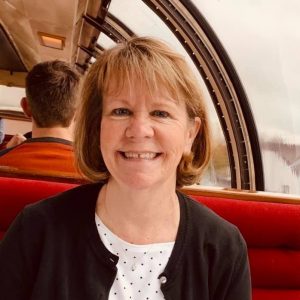
KIM WAGGIE, VOLUNTEER OF SUMMER QUARTER Each quarter the Seattle Genealogical Society recognizes one volunteer as our Volunteer of the Quarter. Our volunteer for Summer 2019 Quarter is Kim Waggie, one of SGS’s dedicated Desk Volunteers.
Kim’s interest in genealogy began 20 years ago. As she became more enthralled with genealogy, she enrolled in & completed the certificate program in Genealogy & Family History at the University of Washington. Her research focuses on Germany & the Midwest, especially northwest Iowa. Kim’s final paper was about her great-grandmother who moved to Iowa with her second husband. She also researched a Scotch-Irish line in her family that migrated, beginning in late 1700’s Virginia, to Tennessee, Kentucky, and finally landed in Southern Illinois. Kim has conducted research while on trips to Newell, Iowa to see family. She uses online Iowa cemetery & newspaper records, and resources at the local historical society. Other favorite resources are the SGS Library (of course!), Ancestry, and FamilySearch. Kim is currently researching her 3rd great grandfather from Southern Illinois. At age 50, he volunteered to fight in the Civil War, although military records list his age as 44. He contracted typhoid fever in Pittsburgh and died just months after enlisting.
About five years ago, Kim joined the Seattle Genealogical Society. For two plus years, she has served as a Desk Volunteer, primarily on Fridays. Kim likes meeting other genealogists and helping visitors to the SGS library explore the resources, including Seattle city directories and college yearbooks.
Kim enjoys writing. At the SGS spring seminar, she hosted the table session focused on writing family history where, she reports, there was a lively discussion. Kim appreciates our SGS Seminars, Second Saturday series, and SIG meetings. She feels volunteering at SGS affords her the opportunity to meet and help others, while continually learning and improving her own genealogical research skills.
Besides genealogy, Kim plays French Horn in community orchestra and bands. She is a board member of Rain City Symphony. Kim Waggie is an example of the highly qualified, well-informed, helpful Desk Volunteers who make a visit to Seattle Genealogical Society Library worthwhile.
Next time you visit the SGS Library and see Kim at the desk, say hello. She will be glad to assist you.
SGS HOLIDAY GATHERING Saturday, December 14, 2019 1:00 pm – 4:00 pm Join in the fun at the SGS Library. Bring your favorite cookies and genealogical gems to share!
IT’S THE GIVING SEASON! Please consider making a tax-deductible contribution to support the Seattle Genealogical Society and Library during our Annual Appeal this December. SGS 2019 Annual AppealDonate Now Online If you have a Paypal account, you may donate to SGS via the Paypal Giving Fund. The transaction fee will be waived and your gift will be matched with an additional 1% by the fund. Go to: Paypal Giving Fund – SGS THANK YOU!
SAVE THE DATE
Jewish Genealogical Society of Washington State, LDS Factoria Bldg, 4200 124th Ave SE, Bellevue, WA Monday, December 9, 2019
Doors open at 6:30 PM and the presentation starts promptly at 7:00 PM
Come
early to network with other attendees and to enjoy the extensive JGSWS
library resources, including FREE access to the FHC computers and
genealogical websites
Free Wi-Fi, admission, & refreshments
At this meeting, Cary Bright will present“DNA PAINTER: Cousin Matching and Its Five Tools”. Cary also chairs a monthly DNA Workshop at SGS
Spring 2020 SGS Seminar with Fritz Juengling, Fairview Christian School, 844 NE 78th St, Seattle, WA Saturday, May 16, 2020 Mr Juengling is the German, Dutch and Scandinavian Research Specialist at the Family History Library in Salt Lake City. SGS is happy to have Fritz as the presenter for our spring seminar.
SGS CALENDAR OF EVENTS Unless otherwise indicated all programs will be at the SGS Library, 6200 Sand Point Way NE, Seattle. Check the SGS Web Site for additions, changes, and corrections. Programs may be canceled or postponed because of inclement weather. The Library will be closed Dec 21, 2019 – Jan 1, 2020 for the Winter Holiday. DECEMBER
Saturday, December 7, 10:15 am – 12:15 pm, Family Tree for Family Search Interest Group, with leader Lou Daly. Saturday, December 14, 1:00 pm – 4:00 pm, Second Saturday – Holiday Gathering – bring your favorite cookies and genealogical gems to share.
THE GENEALOGICAL FORUM’s Thursday Evening E-News Special Edition November 28, 2019
We Give Thanks…
I hope you enjoy this Thanksgiving holiday. Please know how grateful all of us at the GFO are for all of you who support the Genealogical Forum of Oregon. Tracing family history has become one of the most popular hobbies in the country. We’re making very personal connections, not only to history, but to distant living relatives we never knew before. (Thank you, internet connections and the explosion of DNA testing.) My deepest thanks go to the more than 100 volunteers who keep the GFO alive. This is not a mere platitude. The GFO literally would not exist, nor keep the doors open daily, without volunteers. They greet you, help with research, handle membership, index records to make them searchable, number and catalog more than 50,000 holdings and provide countless classes all year long so we can share what we’re learning with each other. I’d also like to offer my gratitude to the volunteers who serve on our Board of Directors. They give even more time, monitor our modest finances, guide the organization and strive to keep us relevant in this increasingly digital (and often impersonal) world. Finding family is personal. Meaningful. Fun! Thank you for helping the GFO to preserve and share heritage since 1946.
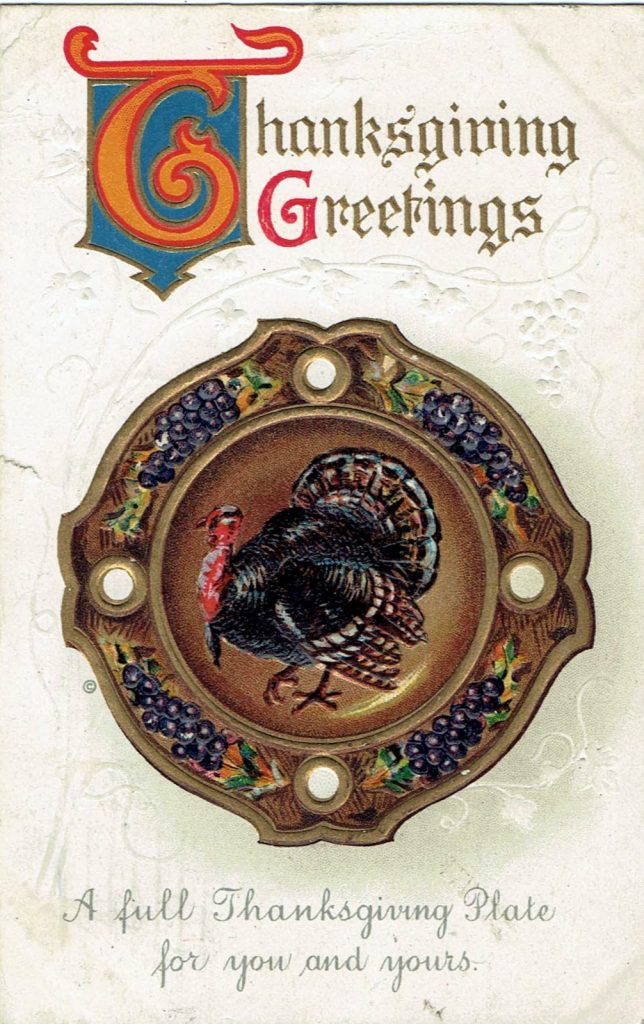
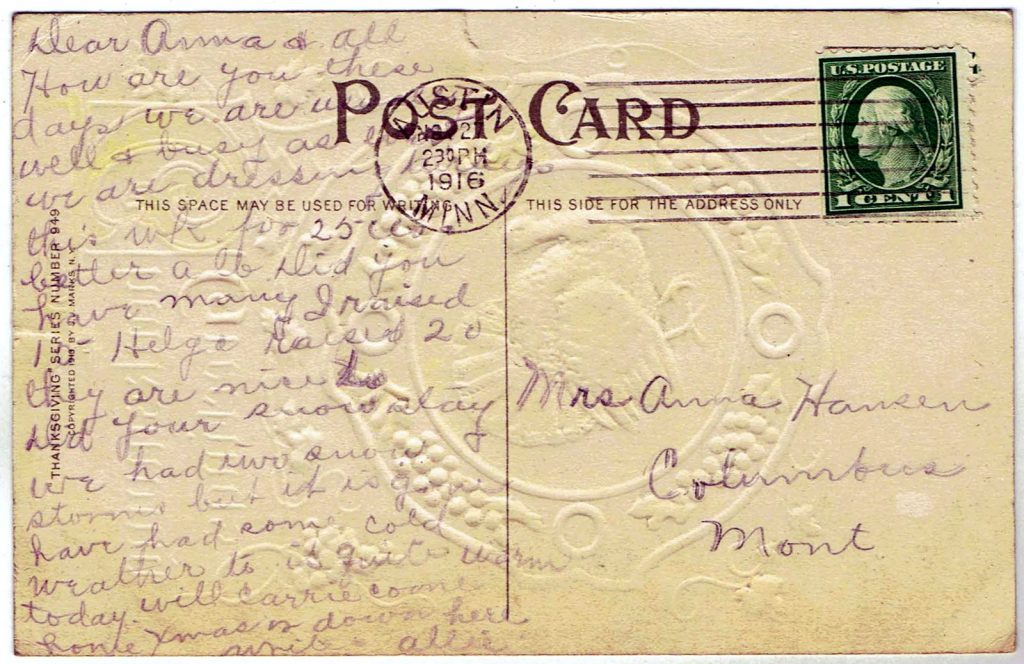
This is a postcard to my grandmother Anna (Dillingham) Hansen from Allie. Allie is Alice Costello (DeRemer) Hansen, wife of Peter Hansen, the older brother to my grandfather Anton Hansen. Peter was the first of five Hansen brothers to come to Austin Minnesota from Denmark in the 1880s. Four of the brothers never left Minnesota, but my grandfather was the one that went west, first to Columbus Montana and then to Blanchard Idaho.
Anna’s Dillingham family came to New England in 1632, and they were Quakers. They later married into six Mayflower families, Alden, Cooke, Doty, Hopkins, Mullins, and Soule.
GRAND OPENING December 7, 2019 Announcing Grand Opening of CCGS Research Library at 3205 NE 52nd St., Vancouver, WA 98663; Open House begins from 11am and Mayor Anne McEnerny-Ogle will officiate at 5pm ribbon cutting ceremony. Serving Paper Tiger Coffee Roasters custom CCGS coffee blend “Library Blend,” Tea and Christmas cookies. See you there!
WSGS has received an invitation to attend Clark County Gen
Society’s Grand Opening of their new research library on December 7,
2019 at 5 pm 3205 NE 52nd St Vancouver, WA RSVP ccgslibrarian@outlook.com
Olympia Genealogical Society’s December meeting will be ” DNA Redux.” Using DNA for genealogy is no longer the “new thing” and we should all have some knowledge about it. At our December 12 meeting, we will get a crash refresher course about DNA— what it is, how to test it and what it can, and can’t, tell us about our ancestors. Our presenter is longtime OGS member, Carol Ballard, who also leads the genealogy and DNA efforts at Panorama. Please join us for our 7:00 pm meeting and presentation at Thurston County Courthouse, Building 1, Room 152. Info, 360-349-2493 or www.OlyGenSoc.org.
=================================================== Joyce T. Ogden jtogden@comcast.net
Not many readers responded to our Survey
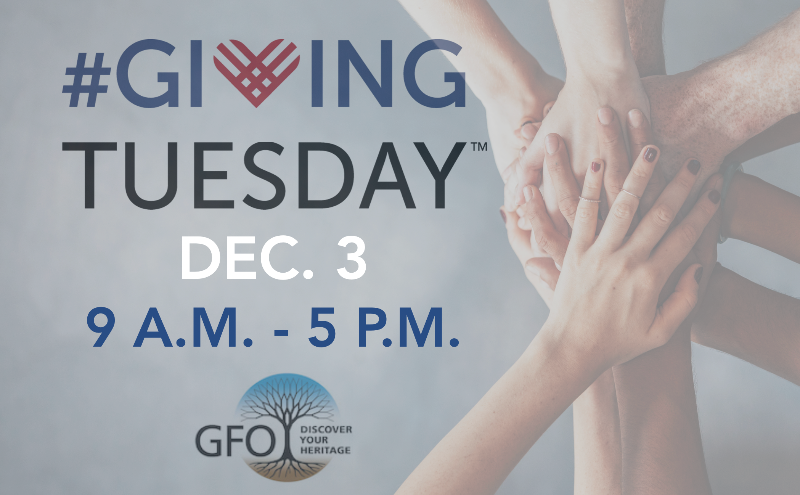
last week asking about participation in our upcoming Giving Tuesday –
which has us a little concerned. Of those that did, there was good mix
of all day, morning, and afternoon participants. We need your help! Remember,
volunteering for Giving Tuesday will entitle you to a free GFO pass
which you can use later or pass on to someone else. And there will be
food! For GFO, GivingTuesday isn’t about fundraising. It’s
about banding together for a volunteer blitz to accomplish one large
task. What if all GFO’s members came together on just one day to give
back by lending their time and talent?
Please save the date: December 3rd and come to the GFO all or part of the day to help. GFO will provide pastries, fruit, and coffee in the morning, pizza and pop in the afternoon. You provide the people power. Please give some time.
GFO Star: Kelly Thornburg
Our
GFO Star for December is Kelly Thornburg. When the GFO needed
volunteers for its for its annual financial review, Kelly offered to
help. She
has decades of accounting experience and happens to be the mother of
our incoming treasurer Erin Randall. While not a GFO member, we welcomed
a set of “outside expert” eyes. She lives in Pendleton,
and drove over three hours – twice! – to help pore over long columns of
numbers and match up receipts in working sessions of the Financial
Review Committee. A million thanks, Kelly!
SPECIAL OFFER! If you give a GFO membership as a gift, we’ll give you two extra months on your current membership! If you give two gifts, you’ll get four extra months. Give the meaningful gift of family history this holiday season with a membership to the GFO. It’s so easy. Visit our gift page for information.
Join
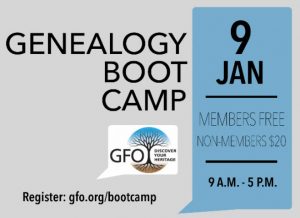
Laurel Smith on Saturday, January 9 from 9:00 am – 5:00 pm at the GFO
for a day of beginning genealogy. There will be sessions about the
census, vital records, discussions about genealogy software and database
use, organizing your research, using Ancestry.com, and more — all
geared toward beginners — but basic computer skills are a prerequisite.
All
communications are done via email, and you must be able to download and
print the class notes. Bring a sack lunch, snacks, and a beverage so
you can keep going as the class does. GFO members may attend for free, non-members $20.
The
Clark County Genealogical Society has moved. Come celebrate their grand
opening at their new research library on December 7, at 5 p.m. Address: 3205 NE 52nd St., Vancouver, WA 98663 Please RSVP to ccgslibrarian@outlook.com.
If
you work at Intel – or at any company that offers matching funds to
charitable organizations – you have the chance to double your donations
to the GFO!
If you’re unsure if your company provides matching funds to the GFO, inquire with your HR department.
What may qualify for matching: ▪ General monetary donations to the GFO ▪ Membership dues ▪ Volunteer hours (Intel matches hours at $10/hour) For Intel, the following people are eligible to request matching donations: ▪ Active U.S. blue badge employees ▪ Spouses of Active U.S. blue badge employees ▪ U.S. Intel Retirees *Tip:
For Intel Donors who want to reduce the amount of fees taken out of
your matching donation, you can make a payment directly to the GFO and
then submit a match request through Intel’s Benevity Portal. If you make a payment to GFO via PayPal or credit card directly through Benevity, they will take out management fees of up to 3%. Your company may offer a similar payment alternative.
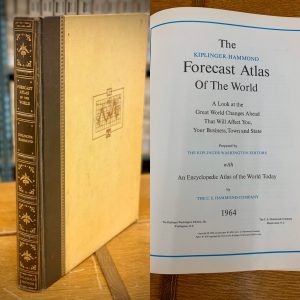
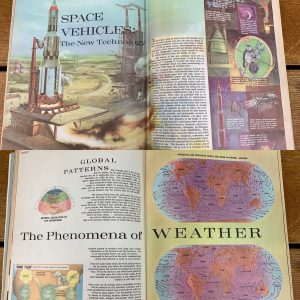
This week we have a surplus book that’s just plain fun. The Forecast Atlas of the World prepared by the Kiplinger Washington Editors, who, in 1964, took a stab at forecasting the future. This
300-page, hardcover book is chock full of full-color spreads on topics
ranging from space technology to population growth to climate.
But it’s not just future casting. It also holds reams of factual statistics on all 50 United States. This
snapshot in time can be yours. It’s in very good condition with no
marks inside, but with some wear on the edges of the cover. Pick-it-up price: $10 Mail-it-to-you price: $15 Please email booksales@gfo.org if you’re interested.
New Survey: Thanksgiving Traditions Thanksgiving
is right around the corner. We’d like to know if you have family
traditions or recipes you’ll be including this year.
Saturday, November 23rd DNA Beginners 9:00 a.m. – 12:00 p.m. will have two guest speakers, Phyllis Coyne and Sheryita Mason-Cruise. Besides their presentations, Emily Aulicino will speak on two short topics: Quick Tips for Finding Common Ancestors in AncestryDNA and atDNA Tools: CAUTION . Download handouts here. Burgeoning Connections and Surprises through DNA Matches. Speaker Phyllis Coyne will share her journey as a beginner using DNA match results to expand her family tree. She has experienced the exhilaration of finding previously unknown connections, long lost cousins, and family secrets with the supportive genealogical comradery of newly discovered relatives. Finding Ancestors And Connecting Living Family With DNA Testing. Our second speaker, Sherylita Mason-Cruise, will share some examples of how she located birth family for her family members as well as finding biological family for her friends. She has united testers with their siblings, and confirmed connections to prove their parents. Every path to breaking a brick walls is different, and the more ideas you get from those who are successful, the better chance you have in eliminating your dead-ends.
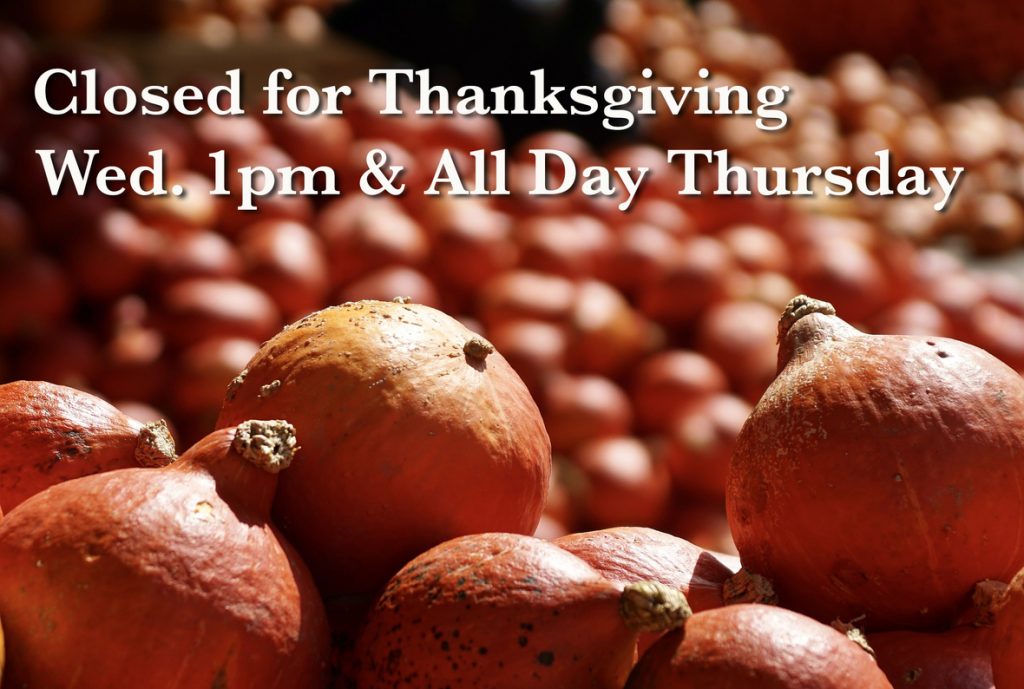
You are welcome to send your questions before the meeting. Email: dna@gfo.org Sunday, November 24th Library Work Party 9:00 a.m. – Noon There’s another work party at the GFO library today! We’re getting ready for GivingTuesday. There’s lots to do and we’d love to have your help. Doors open at 9 and work usually wraps up around noon. Some people come for just an hour or so; others work the full time. You are welcome to do either. Any time you can share is valuable. Hope to see you there. Wednesday, November 27th GFO Library Closes at 1:00 p.m. Thursday, November 28th GFO Library Closed for Thanksgiving.
Toys for Tots, Christmas Cookies and Pack up EWGS Supplies
(EWGS Meetings) 12:30 pm to 3:00 pm
Spokane Public Library Auditorium – Downtown Spokane
Please bring a new, unwrapped toy or book as a donation for the Marine Corps Toys for Tots to our annual Christmas meeting. Bring cookies with the recipe to share as we celebrate our last meeting in the downtown library. If willing feel free to share a brief (5-7 minute) Christmas memory. Remember, visitors are always welcome so bring friends.
You are free to copy articles to any non-commercial web site or message board or printed publication you wish. Don’t bother to ask permission, just do it.