America at 250 Edward Trabue

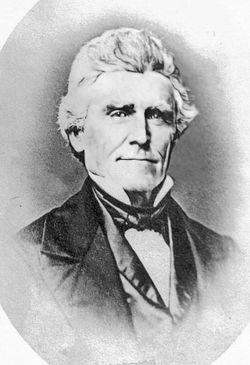
Col. Edward Trabue

“My grandfather’s name was Sir Anthony Straboo, but Colonel Byrd (of Virginia), set it down as Anthony Trabue, and so we write our names to this day.” — Colonel Daniel Trabue’s Journal.

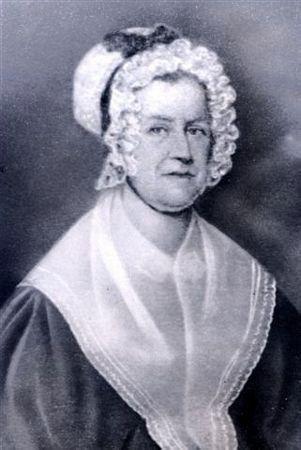
The Trabue family bloodlines runs across two continents and is very documented. Other historical figures dot the tree as well. Henry Clay, American Statesmen was the first cousin to Edward Trabue’s wife, Jane Elizabeth Clay (photo).

His father, John James Trabue, born in 1722 in Henrico, Virgina, was an Ensign in the Revolutionary War and received pay and bounty lands under an Act of Congress. Trabue and five of his sons were in the Revolutionary War …

Edward’s mother, Olymipia Dupuy hailed from a Huguenot family as did the Trabue’s, they had fled from France at he time of the bloody persecution against the dissenters of the Roman Catholics. John James and Olympia Dupuy Trabue built a large limestone home on Grier’s Creek in Woodford County near Tyrone, KY. It is on the National Registry of Historical Houses. John and Mary O’Rear’s family live in the house today.

The Trabue’s had 16 children. The four sons of John James Trabue and Olympia DuPuy Trabue—William, Col Daniel, Edward, and Stephen—married four daughters of Col Robert Haskins and his wife Elizabeth Hill Haskins— Elizabeth, Mary, Martha (or Patsy), and Jane Haskins.

Also, five of John James and Olympia Trabue’s sons James, John, William, Daniel and Edward fought in the Revolutionary War.

James Trabue – Born in 1745 in Chesterfield County, Va., was Commissary Gen. Under Col. George Rogers Clark; was Commissary Gen. in the Revolutionary War, in the Dept of KY. Surveyor with Col Daniel Boone: Died 1803 in Kentucky.

John Trabue – Born in 1754 in Chesterfield County, Va., was Col. in Revolutionary War; Deputy Surveyor of Kentucky lands under John May.

William Trabue – Born in 1756, Sergeant in the VA. Line in the Revolutionary War, given bounty land of 200 acres for his service.

Daniel Trabue – Born in 1760, Commissary General in Continental Army and served in the expedition under Col. George Rogers Clark. He was Issuing Commissary General under his brother, James Trabue, who was Commissary General; was at the surrender at Yorktown, served under Generals Lafayette and Muhlenberg, sheriff and Justice of the Peace in Kentucky, settled on Greer’s Creek, Fayette County, Kentucky. On July 13, 1778 Daniel Trabue became quartermaster sergeant of Logan’s fort. In a twelve-week span he recorded supplies, either bought or acquired by hunting of 84 bushels of corn, 724 pounds of pork, 2779 pounds of tame beef, and 2820 pounds of buffalo beef. (18) Daniel Trabue presided at the court martial of Daniel Boone. Family home in Columbia, KY. 8 children; One of Daniel’s children, 12-year-old Johnny, was murdered by the infamous Harpe Brothers during their 1798-9 foray through southern Kentucky and northern Tennessee during which they butchered more than 25 settlers.

Edward Trabue – Born 1762, Chesterfield, Va, enlisted at age sixteen and became a Colonel in the Virginia Militia in the Revolution War. He fought at Guilford Court House, NC 15 Mar 1781; was present at Gates’ defeat at Yorktown in 1782. Edward received a tract of 200 acres in Lincoln County from Patrick Henry, Esq., Governor of VA on March 24, 1783. The deed was issued at Richmond, VA, December 2, 1785. Edward Trabue and his wife Martha Haskins Trabue, a daughter of Col Robert Haskins and his wife Elizabeth Hill, of the Hills of Surrey, both of English origin, and descendants of the early Virginia Colonists, immigrated to Kentucky after the Revolutionary War.

The Trabue’s built for themselves a handsome home in Woodford County, near the Kentucky River and the home of Edward’s parents, John James and Olympia Du Puy Trabue. History of Woodford County relates the story that when General Lafayette toured America after the Revolutionary War in 1824-5, he visited Fayette and Woodford counties and upon meeting Edward Trabue he “put his arms around Edward and wept at the sight of a fellow Frenchman. He may well have become acquainted with Edward years before during the Revolutionary War. Edward died in 1814 and is buried in the family cemetery in Tyrone, KY.

Sources:

From Daniel Trabue ‘s Journal and family historical and genealogical research –

Colonial men and times; containing the journal of Col. Daniel Trabue, some account of his ancestry, life and travels in Virginia and the present state of Kentucky during the revolutionary period; the Huguenots, genealogy, with brief sketches of the allied families – 1915 by Harper, Lillie Du Puy Van Culin, editor; Trabue, Daniel, 1760-1840. Published by Philadelphia, Penna., Innes & Sons

https://archive.org/details/colonialmentimes00harp/page/n9/mode/2up

Trabue Family in America -Julie Trabue Yates and Dr. Charles C. Trabue 1983

Trabue, Charles C., ed. 1983. The Trabue Family in America, 1700-1983. Nashville, Tennessee: J.T. Yates & C.C. Trabue IV.

Trabue Family Tree – Georga Foster, 2001 – Ancestry

Trabue Family Reports – Southern Kentucky Researchers – https://www.so-ky.com/

Submitted by Georga Foster – Col. Edward Trabue is my third great- grand father.
America at 250 William Brate

Revolutionary War Soldier ancestor, William Brate, served New York. He served under Capt. William Winne’s company militia of NY with Col. Schuyler. He served under Van Denburgh’s regiment of Milita of NY.

He was born about 1749. He married Ariantje “Hannah” Moak in June 1770 in Albany, NY. The Niskatha US Dutch Reformed Records has their marriage banns recorded under Willem Bratt and Arriaantje Mook. Their children were Jacob Brate. She died in 1776. His second marriage was to Elizabeth Arnhout in 1776. Their children were Martinus, Frans, Baltus, Catherine Oliver, Harriette Haller, Margaret Moake, William, and Hannah Bratt. He died about 1820 in Bethlehem, New York. His will was dated March 18, 1820, and probated in Albany.

Submitted for Martha McNeill, a member of Mason County G.S.

America at 250 David Otis

Revolutionary War Soldier ancestor, David Otis, served for Massachusetts as a Private. He enlisted September 5, 1777. He served under Capts. Aaron Rowley and John Bacon, and Col. John Brown detachment of Berkshire County militia. He served under Capt. John Bacon’s company on an alarm to reinforce Gen. Stark at Stillwater.

He was born on June 3, 1743, in Montville, New London County, CT. to Deacon Joseph Otis and Elizabeth Little. He is listed in the Mayflower Births and deaths volumes. He married Mary “Molly” Miller Day in November 1766 in Colchester, CT. Their children were Lovina, David, Joseph, Perez, Mary Ann Kellogg, Abijah, Jacob Day, Achsah, Shubael, Selah, and Isaac. He came to Galway, NY from Berkshire County, Mass. about 1775. He lived in Richmond, Mass. some sixteen years, where most of his children were born. His second marriage was to Abigail Smith in 1783. He died on August 16, 1825, at age 82 in Galway, Saratoga County, NY.

Submitted for Martha McNeill, a member of the Mason County G.S. Davis Otis has a DAR ID #A084800. He has seven female descendants with DAR member #s. One male descendant with SAR #92789.

America at 250 Samuel Harrington

Revolutionary War Soldier ancestor, Samuel Harrington, served for Massachusetts. He was drafted from Worcester County militia to march to Horse Neck under the command Col. Converse but failed to join the regiment. He was then drafted from town of New Braintree into Capt. Timothy Page’s company. He served under Capt. Paul Mandell of Hardwich in the Crown Point Expedition in 1756. He served as a private in Capt. Timothy Bigelow’s company, Col. Artemas Ward’s regiment on the alarm of April 1775.

He was born on May 15, 1732, in Westborough, Worcester County, Mass., to Lieut. Samuel Harrington and Sarah Warren. He married Lucy Whitney in April 1756 in Westborough. Their children were Lois Hall, Nathaniel, Sarah Johnson Faulkun, Lucy Cutter Clark, Trceolince Blanchard, Abijah Shumway, Moses, Aaron, Nathaniel Dretain, Samuel, Asa, and Levi. He died October 22, 1803, in New Braintree, Worcester County, Mass. His will, filed in 1803, listed many of his children.

Submitted for Martha McNeill, a member of the Mason County G.S.

America at 250 Thomas Hall

Revolutionary War Soldier ancestor, Deacon Thomas Hall, served for New Hampshire. He served in the Continental Troops in the Drum and Fife.

He was born in August 1712, in Medford, Middlesex County, MA to Dea. Pacifull Hall and Jane Willis. He married Judith Chase of Sutton in June 1737. His second marriage was to Huldah Parke of Millbury, Mass in June 1758 in Sutton. He was admitted to the Congregational Church in 1735 and was chosen as Deacon. He was a farmer with his land next to his father’s farm in Sutton. His children were Judith Boyd, Abigail Bemis, Betty Lathe, Dr. Percival, Ensign Moody, Mary, Moses, Sarah Elizabeth, Thomas, Huldah Tabor. Son Percival became a physician and surgeon and served as such in Col. Ebenezer Leonard’s regiment in the Revolutionary War. Thomas died in September 22, 1797, at age 85 in Cornish City, Sullivan County, New Hampshire and was buried in Chase Cemetery in Cornish City.

Submitted for Martha McNeill, a member of the Mason County G.G. A male descendent has an SAR number 27602.

America at 250 Moody Hall

Revolutionary War Soldier ancestor, Moody Hall, served for Massachusetts and attained the rank of Ensign. He enlisted on June 27, 1777, at Ticonderoga under Col. Jonathan Chase’s regiment of militia.

He was born on February 21, 1760, in Medford, MA to Thomas Hall and Huldah Park. He married Lois Harrington in October 1784 in New Braintree, Worcester County, MA and she died in November 1807. His 2nd marriage was to Mary Eastabrook in June 1810 in NH. His children were Moody, Abigail Hammond, Asaph, Milton, Sophia Marietta Cobb, Adin Davis, Lucy Alvord, Lois Faribanks, Mary Freeman, Rev. Thomas, and Samuel Whitney. Son Moody was a missionary for the Cherokee Indians. Son Rev. Thomas was a graduate of Kimball Union Academy and Dartmouth College and was pastor of several churches in Vermont and New Hampshire. Son Samuel Whitney was a merchant in Boston. Moody died on February 28, 1813, at age 53 in Cornish, New Hampshire and was buried in the Chase Cemetery in Cornish City, Sullivan County, New Hampshire.

Submitted for Martha McNeill, a member of the Mason County G.S.

America at 250 Luke Ellis

Revolutionary War soldier, Luke Ellis, served for Massachusetts in the war as a rifleman. He served for the Sea Coast Defense under Capt. Henry Jenne and Col. Hathaway in 2nd Bristol infantry regiment. He responded to an alarm on Rhode Island in 1780. He also served under Capt. Thomas Crandon. He served for five months and ten days.

He was born circa 1755 in Massachusetts to Joseph Ellis and Martha Tinkham. He married Naomi Briggs in 1780 and married Elizabeth Macomber in 1784. His children were Benjamin Read, Joseph Phinney, Charles F., Lovina, Eliza, Sarah, Naomi, Mary Polly (Bennett), Deborah Macomber, and James. He died June 10, 1836, in New Bedford, Mass. He was a Mayflower Descendant.

Submitted for Martha McNeill, a member of the Mason County G.S. Luke’s DAR I.D. No. is A037795. He has five female descendants with DAR member numbers.

America at 250 Thomas Gould Alvord Sr.

Revolutionary War soldier, Sergeant Thomas Gould Alvord Sr., served both Connecticut and New York in the war as a cannoneer. He was in Capt. Joseph Thomas and Col. Lamb’s artillery regiment and was present at Cornwallis’ surrender. He served during the entire war for which he drew Lot No. 13 for 600 acres in Homer, NY. He was at the Battle of White Plains and was wounded by a musket ball which entered his arm and passed out near the elbow. The ball was picked up by a companion, Luke Wardsworth, who placed it in his own gun and sent it back to the enemy. At the Battle of Yorktown, he loaded and fired a cannon four times a minute for four hours, and when the balls gave out, they used old bolts, and pieces of log chain. He also served under Capt. William Judd and Col. Wyllys in the 3rd regiment.

He was born on March 1, 1742, in Durham, CT. to Asahel Alvord and Rachael Gould. He was raised by his uncle, Elijah Cowles, whom he accompanied to Farmington, CT and learned the trade of shoemaker. He married Keziah Orvis in 1762 and later widow Hannah Hart Byington. His children were Charles, Ebenezer, Elisha, Dioclesian, Asahel, Thomas Jr., Eunice, Harvey, Carobela, Keziah, and Arklymeny. He died on May 18, 1810, in Homer, Cortland Co., NY.

Submitted for Martha McNeill, a member of the Mason County G.S. Thomas DAR I.D. is A002136. He has 55 female descendants with DAR member numbers. He also has three male descendants with SAR member numbers.

America at 250 Thomas Gould Alvord Jr

Revolutionary War soldier, Private Thomas Gould Alvord Jr., served New York in the war. He enlisted at age 16 as a gunner in the 2nd artillery regiment under Capt. Joseph Thomas and Col. John Lamb. He served with his father. He was at Cornwallis’ surrender. He drew lot No. 56 for 600 acres of land in Homer, NY. But he was told by some land sharks that the land was poor and covered with water for most of the year. He parted with the land for a few dollars, a horse and saddle. He settled with his brothers, Charles and Ebenezer, upon Lot No 13 which his father had received for service in the war.

He was born on March 23, 1763, in Farmington, Hartford co., CT to Thomas Gould Alvord Sr. and Keziah Orvis. He married Nancy Scoughton in CT. on June 17, 1783. He was an innkeeper for an inn established in 1808. Their children were James Wadsworth, Elias, Jacob Byington, Luman, Nancy (Atwater), Eliphalet, Keziah Orvis (Babcock), Elizabeth, Edward, and Phebe Ann (Williams). He died on June 22, 1835, in Homer, NY and was buried in Alwater Cemetery in Homer. His widow collected a pension of $100 annually.

Submitted for Martha McNeill, a member of the Mason County G.S. Thomas has a DAR I.D. No. A002140. He has three female descendants with DAR member numbers.

America at 250 Joseph Walling/Wallen

AMERICA 250 REVOLUTIONARY WAR ANCESTER JOSEPH WALLING/WALLEN

By Kathleen Weddle Sizer

Joseph Wallen, 5th great-grandfather served in the Revolutionary War in the militia of Montgomery County under Captain Harmon Cox 1777.  Montgomery County men took Oaths of Allegiance to the Commonwealth of Virginia in 1777-1779 and Joseph, John and Thomas Wallen signed the Oath in the company of Captain John Cox. The Oaths are found in the Montgomery County courthouse in Entry Book A page 104 and 106 of Fincastle and Montgomery Counties, Virginia

Wallen’s Ridge in Southwest Virginia and Wallins Creek and town of Wallins in Harlan County, Kentucky are named for the Walling brothers.  From Tennessee Cousins by W. S. Ray, page 163 “… The Indian Traders and what was called the ‘long hunters’, of course had been through the country before the Indians had consented…  Men like Daniel Boone, the Wallens … had seen the country …”

General Lord Cornwallis’ Army marched northward through the Carolinas and Colonel Patrick Ferguson, …  sent a threat to the “Over Mountain Men” if they did not cross the mountains and take the oath of allegiance to King George William Frederick III, that he would cross over “hang their leaders and lay their country to waste” and destroy “wityh fire and sword”.  Ferguson and Cornwallis underestimated these men.  Cornwallis sent Ferguson on ahead to cover his left flank while dealing in another area of battle and Ferguson set up camp on a rocky hilltop called King’s Mountain in Western South Carolina.

The militia was called into actions; 910 men answered the call as Patriots but were two days’ travel away.  Ferguson delayed moving east giving the militia time to arrive.  They left October 6, 1780 that night, marching all night and into the next morning October 7 through rain with 15 miles to go to arrive at King’s Mountain in early afternoon.  Around 3:00 o’clock the commanders of the militia immediately launched the offensive, breaking the men into units of 200 to attack from all sides, being below the ridge where Ferguson was, a difficult task.  Commanders told the men “Don’t wait for the word of commence.  Let each one of you be your own officer and do the very best you can.”  “Shout like Hell and fight like devils.”  They were described as “a race of hardy men who were familiar with the use of the horses, rifle and stout, active, patient under privation and brave”.  The battle was described later as the largest “all American Fight”; the Loyalist militia and Patriot militia being almost all Americans.

Ferguson didn’t realize that these men had endured hardship, discomfort, hard work, Indian incursions and even their woman were strong surviving in the back county for 30 years.  Many men were also Scots, Irish and German and had endured decades of persecution at the hands of English and Germanic nobility

Ferguson was killed; most of his men surrendered from a force of 1,125 to the Patriots with a force of 910 men.  Of Loyalist 668 were taken prisoner, 163 wounded and 244-290 killed; the Patriots suffered 28 killed and 58-60 wounded.  Three to survive were grandpa Joseph Walling, brother Elisha and Daniel Boone’s father John.  The battle lasted 65 minutes.  President Thomas Jefferson said “The turn of the tide of success” was the battle of King’s Mountain.”  Joseph returned to backwoods life, killed by Indians in 1792 in Kentucky.  Because of his early death, he did not receive a pension and his wife Millicent died in 1800.