America at 250 Ebenezer Story

The Story Behind a Story: Ebenezer Story of Revolutionary Connecticut

by Janice Moerschel

Some ancestors are known only as names in a tree. My 4-times great grandfather Ebenezer Story left traces of a fuller life in shipyards, taverns, waterways, woodlots, saltworks, old Connecticut soil, and finally the Sugar House Prison. He was born in Norwich on 26 June 1749. His roots trace back to William Story, who arrived in Massachusetts in 1637. Ebenezer worked as a carpenter, farmer, fisherman, woodsman, and salt maker. These skills placed him in Revolutionary-era Connecticut’s shipbuilding economy along the Thames River. His life comes into focus through the Continental frigate Confederacy, the Norwich shipyard, and his wartime service aboard that vessel. Pieced together from records and rediscovery, his story reveals a young husband, father, craftsman, and patriot. He was drawn into the costly struggle for American independence.

On 15 Nov 1771, Ebenezer married Mehitable Webb in Brooklyn, Connecticut. They settled near Brewster’s Bar on the Great River in Norwich. Their home became more than a residence. In 1777, Ebenezer petitioned to operate a tavern, mere steps from the shipyard where the Confederacy was being built. The Story family served that bustling economy by providing meals, milk, carting, timber, and other goods. These supported workers constructed what was later praised as one of the continent’s finest ships.

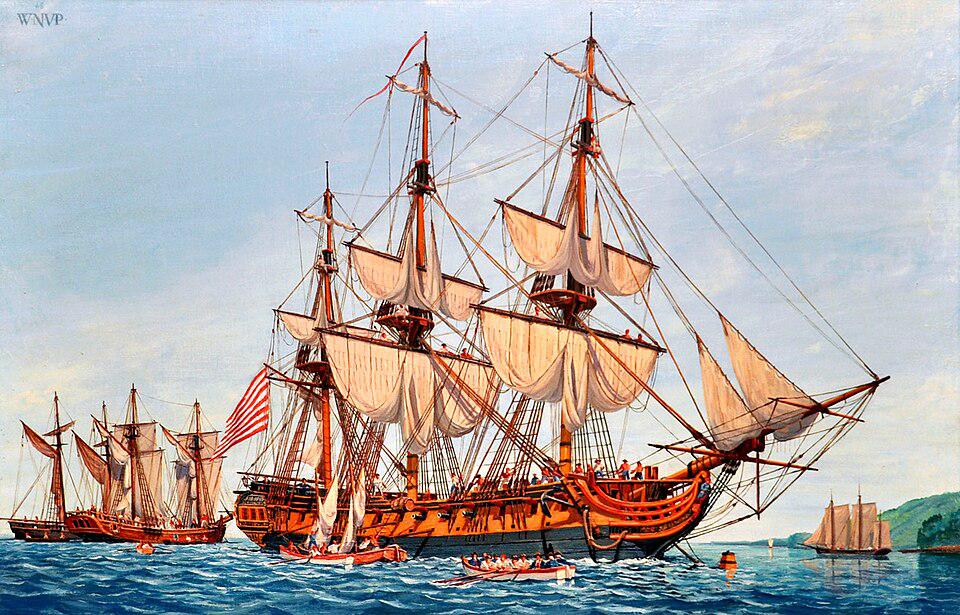
The Confederacy, Wikimedia

Ebenezer’s connection to the Confederacy (first named the Continental) became both a point of pride and a tragic turning point. He helped build the ship. Then he joined its crew in 1779 as carpenter. Though it played no major role in the war, the frigate sailed the West Indies, Chesapeake Bay, and waters off Delaware – where the British captured it. The ship and crew were taken to New York Harbor. Ebenezer was confined in Brooklyn’s notorious Sugar House Prison, where overcrowding, hunger, sickness, and suffering killed many prisoners. A Sons of the American Revolution Membership Application records that he starved to death there between September 1781 and November 1782.

His probate record, dated 5 Nov 1782, offers a vivid glimpse of the world he left behind. Mehitable was widowed with three young sons. She was appointed executrix, and the document was witnessed by her uncle Samuel Huntington, a signer of the Declaration of Independence. The inventory shows Ebenezer’s wide activity and resources. It lists clothing, silver, tools, livestock, canoes, a scow, fishing gear, saltworks and cider-mill shares, land, and gold and silver money.

Centuries later, archaeology brought remnants of Ebenezer’s life back into view. The rediscovery of the Story site in Preston, Connecticut, helped illuminate how families lived and worked along the state’s tidal waterways during the Revolutionary period. Through records and artifacts, Ebenezer emerges not simply as a name. He appears as an ancestor, craftsman, tavern keeper, sailor, prisoner, husband, and father. His life was woven into America’s fight for independence.
America at 250 Henry Maes Ostrander

Revolutionary War Soldier Ancestor – Henry Maes Ostrander – 5th GGF

As a resident of Fishkill, New York, Henry enlisted in the fall of 1775, served 5 months as a private in Captain Rosekrans’ company, Colonel Holmes; New York Regiment and was discharged in January 1776 at Albany; he reenlisted in the spring of 1776 and served 10 months as a private in Captain James Rosekrans’ company, Colonel Lewis Dubois’s New York Regiment, then re-enlisted under these same officers. He was in the battle of Fort Montgomery where he was taken prisoner and was exchanged 10 months later, rejoined his regiment, was in the battle of Newtown, and was discharged from services in January 1781 at Morristown, New Jersey. He received a pension with number W16667 which he applied for at Plattsburgh, NY.

Henry Ostrander DAR ID is A084747

Henry Ostrander was born on 10 Oct 1754 in Fishkill, Dutchess, NY to parents Maes Cornelius Ostrander and Jannetje Swartwout. He married Martha (Patty) Nicholson in October of 1779 in Fishkill NY. Their children were Elizabeth Liddell, Huldah “Adah” Griffin, James, Richard, Henry Swartout, Sarah Sanger, Mary Dunham, Jane Larkin and Israel Nicholas. He died on 26 Jan 1830 in Plattsburgh, Clinton, NY. In pension records son Israel said Patty Ostrander told the story that daughter Adah b. 7 Sep 1785 was the first born white child in Plattsburg, NY which was a wilderness when they moved there.

Susie Graham is the descendant of Mary Ostrander Dunham, daughter of Rev War Ancestor (RWA) Henry Ostrander and Dan Dunham, son of RWA William Dunham. I also am the descendant of their grandson Leander Dunham and his wife Deborah Platt Turner, the daughter of RWA Lemuel Turner.

America at 250 Benjamin Cruzan Sr.

America 250 – Revolutionary War Ancestor Benjamin Cruzan Sr.

By Kathleen Weddle Sizer

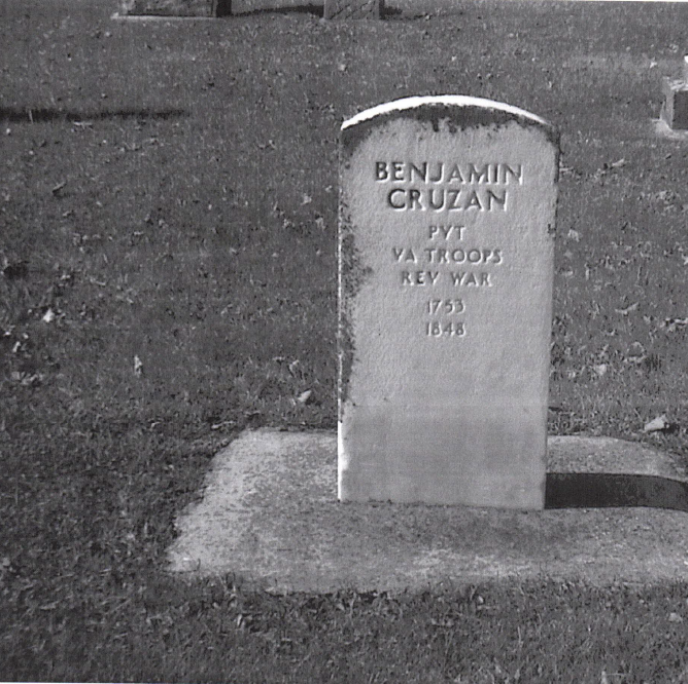
My 4th great-grandfather Benjamin Cruzan Sr. was born c. 1758 in Delaware in the Colonies and died 5 June, 1848, at Cross Plains, Indiana. He received a pension for service in the Revolutionary War first in Ohio, Adams Co. Court of Common Pleas, age 67 with pension rate of $8 a month 12 April 1825 and arrears of $35.55 recorded in Book B, Vol. 11, page 8, File No. 35,869 He moved to Rush Co, Indiana receiving a pension 4 March, 1833 to 5 June 1848, when he died. His pension or Virginia claim number is 19,436 for Bounty Land Warrant; U.S. Pension Roll of 1835, Vol. IV 3 Indiana, Benjamin Cruzan alias Cruidson, rank private, annual allow $96 to date; Record No. 85,196. His pension was rejected twice before because one paper spelled his name Cruidson and another Kruzen. He had to show value and no land and his personal items were valued at $100.08 ½.

In Roster of Soldiers and Patriots of the American Revolution Buried in Indiana by Mrs. RC. O’Byrne, Clearfield Company, L.C. #68-18632, page 110: Cruzan (Cruidson) Benjamin of Ripley County, born about 1758; Enlisted on June 1, 1780 in Hillsborough, State of North Carolina service – private in company commanded by Major Moore Fauntleroy, Regt. of Col. Anthony Walton White, Virginia line,1st Reg. horse, fall of 1780-1783 4th Continental Dragoons. In 1782 he was in Yorktown and on May 21, 1782, Colonel Brown of the British troops was attacked by General “Mad” Anthony Wayne. The vanguard of the Americans was composed of 60 horsemen and 20 infantries led by Colonel Anthony White. These [men] made a spirited charge, killing or wounding 40 of the British and making 20 of them prisoners; discharged in South Carolina. He was in Company C 5th Troop, 1st Regiment Light Dragoons when discharged in 1783 or 1784. Brother Isaac Cruzan also enlisted in Major Fauntleroy’s company.

Benjamin served at Fort Henry, Wheeling, Virginia testifying for Benjamin Long that they both knew two men, Jacob Crow and Jacob Nave (Knave), killed by Indians. At time of service, the fort was under Captain Johnson. Long entered service at Cook’s Tavern about 60 miles from Wheeling’s Fort Henry. There were several attacks at Fort Henry over the course of the Revolutionary War. The fort was built on a plan like other forts on about 1/2 acre of land with the fort being about 175 feet long and 125 wide with block houses on each corner, cabins in the fort holding about 50 men and the stockade walls were 8-10 feet in height made of pickets.

Grandfather also served in the War of 1812 from Kentucky under Pogue’s Militia Regiment August 27, 1812 to September 26, 1812.

America at 250 John McGee & Robert McGee

Among the Revolutionary War patriots in her family is Lee Ann Mauk’s 5th great-grandfather, John McGee (1761–1844), and her 6th great-grandfather, Robert McGee (1730–ante 1793), both Scotch-Irish patriots from New Jersey who contributed to the American cause during one of the most difficult periods of the Revolution.

The Scotch-Irish formed a large part of General George Washington’s Continental Army and played a critical role during the harsh winter of 1777–1778 and the Forage Wars in New Jersey. These engagements involved securing food, hay, and supplies for the army while preventing the British from obtaining them.

Robert McGee served as a Forage Master in 1778, helping procure and transport essential supplies that sustained Washington’s army. His work was vital to the survival and effectiveness of the Continental forces.

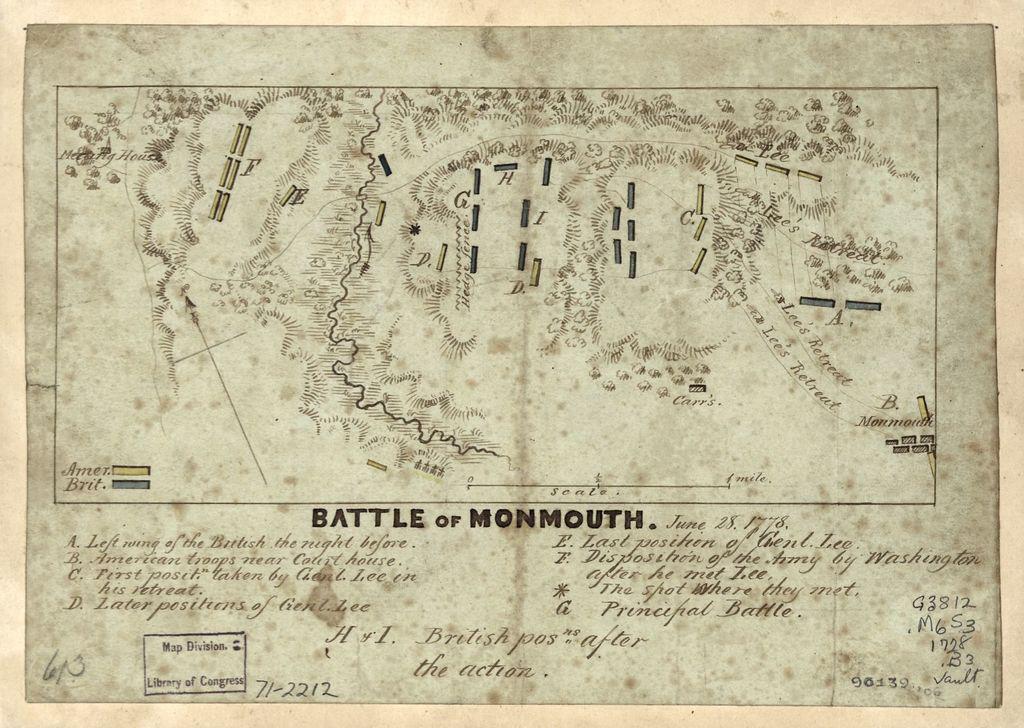
His son, John McGee, served several tours of duty as a private in the New Jersey militia. He served as a wagoner, transporting military hospitals and public stores from Princeton, New Jersey, across the Delaware River to Bethlehem, Pennsylvania. As a member of Captain David Chambers’ Company, he marched to the field at Monmouth, New Jersey, on June 28, 1778. He assisted in guiding General Charles Scott’s troops into action during the battle. After the battle, John guarded the New Jersey shores against British incursions.

The Battle of Monmouth was one of the largest battles of the Revolutionary War and demonstrated the growing discipline on the open field of battle of the Continental Army after the winter encampment at Valley Forge. Washington directed American forces against the British led by General Sir Henry Clinton and Lieutenant General Charles Cornwallis.

America at 250 JOSIAH HOARD BRANDON

JOSIAH HOARD BRANDON

Reverend Brandon was born in Burke County, North Carolina in 1761. Josiah, between fifteen and sixteen years old enlisted under Captain Samuel Davidson to fight the Cherokee Indians. He participated in the building of “Old Fort” and in 1779 joined in pursuit of Captain Cunningham serving in Captain Boykin’s Company of Light Horse Cavalry as a Private and Light Horseman. He served some three years total.

He enlisted again in 1780 to fight the Cherokees who had butchered the John Davidson family, close neighbor of the Brandon’s. During the battle at King’s Mountain Josiah’s father was killed and Josiah was captured, though released shortly afterwards by Major McDowell. Shortly after, he re-enlisted under Captain Boykin to march against Captain Cunningham who was marauding the settled areas of South Carolina near Ninety-Six.

Shortly after King’s Mountain Josiah married Rachel Brown, a childhood friend and neighbor and daughter of Thomas Brown, a noted Quaker in western North Carolina. She was fifteen when they married and lived to eighty years of age after giving birth to some fifteen children. Rachael died in 1847 in Lincoln County, Tennessee. They were married 8 March 1781 in Burke County, North Carolina.

Josiah became a Methodist minister and about 1805 moved to Lincoln County, Tennessee where he lived until his death in 1842. He and his wife are buried opposite his church, Brandon Chapel, near Lynchburg, Tennessee.

Josiah is my GGG Grandfather on my Father’s side. My Grandfather William Riddle married Cora Brandon in 1900 in Tennessee.

Submitted by: Frances L. Riddle Baker-Spuler

America at 250 Anastasium Staats Sager

Revolutionary War Soldier ancestor, Anastasium Staats Sager, served for New York and had the rank of Lieutenant. He was private in Van Schaick’s battalion in NY in 1776, and a corporal by October 1777. He served in militia companies of Clock and Adam Vrooman. He served in the French and Indian Wars. His sons, Gerritt, Peter, Frederick, Johannes and Adam fought for the British Butlers Rangers and fought against the rebels. They went to Canada. Peter returned to the States and finding his property not confiscated, he remained in the US.

He was born on August 11, 1715, in Highland or Hoogerland, Albany County, NY to Gerrit Segers and Anna Maritje Weigand or DeGroot. He used his middle name as his first name many times. He married Susanna Bradt in December 1740 in Albany. Their children were Garret, Peter Staats, Frederick, Johannes Garret, Adam, Maria, and Adriaan. He died in 1809 in Richmond, Lennox and Addington, Ontario, Canada.

Submitted for Martha McNeill, a member of the Mason County G.S.

America at 250 Joseph Primmer

Cindy Lundberg, May 21,2026

Joseph Primmer my Revolutionary War Patriot DAR Ancestry Number A093232

He was born In Birmingham, Warwickshire, England about 1738. His parents were Charles Primer and Anne Jackson. Charles was a button maker in Birmingham, Warwickshire, England.

Joseph Primmer was playing as a young lad, upon the coast of his native land, where he was shanghaied and pressed into service on a British War vessel. After he finally reached our shores, the next twenty years he was engaged in shipping services on the Hudson River, making his headquarters at Schodack Landing.

Joseph married Maria Shufeldt in 1760 She was from Prussia. Joseph and Maria had five children. William Primmer, (the eldest son, is my line. He was born in 1767 and died 25 of March in 1865 at the age of ninety-eight.) Rachel Earing, Alchey, Peter Primmer, and Deborah Frost.

In 1760 Joseph Primmer and Hugh Wilson moved with their families to the locality formally known as Hoag’s pond and on the Schodack side of the line (Nassau, Rensselaer, Co.) Indians had their wigwams in the neighborhood, which was known as ON-TI-KE-KO-MUCK. The chief was KA-SHE-KE-KO-LUCK. From these Indians Primmer made his purchase of land. The deed which Joseph Primmer received showed the date of May 16,1760. This deed signed by the chief using his mark, Hugh Wilson and John Fitzgerald witnessed the signing. This land was at the head of Hoag’s pond. Primmer’s diet consisted of Hasty Pudding, boiled corn, bread baked in ashes and fried Indian meal cakes.

Hoag’s pond became Nassau Lake after the “Beaver Dam” was in place. Primmer’s property extended westward from the Valatie Kill between the north end of the “Beaver Dam” (now Nassau Lake) and present Central Nassau Road. He built a house and the site of his house was visible as late as 1896. Primmer’s first house may have been on the North side of present Nassau Lake, in Morey Park just west of the Valatie Kill. Primmer was living there as early as 1780’s. It is possible the damming of Hoag’s Pond caused him to relocate to this other location. Primmer cut a direct road from his settlement to Schodack Landing. Traveling over this road he brought back vital supplies including apple seeds which he planted for years. This road was known as the Schodack Landing Road.

DAR records for Joseph Primmer show his service during America Revolutionary War as being a private with the Albany County Militia, 4th Regiment, and Land Bounty Rights. The 4th New York Regiment was one of four established by the New York Provencial Congress at the direction of the Continental Congress for the defense of the King’s Bridge where Manhattan Island joins the mainland, and the Hudson River. This regiment would see action in the invasion of Canada, New York Campaign, the battle of Saratoga, Battle of Monmouth, and the Sullivan Expedition. The 4th Regiment was active May 25th, 1775, to January 1, 1781. They were an Infantry type of Regiment with 720 men. The 4th Regiments merged into the 2nd Regiment of New York on January 1, 1781. A second service Joesph Primmer performed was issuing Land Bounty Rights. Land bounty rights refer to government grants of public land to individuals who served the U.S. military, primarily to encourage enlistment and reward veterans. The rights were active from the Revolutionary War through the 1850’s.

He died sometime between April 9, 1803, and August 10, 1803 (date will probated). His burial place is unknown; he may be buried on his farm at the north end of Nassau Lake in Rensselaer County, New York.

America at 250 Pieter Seger

Revolutionary War Soldier ancestor, Pieter Seger, served for New York. He served for the 3rd regiment under Quackenbos, land bounty rights, for Albany County Militia. He served under Philip Schuyler’s regiment NY Militia.

He was born on December 6, 1742, in Albany, NY to Anastasius Staats Seger and Susanna Bradt. He married Hannah Houck (Annatje Huyck) in 1770. Their children were Susanna, John, Lewis Lodowick, Magdalena, Mary, Staats Peter, Adam, Catherine Jane Glick, Frederick, and Conrad. He died in February 1826, at age 86 in Bethlehem, NY and was buried in the Jerusalem Cemetery in Feura Bush, NY.

Submitted for Martha McNeill, a member of the Mason County G.S.

America at 250 Frederich Titius/Decius

My Patriot Ancestor

Frederich Titius/Decius

b. 1762 Ashersleben, Saxony Anhalt, Hanover, Germany d. Sept. 1826 Shenandoah Co. VA

Frederich Decius is my is my 4x Gt. Grandfather on my fathers side.

Born in Hanover Germany, Frederich Tisius/Decius at age 14 was conscripted by Col. Albrecht von Schneiter for King George of England to be sent to America to fight against the Americans. He is registered in the British Army records as enlisted 25 Aug 1776 in the 4th Regiment of the Company of Capt. John Webster arriving in New York City 30 Dec 1776.

He deserted the British Army on 18 June 1778 after the Battle of Brandywine along with 2 other young men, Effinger & Fauchs(Fox). .

He was hidden by German families in eastern PA until he joined Col Bartholomew von Heers Unit 986  Marechaussee Corps on the 15th of March 1780 and served as a private in this unit until it was disbanded 4 November 1783 . This unit of the American Army served as George Washingtons Provost Troop of Light Dragoons or mounted military police. The men of this early MP organization, participated in combat, fighting with General Nathaniel Greene’s army in the Battle of Springfield, New Jersey, June 1780. The next year, the Corps protected General Washington and his headquarters during the siege of Yorktown, the last major battle of the American Revolution. Frederich received bounty land in Shanandoah Co., VA and raised his family there but never requested a pension. .

FYI- The spelling of Titius was legally changed to Decius in 1818 by the Gov. of VA as there was so much confusion on the spelling and pronunciation . The T is pronounced like the English D and in Frederich’s land and court records we find 11 spellings of the name up until the change. Frederick signed his deeds etc in English but wife Magdalena kinda of used a combination of English/Gothic.

America at 250 Willem P. Houghtaling

Revolutionary War Soldier ancestor, Willem P. Houghtaling, served for New York. He enlisted in Ulster, NY. He served as a private in the 3rd Ulster County, NY regiment militia. He served under Capt. William Winne on the west side of the river.

He was born on December 23, 1753, in Albany, NY to Peter Houghtaling and Anna Becker. He was married to Marytje Maria Bloemendal in March 1772 in Albany, Albany County, NY. And the banns were under the name of Willem Hoogteling with the Dutch Reformed Church records. Their children were Rebecca, Peter, and Maas. His second marriage was to Hannah Lampman Van Wagner. Their children were Cornelius, Wilhelmus W., Maria Mathias, and Catharine Brate. In 1800 to 1840, he was living in Bethlehem, Albany County, NY. He died on April 13, 1836, per tombstone, at age 80 in Feura Bush, Albany County, NY and was buried in the Jerusalem Cemetery in Slingerlands, NY. But his will was probated on May 13, 1834, in Albany County, NY.

Submitted for Martha McNeill, a member of the Mason County G.S.