Seattle – City of Clocks, by Karen I. Treiger

(Photo: June 30, 1930, looking east from 4th Avenue on Pike Street. Clocks left to right: Hoeslich, Weisfield & Goldberg, Sutherland still on left up a block; Friedlander on right side, W H Larne, Ben Bridge dark clock on far right. (CCBY 2.0 License by William Creswell))
Sixteen!
That is how many clock towers could be seen on Pike Street in 1930. One of the sixteen clocks belonged to Friedlander & Sons Jewelers on 5th and Pike.
These tower clocks were built by Jacob Meyer, who emigrated to Seattle from Germany in 1883 as a 15-year-old boy. Mayer lived on Yesler Hill, in the same neighborhood as my great-great grandparents, Paul and Jenny Singerman. I imagine they knew this young man and perhaps had him over for a holiday meal or two.
Knowing the exact time had become increasingly important. Boats were coming and going from the docks at specific times, rail trains were likewise coming and going on a schedule. Not everyone had a personal time piece – a watch or a pocket watch. So, these clocks served a public good and advertised the stores presence on the street. A Mayer-built tower clock, with your jewelry store’s name on it, was a must.
After the Great Seattle Fire in 1889, the seven jewelry stores that survived purchased street clocks from Joseph Mayer, placing the clock outside their stores. Not to be outdone, my great, great grandfather, Sam Friedlander, who moved his family to Seattle in 1906, bought a Mayer clock in 1908. He planted it in the cement outside the store at 925 1st Avenue. When the store moved to 1300 2nd Avenue in 1915, Sam brought the clock with him. It was sold and replaced with a larger Mayer clock around 1918. “Friedlander & Son” was written on the face of the clocks.

(Photo: Friedlander & Son – 2nd Ave Store – MOHAI, Austin Seward Photo Collection, 1980.6877.5.53)
The history of these tower clocks was researched by Rob Ketcherside. In 2022 he sent me an email with this information about the Friedlander tower clocks. He confirmed that the first clock was purchased in 1908. It was a “2 dial post clock.” He further confirms that it was moved to 1300 2nd Ave. in 1915. Through his research, he traced the clock to 1941. After that time he could no longer trace this clock.

(Photo: Close up of the Friedlander clock at 2nd Ave – MOHAI, Austin Seward Photo Collection, 1980.6877.5.46)
The second Friedlander tower clock was a “4-dial” Mayer clock installed at the 2nd avenue store around 1918. Ketcherside is not sure where this 4-dial clock ended up. The third and final Friedlander clock was an “8-dial” Mayer clock installed in 1928 at the new 5th and Pike store. This is one seen in the 1930 photo.
Mayer clocks can still be seen around Seattle. The Ben Bridge clock is the one that comes to mind for me immediately. A June 22, 2024 Seattle Times article by Daniel Beekman points out others:
“Ten of the old clocks grace the city’s streets today, according to Ketcherside’s research, including eight built by Mayer, who died in 1937.
There’s a clock in Columbia City that used to be in Pioneer Square, one in West Seattle that used to be in the University District and one in Greenwood, as well. There’s a remarkable clock with eight faces in South Lake Union, where the Mayer brothers once had their manufacturing operation, with a plaque that calls it ‘Joseph Mayer’s Magnificent Clock,’ and a similar clock outside the Museum of History and Industry, also in South Lake Union.

(Photo: Clock tower in Columbia City, Seattle. Taken by Author, 2024)
A century-old clock that stood outside Benton’s Jewelers on University Way Northeast before moving to a site near University Village was recently refurbished and reinstalled by Aegis Living, which spent tens of thousands of dollars on the work, according to a representative. Aegis bought the clock while redeveloping the U Village site and had a digital mechanism added.”
Some of the clocks are currently being restored and reinstalled. One in northeast Seattle and one downtown. A third one is being worked on and will hopefully be installed on Seattle University’s campus.
Clocks and watches help us know the time. But I cannot help thinking how the passage of time affects us all. Each 24-hour cycle, we grow one day older. Each 365 days, a year older. We must strive to be grateful for each day, each year, and make the most of our time. As James Taylor sings in his song – The Secret O’Life – “The secret of life is enjoying the passage of time.”
*****
Karen Treiger is the author of My Soul is Filled with Joy: A Holocaust Story (2018) and author of the upcoming book, Standing on the Crack: The Legacy of Five Jewish Families from Seattle’s Gilded Age.
Her website is: Homepage – Karen Treiger – Author
Her weekly blog about the history of Seattle and stories about her ancestors can be found here: Ancestry, Genealogy, Legacy, History: Stories of Five Jewish Families in Seattle
SOURCES:
Seattle “The City of Clocks,” By Mark Mendez Mayer, Seattle Histories: Seattle “The City of Clocks” (Nov. 10, 2022).
Paul Middents, “Seattle’s First Watchmakers 1869 ‐1889: In Bringing Time to the Public in the Pacific Northwest,” Dec. 6, 2015.
Daniel Beekman, “Seattle’s Historic Street Clocks are Making a Mini Come-Back,” Seattle Times, June 22, 2024.
Rob Ketcherside, “Time Travel to Pikes Forest of Street Clocks,” Seattle Times, May 20, 2015. https://ba-kground.com/pikes-forest-of-street-clocks/
Email correspondence between author and Rob Ketcherside, December 13, 2022.


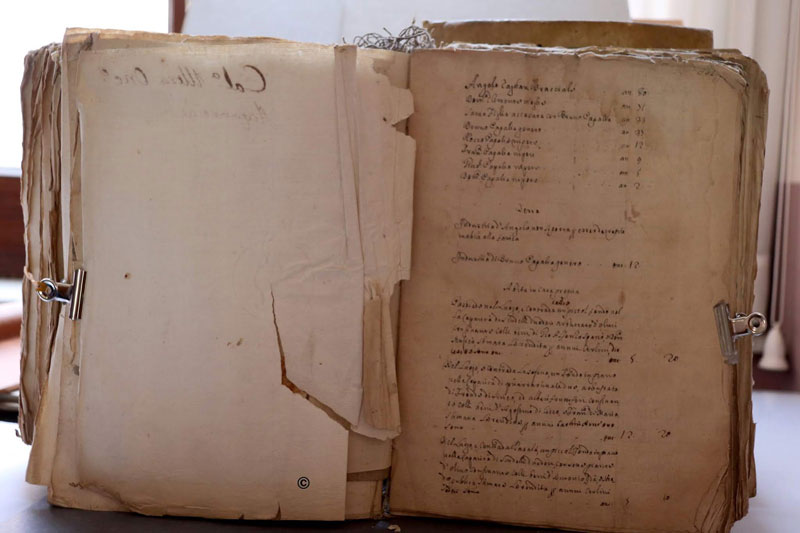 Bridging the Divide: Italian Catholic Parish Records as a Cardinal Resource for Historical Demography and Genealogy
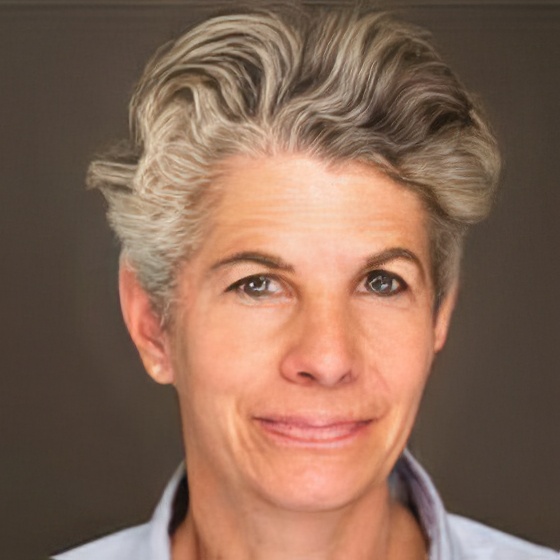 Bio: Suzanne Greco is the Founder & Director of Italian Parish Records, a non-profit organization dedicated to preserving and making accessible the Italian Catholic Parish Records. She is a current Ph.D. Candidate at the University of Edinburgh Divinity School in Ethical & Practical Theology, recently having graduated from Harvard Divinity School. Suzanne has researched Italian family lines and indexed civil and parish records for 27 years.
 Days Hours Minutes Seconds
 Welcome to Italian Genealogy Let’s explore the world of Italian genealogy together, one person at a time.
 Days Hours Minutes Seconds