Let’s Talk About: Kinship of the World

This image comes from an article in a 1977 issue of The Ensign, publication of The Church of Jesus Christ of Latter-day Saints. Even asking Grandma Google 🙂 I could not find a better image for this post…………..

QUESTION: What really is world history? Isn’t it the story of cousins who could just not get along? (That made you smile, didn’t it?) Yes, we living today are cousins of a sort because populations have expanded and contracted as wars, fires, floods, plagues and other disasters impacted them. 

It is estimated that the Black Death plague in England in 1348-1377 carried off 40% of the population. That same plague alone in Europe in 1720-1721 claimed 20 million people. 

Many families were completely wiped out; many surnames died out; many families were left with no descendants. You and I survived because somehow, miraculously, our ancestral line survived. Or at least one or two of them did. 

Quote from this article: “For example, in the U.S. in 1960 there was about an 80% chance that a man would have no descendants with his last name 13 generations later. The chance of a kinship line dying out depends on the death rate of the society and the number of children in each family. Even in a society were couples have many children, there is a 20-30% chance that a family line will die out after ten generations or so.”

What does this mean to us as we search out our family history? It means we must realize that many of the family lines existing in the year 1700 have no male descendants bearing that family name living today. 

THOUGHT: A typical extended pedigree chart can comprise 100 or more surnames and if each person’s tree was totally unique to him/her, in 30 generations (about 1000 years) every person would have two billion ancestors….. for more people than there were in the world in A.D. 1000. Could that really be so? No way.

Somewhere along the line our ancestors were already related to each other, marrying 5th, 6th or 7th cousins without realizing that. So instead of having MORE ancestors the further back we trace, eventually we will have fewer and fewer. 

And if our ancestors wee related, albeit distantly, the same must be true of all of us. Again quoting from the article, “As we research our genealogies we find our pedigrees mingling with those of hundreds of thousands of others until we are all traveling on the same broad road of ancestry back to the fathers of the human race.” 

The diamond pedigree reminds us most surely of the brotherhood of all mankind. 

Let’s Talk About: English Census Records


For what years can we access census records in England?  There are nine  censuses available: 1841, 1851, 1861, 1871, 1881, 1891, 1901, 1911 and 1921. Sadly, the 1931 census was totally destroyed by fire and no census was taken in 1941 due to World War II. (In 1939 there was taken a National Registry and ID cards issued.)

Found it interesting that the English censuses included the name for each person in the house whereas U.S. censuses didn’t begin doing that until 1850. 

If you cannot read the info in that last paragraph, just Google that title. Tips to realize and remember:

  • English counties are also known as shires (Worcestershire, Somersetshire, etc.) comparable to our U.S. states.
  • Ind. independent or having own means; also may be reported as gent/gentleman.
  • Pensioner usually referred to someone retired from the Army
  • Scholar meant the child or person was attending school
  • Ag Lab mean agricultural laborer
  • F.S./ M.S. meant female/male servant

Just for fun, using www.freecen.org.uk I looked by my mother’s maiden name, GURNEY, in the 1841 census. Viola! There were 104 hits!!  And I’ve never explored them!!! 

German Interest Group of the Eastside Genealogical Society Finding Females in Naturalization Records

Eastside Genealogical Society

Genealogy Interest Group

When: Friday, October 4, 2024 from 12:30 to 2:30 pm PDT

Zoom Registration required:  https://tinyurl.com/5a66t9nu

Topic:  Finding Females in US Naturalization Records, 1790-1952
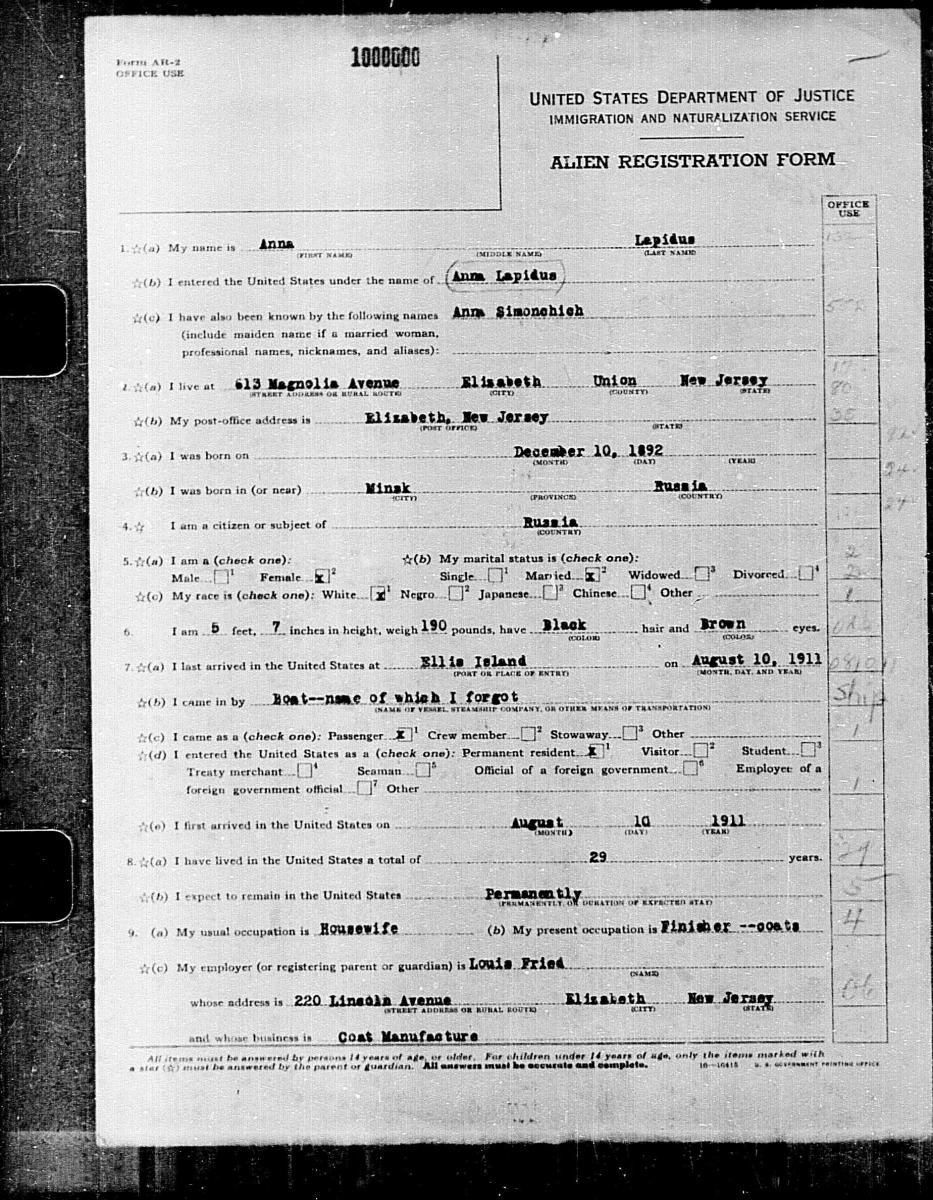
Whether you’re missing a naturalization record or finding an unexpected one, this webinar helps you discover how female ancestors — both foreign-born and birthright — gained, lost, or regained citizenship in the United States between 1790 and 1952.

US citizenship and attendant rights for women could be fragile, depending on marital status, prevailing laws, social norms, and other shifting factors. Examples of US naturalization and citizenship records, and search strategies for finding these records are featured in this presentation.

Presenter:   Nancy Loe

Archivist, librarian, and genealogist Nancy Loe has been helping researchers with their family trees since 1977. She specializes in US and European family history research, presenting at webinars and conferences in the US, Canada, and Australia, including NGS and Rootstech.

Nancy’s genealogy e-books and free monthly newsletter are available at www.sassyjanegenealogy.com.

More information: Visitors are always welcome. Our website is https://egsgermangroup.wordpress.com/  

Six Societies Awarded Supportive Grants

In a one-time departure from the norm, the WSGS Board of Directors awarded Supportive Grants to six of the societies that applied for grants. In the past, only two grants have been awarded. This year, however, the Board agreed with the reviewers that all six society projects deserved funding. The average amount of each grant was $250. Diane Huckabay, WSGS Education Chair, announced the awards at the Annual Meeting on August 30, 2024.

The grants were awarded to:

Black Genealogy Research Group of Seattle – Two registrations to attend the Family Tree Magazine University Courses. The two attendees will share their knowledge at monthly BGRG meetings.

Clallam County Genealogical Society — Defray some of the costs of speakers for their “Speakers’ Series.”

Jefferson County Genealogical Society – Support publicity for the society’s 40th anniversary celebration. It will also support their speaker from Scotland (on Zoom).

Lower Columbia County Genealogical Society – Print and distribute brochures advertising/ promoting the society, so they can be placed around a variety of local establishments, mostly libraries.

Okanogan County Genealogical Society – Fund a web page that documents Okanogan County cemeteries and the individuals buried in those cemeteries.

Sno-Isle County Genealogical Society – Fund the purchase of audio and visual equipment to support hybrid online and in-person meetings.

For more information about the Supportive Grants, click here.

Tacoma Pierce County Genealogical Society Chat

Tacoma-Pierce County Genealogical Society Genealogy Chat

Tuesday, September 17, starting at 7:00 PM via Zoom

Please join us and let’s chat!

This is a monthly opportunity to connect with others and talk about anything and everything genealogical. The value of this meeting increases with the participation of each person that attends and contributes to the conversations. This is your chance to celebrate the breaking down of a brick wall in your research or ask questions of others that can help you find records or relatives. Everyone, members, and guests are welcome and encouraged to attend and participate.

Date & Time: Every month on the Third Tue, from 7:00 PM until 8:30 PM Pacific Time

Please download and import the following iCalendar (.ics) files to your calendar system.

Monthly: https://us02web.zoom.us/meeting/tZMldOCprTsqGtSoVglOBTElUaBRgTq5IEgI/ics?icsToken=98tyKuGvpjgjG9eVsBmHRpwEGojCXevztmJfjbdukyniDw9xVib6A-NgALVLAY35

Join Zoom Meeting:

https://us02web.zoom.us/j/87839130000?pwd=dGdHY2wrZ0d1bDNRTEQ4Uk15OVk0Zz09

Meeting ID: 878 3913 0000

Passcode: 836216

One tap mobile:

+12532050468,,87839130000#,,,,*836216# US

+12532158782,,87839130000#,,,,*836216# US (Tacoma)

Dial by your location:

        +1 253 205 0468 US

        +1 253 215 8782 US (Tacoma)

Meeting ID: 878 3913 0000

Passcode: 836216

Find your local number: https://us02web.zoom.us/u/kdesX0el3t

Tacoma Pierce County Genealogical Society Book Club

Tacoma-Pierce County Genealogical Society Book Club

Saturday, September 21, 2024, starting at 4:00 pm via Zoom

Please join us as we discuss a fictional genealogical book, Least Trodden Ground by Elaine L. Orr.

More information at: 

Amazon: Least Trodden Ground

Also available in print from various used bookstores.

We will also choose future books. 

TPCGS Book Club Zoom Meeting

Every month on the Third Sat beginning at 4:00 PM Pacific Time

Please download and import the following iCalendar (.ics) files to your calendar system.

Monthly: https://us02web.zoom.us/meeting/tZUkfuCqrzgsG9RrrhNAdU65Lz86P0s92mu1/ics?icsToken=98tyKuGppzIjGNWWthiHRpwcHYr4XerzmHZdjfpvjg3tLQFXV1WjGvgaZIIvA4GC

Join Zoom Meeting:

https://us02web.zoom.us/j/81999213610?pwd=Qkk2WFZTZ2Rzdzc1Z0szN1AzdEZCUT09

Meeting ID: 819 9921 3610

Passcode: 479394

One tap mobile:

+12532050468,,81999213610#,,,,*479394# US

+12532158782,,81999213610#,,,,*479394# US (Tacoma)

Dial by your location:

        +1 253 205 0468 US

        +1 253 215 8782 US (Tacoma)

Meeting ID: 819 9921 3610

Passcode: 479394

Find your local number: https://us02web.zoom.us/u/keibNHDdyf

Italian Interest Group of the Eastside Genealogical Society Maps for Genealogy

21-Sep-2024 Meeting
Welcome to Italian Genealogy Let’s explore the world of Italian genealogy together, one person at a time.
Maps can be incredibly valuable tools for genealogy research. They allow us to visualize our ancestors’ world, understand historical boundaries, and discover new records. Remember, maps not only provide context but also connect you to the places your ancestors called home. Happy mapping!
                          ZOOM Meeting Topic:    
Using Maps for Genealogy
When:        21-Sep-2024, Saturday
Time:         1:30 PM – 3:30 PM (PDT)
If you aren’t an active member, please request a Zoom meeting invitation.
Meeting Request
COUNTDOWN TO THE MEETING:
Days Hours Minutes Seconds
Eastside Genealogical Society
– Italian Interest Group P.O. Box 374
Bellevue, WA 98009-0374

Columbia Gorge Genealogical Society Solutions to Researching in Today’s Economy

Morning Members and Friends!

Just a reminder of the upcoming program this Saturday, September 14th at 1:00pm. We will be be discussing ways to best fulfill our research quests in today’s rising costs for subscription and membership fees.

We all want reputable and reliable resources for our work but for some researchers that is becoming a unattainable goal. This program bring suggestions and recommendations on how to best navigate resources in genealogy and history research. Laurel Smith will be joining us from the Genealogical Forum of Oregon providing information on their online databases which you can access from home and their new database NewspaperArchive. 

Please join us! The program is free as always and guests are welcome.

Please register here:  https://gorgegen.blogspot.com/ 

See you soon!

Let’s Talk About: Green Peas


“Fresh green peas were considered a delicacy by King Louis 14th of France. To his wife, the subject seemed all consuming. ‘This subject of peas continues to absorb all others….a pleasure of having eaten them and the desire to et them again are among the great matters which have been discussed for the four days past.’ One of Louis’ wives wrote in a letter dated 1696: “It is both a fashion and a madness.”
The history of peas is long and jumped quickly from country to country. Certainly by 1793 in America “peas were popular with all classes of people.”
Recipe for Dressed Peas from a 1744 cookbook published in London:  Place one pound of peas in sauce pot with 6 TB of butter; simmer and dust with flour. Add any sweet herbs desired: parsley, basil, mint. Stir in 1/2 cup flour and bit of boiling water “slowly stewing the mixture.” Lastly, add some diced ham. 
(Thanks to The Magazine of Colonial Williamsburg, September 2023.) 
Did you know that Washington ranks #1 in edible dry pea production, contributing 45% of the U.S. production.  Our dry eastern Washington fields are good for dry peas, lentils (all colors) and chickpeas. There are three types of peas grown here:

  • Garden peas – grown from seeds
  • Sugar peas – grown for the whole edible pods
  • Field peas – grown for dried seeds

Isn’t September a dandy time to make a pot of pea soup???

Fiske Genealogical Library Fall 2024 Classes

Wednesday, September 18       

10:00 am to 11:15 am Pacific Time – Fiske Genealogical Library, Seattle (Virtual Class)

Using the Research Wiki to Start Foreign Research

Presented by Jenny Hansen

For links to join the meeting and get class notes, select https://fiskelibrary.org

Starting research in a new country is a daunting task, especially when foreign languages, cultures and customs are considered.  With the development of the FamilySearch Research Wiki, detailed online help is always available.  This class will show what tools the wiki can offer anyone starting research in a foreign area.

Wednesday, September 25

10:00 am to 11:15 am Pacific Time – Fiske Genealogical Library, Seattle (Virtual Class)

Exploring Your Hispanic Roots

Presented by Beth Swartz

For links to join the meeting and get class notes, select https://fiskelibrary.org

Basic research techniques using online resources to follow your family in the US and Mexico.

Wednesday, October 2     

10:00 am to 11:15 am Pacific Time – Fiske Genealogical Library, Seattle (Virtual Class)

Using Collateral Relatives

Presented by Claire Smith

For links to join the meeting and get class notes, select https://fiskelibrary.org

Have you ever been unable to find the parents of an ancestor? Learn effective strategies to go beyond using your direct ancestors by going sideways to research your collateral ancestors. Learning about relationships across your family can help you reveal ancestors beyond your brick walls.

Wednesday, October 9     

10:00 am to 11:15 am Pacific Time – Fiske Genealogical Library, Seattle (Virtual Class)

Hopping Down the Paper Trail

Presented by Sara Cochran

For links to join the meeting and get class notes, select https://fiskelibrary.org

The records our ancestors left behind often lead us to other records, and sometimes take us down a rabbit hole. Learn how to scour those records for the next clue, and how to prioritize those clues so that you stay on track.

Wednesday, October 16   

10:00 am to 11:15 am Pacific Time – Fiske Genealogical Library, Seattle (Virtual Class)

Intuitive Genealogy: Ancestral Healing Practices and Your Family Tree

Presented by Joseph Anderson

For links to join the meeting and get class notes, select https://fiskelibrary.org

For millennia human cultures have established and maintained robust relationships with their ancestors through traditional practices. In this class you’ll learn how these practices are being revitalized in contemporary society, and how they can complement your own genealogical explorations. We’ll look at the use of focused and structured imagination to connect with ancestors known and unknown, and to deepen your understanding of the ways they live on in you.

Wednesday, October 23   

10:00 am to 11:15 am Pacific Time – Fiske Genealogical Library, Seattle (Virtual Class)

Show, Don’t Tell: Creative Nonfiction Writing for Genealogists

Presented by Lisa Alzo

For links to join the meeting and get class notes, select https://fiskelibrary.org

As genealogists, we often focus on facts and uncover so much information that our research produces nothing but boring lists. But do you really know what happened between the dashes of your ancestors’ lives? How can you share that information in a compelling way? Learn how to use creative nonfiction writing techniques to produce a “can’t put down” family history.

Wednesday, October 30   

10:00 am to 11:15 am Pacific Time – Fiske Genealogical Library, Seattle (Virtual Class)

New Frontiers in Genealogy

Presented by Lisa Alzo

For links to join the meeting and get class notes, select https://fiskelibrary.org

Artificial Intelligence (AI), Non-Fungible Tokens (NFTs) and the Metaverse. You may have heard these terms on the news, but what do they have to do with genealogy? This session will demonstrate how these emerging technologies will shape a new frontier in family history including how we research our ancestors and share their stories.

Wednesday, November 6  

10:00 am to 11:15 am Pacific Time – Fiske Genealogical Library, Seattle (Virtual Class)

Missing: Reward! Locating Widows, Spinsters, and Bachelors

Presented by Sara Cochran

For links to join the meeting and get class notes, select https://fiskelibrary.org

Have some of the folks on your family tree disappeared?  Pick up some new ideas on how to find widows and never-married adults and then watch these techniques in action in three short case studies.

Wednesday, November 13

10:00 am to 11:15 am Pacific Time – Fiske Genealogical Library, Seattle (Virtual Class)

Finding Treasures in NewspaperArchive

Presented by Mary Kircher Roddy

For links to join the meeting and get class notes, select https://fiskelibrary.org

Newspapers are a fabulous resource to learn more about your ancestors. The National Genealogical Society has recently partnered with Storied to make NewspaperArchive a free benefit of an NGS membership. Learn how to use this website to fill in the details of your ancestors’ lives.

Wednesday, November 20

10:00 am to 11:15 am Pacific Time – Fiske Genealogical Library, Seattle (Virtual Class)

MyMaps: Create a Map of Your Family’s Migration West

Presented by Janet O’Conor Camarata

For links to join the meeting and get class notes, select https://fiskelibrary.org

Create a private Google map to illustrate your family’s migration path.  Pin their locations, enhance by adding text, pictures or photos, links, and layers. Save to your story of your family or to illustrate your family’s book.