June is Bustin’ Out All Over!

It’s June, June, June — and we’re getting ready to bust out all over at the 2015 WSGS Conference in Ellensburg! (Sincere apologies to the toe-tapping music and lyrics from Rogers & Hammerstein’s Carousel.)

It’s not too late to register  to hear David Rencher share his knowledge and expertise. Here’s the brochure and here’s how to register.

[ujicountdown id=”WSGS Annual Conference” expire=”2015/06/27 08:45″ hide=”true” url=”” subscr=”” recurring=”” rectype=”second” repeats=””]

“Nothing In Life Is Free,” Book Review

Book Review – Donna Potter Phillips

Nothing In Life Is Free, by Della Gould Emmons, 1953

“A Historical Novel of the Pioneer West”

“Selected as the Official Book Commemorating the Washington Territorial Centennial”


This book tells the story of the settlers to the area in Washington south of Tacoma, the founding of the town of Steilacom, and the trials and hardships they endured to get there.

It was in the fall of 1853 at a meeting in Olympia with Governor Isaac Stevens that the immigrants got the answer to one of their plaguing questions:  “As for the Indian title (to the land) it must be extinguished throughout the length and breadth of this territory. In my judgment under the Donation Law the settler can locate his claim west of the Cascade Mountains.” And so they came.

Jenny and Julius and their wagon train were stalled in Northwest Oregon debating how best to proceed to their goal, the Willamette Valley of Washington. The leaders held council: they could float down the Columbia River to Fort Vancouver and then overland to the north. Or they could go in a more direct northwesterly direction which would take them along the Yakima River and then up and over the Naches Pass. The wagon master had been told that a road had been built for that route and that it was passable for oxen and wagons. He was misinformed.

This “road” turned out to be a myth and the wagons struggled for weeks crawling along the rivers, down cliffs and over Mud Mountain (aptly named). With the rich and timbered lands at the foot of Puget Sound as their goal, the continued on despite been harassed by the Indians and having to chop clear every mile of the way. Jenny’s only shoes wore out and her dress rotted at the hem.

Quoting from the story:  “Rain, which hadn’t bothered then east of the mountains, decided it was due on the west side and had better make up for any time that it has lost. Down it came, emptying huge pocketfuls and as the immigrants pushed aside head-high underbrush they were showered liberally, as though receiving a Puget Sound baptism, without which they could never be true citizens.”

They did finally make it to Steilacom.  Page 221 described how Jenny and Julius measured off their claim by carrying 66-foot chains over and over and over through the dense and dripping undergrowth that is the country in Pierce County.  And Jenny in her long skirt!


Upon their arrival in 1853, the story details how these hardy pioneers became embroiled in the conflict between the U.S. government and the Hudson’s Bay Company over who rightly owned the land. The local Nisquallys, believing the land was theirs, also acted against the settlers. Jenny, now with a young son, lost her Julius and watched her cabin go up in flames but held onto her 160 acres of land no matter what befell.

The Donation Land Act decreed that “all male citizens of the U.S. who immigrated and settled in Oregon after 1 December 1850 and before 1 December 1853, and who should comply with the requirements of the stated law, should each receive, if single, 160 acres of land, and if married another 160 to his wife, in her own right.”

Finally in 1864 most disputes were settled but it took until 1869 for the fighting factors to pull out of the area. The novel continues with the story: it was in late 1866 that Jenny and her new husband went to the Pierce County courthouse in Steilacom to testify for final ownership of her land.

In the story, Jenny finally receives the patent for her land signed by U.S. Grant, President of the United States, and dated February 1875.

The inside cover of this hardbound book shows a map of their travels. How they came from the Midwest through southern Idaho over Emigrant Hill (near Baker, Oregon) and then cut up to re-supply at Fort Walla Walla. They then went west of Pasco and northwest along Selah Creek and Wenas Creek to the 4988’ Naches Pass. Finally over, they followed the White River, crossing south of Lake Tapps to the area around Fort Steilacom between what would become Tacoma and Olympia.

Della Emmons’ sense of poetry shines out of here prose:  “Spring. Dogwood trees bursting stars and new green gowns dressing the bushes.”

This book was a wonderful read and made me so glad I was not placed by God on earth in the 1850s to be an Oregon Trail pioneer!


** As of February, 2015, this book was available via Amazon for about $10.00.

New From Ancestry: Ancestor Discoveries

Posted by Anna Swayne on April 2, 2015 in Ancestry.com Site

Today, we announced a new AncestryDNA experience called “New Ancestor Discoveries” based on years of research and development by our science team that is revolutionizing the way people discover, preserve, and share their family history. New Ancestor Discoveries combines DNA testing with the power of 65 million trees to help you discover your story in a way never before possible—until now.  Learn more about the announcement here.

*******************************************************************

This announcement from Ancestry appeared in their blog a month ago and I was excited to learn more. Then a couple of weeks later, Anna Swayne, Ancestry’s DNA Educator, posted a blurb, “Getting the Most from Your New Ancestor Discoveries.” I do recommend that you go ask Grandma Google (who knows everything) to read and learn more about this exciting development.


Bottom line, Ancestry is taking the results from the DNA that you or I submitted to Ancestry. Then they do their internal magic to make facts and connections know to us that were unknown previously.


Assuming you’ve taken the Ancestry DNA test, log into your Ancestry account, go to the DNA tab and check your DNA homepage. If you have a New Ancestor Discovery, it will show up on you results page! Maybe you will have none (currently, none, but do check back) and maybe you’ll have several. Just click on the card/circle about which you’d like to discover more information. It really is as simple as that. 


Of course, all the connections and facts that Ancestry finds for you will come from the Ancestry database but that is a good thing for Ancestry is one of biggest databases of information available to us.


I’m confident that there will be several learning opportunities and tutorials made available by Ancestry to help us learn about this new opportunity but I’m also confident that unless you go searching and want to learn, your new Ancestor Discoveries will remain hidden to you. “Try it, you’ll like it,” I do recommend.

Bainbridge Island Gen Society News Flash


Bainbridge IslandThe Bainbridge Island Genealogical Society (BIGS) will meet Friday, June 19, in the Bainbridge Island Public Library Meeting Room from 10:00 AM until noon.  The topic, “DNA Testing – What It Means for Your Genealogy,” will feature BIGS’ members sharing their experiences and results.  Free to members, a $5.00 donation is suggested for nonmembers.  For more information go to www.bigenealogy.org, or call 206-842-4978.  BIGS is a 501c(3) non-profit organization.


Thank you!

Sylvia H. Nelson,  Director of Publicity and Public Relations

YVGS Library Has Wonderful Addition of Materials!

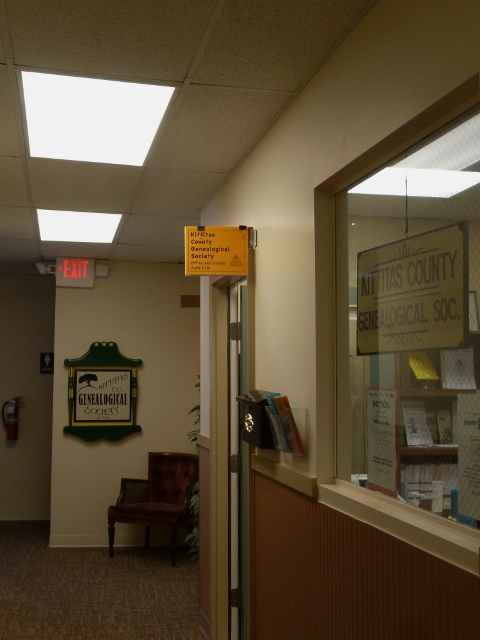
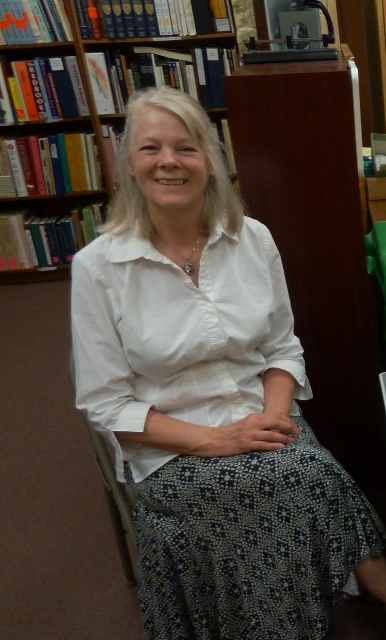
At our WSGS Board Retreat, 25 May 2015, I did an interview with Richard Kyle regarding the new additions to the YVGS library. Here are the points of that interview.


P1110652 (640x480)

P1110653 (640x480)

Richard was the Resource Specialist for the Yakima Family History Library from 1987 until 2008, when he resigned. A large part of his job was to keep track of and index the massive collection of film and fiche that was housed in the library. In 2012 he joined the Yakima Valley Genealogical Society and currently serves as a librarian several times a week and also co-chairs several workshops every month. He reported this important update to me at the WSGS Board Meeting on Friday, 25 April 2015.

The building that houses the Yakima Family History Library is in the process of being converted to another use. Because of this, the library was given a two week notice that they had to vacate to building. In 2013, due to the efforts of Richard and Pat Bundy (vice-president of the YVGS) the YVGS became an affiliate of the Family History Library in Salt Lake City, allowing them to order and keep microfilm and fiche from that library. This, along with the fact that several times over the last few years the YVGS had informed the Family History Library that they had more than enough room to take over the collection for them if necessary, set the stage for the transfer of their film and fiche holdings to the YVGS library.

The LDS church in Yakima will re-open a family history library in one of the church buildings sometime later in the year. However, it will only contain a few computors, the bound books they had and two readers. The bulk of the collection was transferred to the YVGS library.

On Friday, April 25, 2015, a commercial moving company delivered ten microfilm cabinets (with their contents packed into moving boxes) and ten microfiche cabinets to the YVGS library building along with several microfilm and microfiche readers. An inventory is in the process of being completed so a complete list of transferred items can be sent to Salt Lake City. This is a permanent transfer and these new holdings will remain in the YVGS library indefinitely.

Quoting Richard, “This is the equivalent of 18,000 bound volumes on the shelf if the collection were converted to books. A large percentage of these records are original records. To get an idea of the actual size of this collection, when it was housed at the FHL in Yakima the indexes to the collection were on roughly 1,000 type written pages of titles.” The collection that will be retained is in the process of being reduced in size by pulling out all of the microfilms of the United States census and returning them to the Family History Library in Salt Lake City. This will still leave the Yakima library with all of the fiche and roughly 6,500 rolls of microfilm. The collection should be fully cataloged and the online index atwww.yvgs.net updated by the end of June. The collection will not be co-mingled with already extensive collection of the YVGS library, but will be kept separate and apart.

The Yakima Valley Genealogical Society is proud to now know that their library is one of the largest genealogy libraries (both in physical size and in collection numbers) in the Pacific Northwest and invites you to come for a research visit anytime.

Visit their website for more information:  www.yvgs.net  and then Library.

Linda Stephens Honored as Outstanding Volunteer in 2014

Since 2003, the Washington State Genealogical Society has recognized more than 400 outstanding volunteers, nominated by their local society or genealogical organization for their service and dedication. These volunteers are the backbone of their local society, giving their time and expertise, to the organization and the field of genealogy. In the coming weeks, you will be introduced to each of the 2014 award recipients and learn why they received the 2014 WSGS Outstanding Volunteer Award.

Today we’re introducing Linda Stephens of Richland, Washington, who was nominated by the Tri-City Genealogical Society (TCGS). She was recognized for her leader­ship, knowledge, and volunteer efforts toward the goals and operation of the TCGS.

StephensPhoto

Linda Stephens

Ms. Stephens has been a member of the TCGS for only a few years, but has become one of its most dependable volunteers. One example is when TCGS organized a group to index/arbitrate the 1940 census for FamilySearch. Ms. Stephens was one of the first volunteers to join the project. She led the TCGS group with the most records indexed.

Ms. Stephens has also assisted the TCGS Publications Committee to resolve concerns and issues for each bulletin, as well as proofreading each edition before publication. She also proofread many of the scanned indexes of the 52 years of TCGS bulletins in preparation for an All Surname Index.

With all of the contributions Ms. Stephens made to the TCGS, she richly deserved this recognition in 2014.

For more information on the WSGS Outstanding Volunteer Award program, visit the Recognition page of the WSGS website or contact Roxanne Lowe, Recognition Chair, at Roxanne@thekeeffes.com.

Dedication of a Stone for George Murphy Civil War Marine

George Murphy was a Marine in the Civil War, and since there were only 4000 Marines in the Civil War, so to have two Marines buried in Spokane, Washington is kind of rare. George did not have any kind of a military marker at Fairmount Cemetery and so Barbara Brazington tried to get a Civil War marker for him, but since she was not related they refused, so she contacted the local Marine League, and they got a marker donated by a local company and set up a wonderful memorial service. Go here to see the full story .


100_1556 (2)

Eastside Gen Society News Flash

EGS

The Eastside Genealogical Society will meet on Thursday, June 11th, 2015 in the Bellevue Regional Library, Room 1, 1111 – 110th Ave NE, Bellevue  98004 at 7pm, with doors opening at 6:30 pm for networking.

Topic:              Immigration, Naturalization and Citizenship

Speaker:          Janet (O’Conor) Camarata


About the Program:  Solve the mystery of your family’s origin with the use of American-generated records to discover their home country. Learn the process our immigrant ancestors followed to become naturalized citizens and the changes over the last 225 years.  The time periods, the records, the repositories and residency requirements will be shared.


Also see our website for FREE genealogical help and other Special Interest Group meetings —   www.rootsweb.ancestry.com/~wakcegs/  .  Visitors are always welcome at all meetings.

My Family’s Special Rocks

These “sponge rocks” have, for over 80 years, been important to my family. In the early 1930s, my mother lived with her parents in St.Louis, Missouri. (She always pronounced it St. Lois.) Her father, my grandfather, worked in a print shop and hated it; he hated being indoors all day long. Weekends, he would putter in his urban back yard and he built a fish pond there. He rimmed the edge with these large pieces of “sponge rock.”

Mom remembers going out to Rock Hollow (they called it) somewhere near but outside of the city. There they could spend a picnic day and gather rocks for the fishpond.

In the 1940s, my grandparents moved from St. Louis to near Kalamazoo, Michigan, to live on very small Pickerel Lake. Oh, did Grandpa enjoy living on that lake! They took the sponge rocks with them and they formed my grandmother’s flower bed.

Upon her death in 1987, my Mom hauled the rocks back to Spokane, Washington, and they’ve been around her favorite lilac bush for these past 28 years. Upon Mom’s passing in 2014, the rocks were mine and now they reside in a space near the garage entry where I walk past them several times a day. (The brown insulator was added to show the scale of the rocks.)

To this day I don’t know where “Rock Hollow” was, but doing a Google search I did find a Rock Hollow (bicycle) Trail as part of the Meremec River Greenway. I’m sure today it would be a tremendous legal offense to haul rocks from this spot but back in the 1930s it was wilderness and unprotected.

And my grandfather, then my mother, and now me, are committed to protecting these very special rocks.

The TriCity Genealogical Society Will Have Questions Answered

KathySizerLargeWednesday, June 10, Kathleen Weddle Sizer, President of the Yakima Valley Genealogical Society will be answering the important questions, “Why join a genealogical society?” and “Why attend meetings?” Kathy will be using her own experience of 40 years of society membership to answer these questions.

Kathy joined the Yakima Valley Genealogical Society in 1975. Her background in research includes archaic manners of letter writing and repository visits. Her continued interest has taken her boldly into the computer age of family history research. Through the years she has built an understanding of the importance of society membership. Her stories will entertain and enlighten you as to the importance of her membership throughout the years.

The public is welcomed to attend the Tri-City Genealogical Society meeting on June 10.  The meeting will begin with a no-host dinner starting at 5:30 pm at the Clover Island Inn’s Captain’s Table. Kathy’s presentation is scheduled for 7:00 pm following the dinner.

For more information contact Susan Davis Faulkner at 509-554-1050 or denmother4@hotmail.com