Heritage Quest Research Library April 2026

April Happenings 2026 Happy National Volunteer Month!
At Heritage Quest Research Library, we are forever grateful for the dedicated volunteers who show up week after week. Your commitment keeps our doors open six days a week and our collections up to date.
We also extend a huge thank you to the members who step forward whenever called upon to assist with outreach and fundraising.  We couldn’t do this without you!!
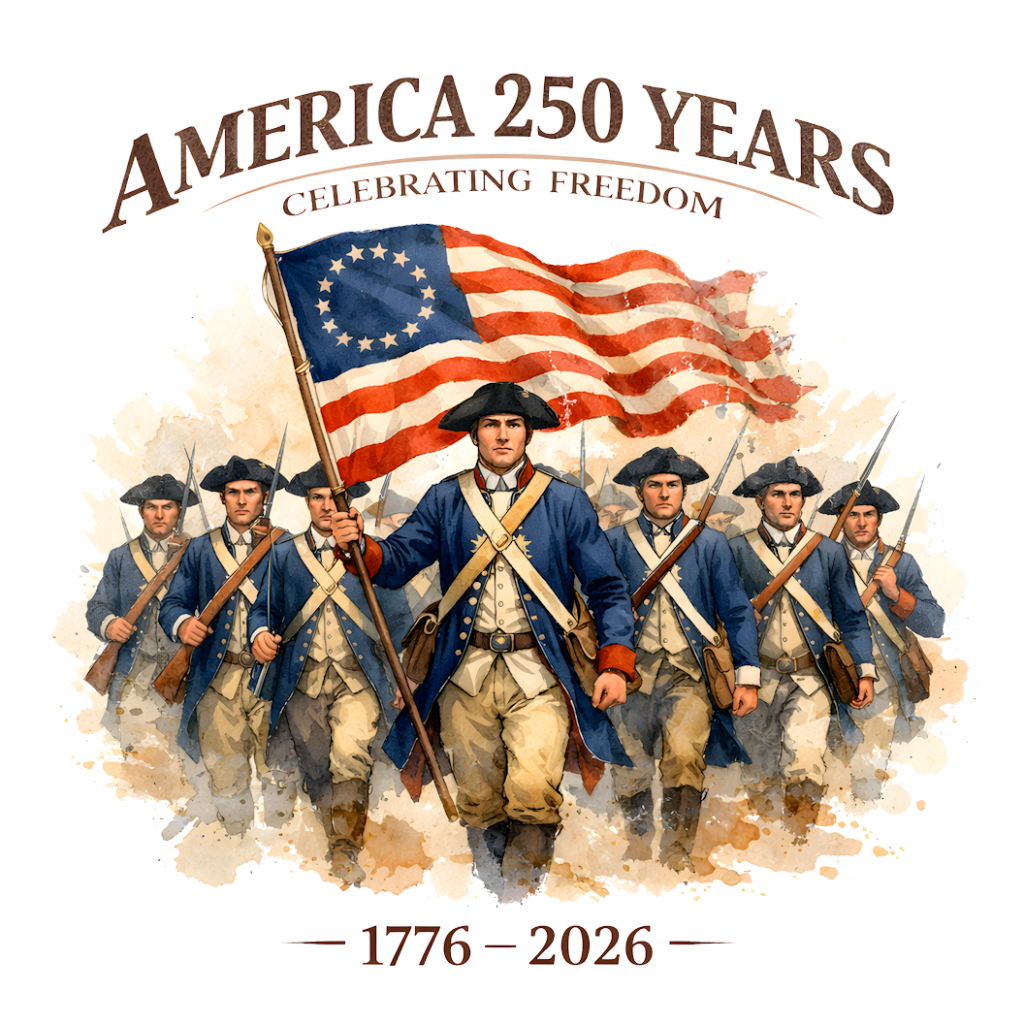
A major fundraiser like the America 250 Patriot Celebration has many moving parts—from planning and coordinating different types of “events within the event” to managing volunteers. It takes little imagination to realize that many hands are needed to ensure a successful outcome.   Your consistent willingness to step forward in support of our mission has always been a cornerstone of our success. We are confident that our upcoming Celebration will be no exception. To ensure this milestone event is truly unforgettable, we ask all our members and patrons to participate.
American 250 Patriot Celebration Getting involved Watch for details in May Happenings
Upcoming Events

Wednesday April 1
America 250 Patriot Celebration Tickets Go on Sale HQRL is excited to announce that purchasing tickets for this event has never been easier. The QR code above will immediately connect the buyer to a screen that is easy to navigate, and a receipt will automatically be sent when the transaction is finished. —–

Thursday, April 2
Introduction to WikiTree  11:00 am to 12:00 pm Heritage Quest Research Library (Classroom & Zoom) Join Shonda Feather to learn about WikiTree, which has a live chat so you can ask questions of genealogists all over the world. (WikiTree a shared tree like Family Search). Register online using the HQRL Store link on the library website or in-person at the Library $20+tax for members, $25+tax for non-members
Attend in-person at the HQRL classroom (limit of 8 persons), or via Zoom. A Zoom link will be sent to your email 1-2 days before the class along with any handouts. —–

Tuesday, April 14
America 250 Patriot Celebration Planning Meeting HQRL Library Classroom 1pm – 3 pm —–

Wednesday, April 15 Management Team Meeting Heritage Quest Research Library 12-2 pm —–

Thursday, April 16
Exploring the Community: Researching Beyond Your Ancestor 11:00 am to 12:00 pm Heritage Quest Research Library (Classroom & Zoom) Learn about cluster research and explore resources with Julia A. Anderson to help you better understand the jurisdictions and history of areas where your ancestors lived. Register online using the HQRL Store link on the library website or in-person at the Library $20+tax for members, $25+tax for non-members
Attend in-person at the HQRL classroom (limit of 8 persons), or via Zoom. A Zoom link will be sent to your email 1-2 days before the class along with any handouts. —–

Thursday, May 7
Beginning Your Family History   11:00 am to 12:00 pm Heritage Quest Research Library (Classroom & Zoom) This FREE class will be taught by our research librarians. Learn how the library can help you and how to start. Sign up in the HQRL Store so we know you are coming and we can send you handouts/or a zoom link. —–

Thursday, May 21
Unusual Places to Find Irish Births & Naturalizations in American Records  
11:00 am to 12:00 pm Heritage Quest Research Library (Classroom & Zoom)

Debra M. Dudek explains how and where to widen your search for your Irish ancestors birth date, place of origin, and their American naturalization details from a variety of underutilized resources! In this lecture, you’ll learn how to utilize a combination of research methodologies and combine them with military rosters, sailing registers, professional registrations, and much more! Register online using the HQRL Store link on the library website or in-person at the Library $20+tax for members, $25+tax for non-members
Attend in-person at the HQRL classroom (limit of 8 persons), or via Zoom. A Zoom link will be sent to your email 1-2 days before the class along with any handouts..  

Tribute to Heidi!
Heidi Geise has a long history as an educator and her expertise serves us well in her role as Education Coordinator. She excels in bringing us quality presentations on a variety of topics month after month. Arranging for first class speakers twice a month is no little undertaking, and Heidi seems to do it seamlessly.
Whether a beginner or a seasoned veteran, attendees always find valuable take-aways. Additionally, those who attend in-person find the added benefit of visiting with fellow researchers. There is something special about that “after-class” energy—often, the most breakthroughs happen over a casual conversation or a shared research hurdle.

Many, Many Thanks Heidi!

The Management Team Managing “On the Shelf” Research To avoid the “out of sight, out of mind” trap when life gets busy, you need a “re-entry” system. Research is often a long game. In a packed schedule, research must be “chunked” into manageable parts rather than treated as one giant task. When you have to pause your research use these techniques to ensure you don’t lose your momentum:
The “Breadcrumb” Note: End every session by writing exactly one sentence on what you were about to do next (e.g., “Check the 1920 census for John Smith next”).
A Research Log: Maintain a research log or spreadsheet to track which databases you’ve already searched and which keywords you used, so you don’t repeat work.
Recycling Files: If you delete or set aside sections of writing, move them to a “recycling file” instead of the trash—you might need those ideas or quotes later.
Citation Managers: Use the organizing feature in your genealogy software, or tools like One Note to save papers and data, ensuring you never ask “who was I researching?”.
The One-Hour Research Plan
If you only have one hour, focus on these high-impact, discrete tasks.
First 10 mins: Review your previous “breadcrumb” note to re-orient yourself.
Next 40 mins: Execute one specific search or read one key source.
Last 10 mins: Update your notes and write the next “breadcrumb” for your future self.
Selective Reading
Instead of reading full manuscripts, quickly scan abstracts, discussions, and conclusions to decide if a source is worth a deeper dive.
Successful Micro-Researching
Set a timer to stay on task and maintain a research log to pick up where you left off. Enjoy your Quest

Seattle Genealogical Society Tip of the Week Rootstech Revolations

TIP OF THE WEEK – 10 ROOTSTECH REVELATIONS

By Kate Penney Howard

RootsTech 2026 wrapped up on March 7. The theme was “Together,” but the unofficial theme was clearly artificial intelligence. AI crashed the party at every forum, every expo booth, and most of the talks. Here are the ten announcements and moments that had people excited.

1. FamilyTreeDNA Rewrote the Rules on Autosomal Testing
FamilyTreeDNA launched new Family Finder tests that analyze over 400 times the genetic data of their previous version — roughly 9% of your genome compared to just 0.02% before. The best news? Upcoming Family Finder Discover reports will be available to all Family Finder test takers, whether they tested recently or years ago.  

2. GEDmatch is Getting a Complete Overhaul
GEDmatch has been the scrappy workhorse of the genetic genealogy world for years. The company previewed a major redesign planned for later in 2026, incorporating AI-powered tools to help users interpret DNA matches and make organizing, filtering, tagging, and analyzing notes far easier. This has been a long time coming.

3. FamilySearch Released Its AI Tools from the Lab
For months, genealogists have been testing FamilySearch AI features in beta. At RootsTech, the AI Research Assistant and AI Hints officially came out of Labs and are now available to all users. Full-Text Search also graduated from Labs, and users can now attach search results directly to the family tree.  

4. FamilySearch Is Testing Natural Language Search
If you have ever wished you could just talk to a database like a person, this one is for you. Simple Search, currently in Labs, is being tested to allow users to search records using natural language. Ask it a question the way you would ask a librarian. See what it tells you!

5. All Revolutionary War Pension Files Are Now Fully Searchable
Ancestry announced that its Fold3 collection of Revolutionary War pension files are now fully searchable thanks to optical character recognition. Researchers can now search for veterans and their next of kin by name, rather than relying on a limited index. For those of us working on pre-1800 American genealogy, this is a genuine breakthrough. They also announced new AI features, including a record and document transcription tool where AI transcribes, summarizes, and provides source citations for documents and photos uploaded to your Gallery.

6. Ancestry Introduced “AI Stories” — And It’s Exactly What It Sounds Like
A new tool called AI Stories narrates a brief story about a document in a shareable, podcast-style audio file. The possibilities here for people who struggle to write about their ancestors are significant. It could be a meaningful bridge for beginners. It raises questions about voice and accuracy that researchers will need to monitor carefully, but the concept is compelling.

7. LifeWeaver Crashed the Party as a Platinum Sponsor
No one saw this one coming. Newcomer LifeWeaver made a significant splash as platinum sponsor of RootsTech 2026. The tool archives and searches through text messages, emails and other digital communication files to create a story from those pieces. LifeWeaver also allows users to add older phones, computers, hard drives, and scanned handwritten journals, digitizing their contents while preserving images of the originals so they can be shared with family. And critically, users’ data is private. The company does not sell data or use it to train AI models.  

8. MyHeritage Unveiled Scribe AI
MyHeritage announced Scribe AI at the RootsTech Innovation Forum, demonstrating how the feature analyzes historical documents and photos to uncover genealogical insights.  The tool provides record suggestions, photo descriptions, and transcriptions. The MyHeritage team also announced Country Coding, a feature that helps sort and organize international records and visualize your ancestors by country.

9. Ancestry Preserve Wants to Digitize Your Shoeboxes
The new Ancestry Preserve service, heavily featured in the Expo Hall, aims to help customers preserve and digitize their old media, including photographs, slides, film tapes, and more. For genealogists who have inherited closets full of analog memories, this fills a real need. The long-term implications for family history are significant. Your grandmother’s slides deserve better than a dark box in a garage.

10. Marlee Matlin and Tara Roberts Reminded Us What This Is All For
The technology announcements were remarkable. But these two keynotes stopped the room. Marlee Matlin, Academy Award-winning actress, shared her inspiring journey of overcoming obstacles and connecting personal triumphs to family history. As a deaf actor, she did not utter a word, but her facial expressions, animated signing, and story had audiences listening with their eyes and hearts. Tara Roberts, National Geographic explorer, shared her extraordinary work documenting slave ship wrecks and reconnecting descendants with their ancestral past.  

RootsTech 2026 made one thing clear. The technology is accelerating faster than most of us can keep up. The challenge for our community is to stay human in the middle of all of it. The records are the beginning. The stories are the point.Join SGS Today

* to renew your membership: log in on the Members Home page
and click the green renew membership button.


DONATE TO SGS

Your donations represent a significant part of the SGS budget. Your continued generosity helps us increase our financial security and expand our services for everyone. We make it easy for you to contribute appreciated stock from your portfolio. We have a brokerage account established and ready to receive your donation from any firm. For details, write treasurer@seagensoc.org. For questions about our needs and our vision, write president@seagensoc.org
 

Seattle Genealogical Society April-May 2026

various images showing citizenship, Civil War veterans, New Deal works programs and a railroad land grant map with the words SGS Spring Seminar: Pivotal Moments. Door Prizes: Ancestry DNA test kits, Family Tree Maker software, My Heritage (one year) and Ancestry (on year) TWO-DAY SEMINAR COVERS KEY POINTS OF AMERICAN HISTORYSaturday-Sunday, April 11-12Join Seattle Genealogical Society this spring for a two-day virtual seminar exploring turning points in American history, the records created, and how they can transform your genealogical research.

Presented online via Zoom
Saturday, April 11, 2026,  9:00 AM – 12:00 Noon (PT)
Sunday, April 12, 2026, 1:00 PM – 4:00 PM (PT)

Program includes:Great Expectations: Union Pacific Land Grants & East-West Expansion
Presented by Annette Burke Lyttle, CG

Hidden Narratives: Reconstructing Families Through Civil War Pension Records
Presented by Mica L. Anders

U.S. Citizenship: The Law and Records of Naturalization
Presented by Rich Venezia

The New Deal: Putting your Ancestors to Work
Presented by Michael Strauss, MA, AG®, AGL™There will be Door Prizes including: Ancestry DNA test kits Family Tree Maker software My Heritage membership (one year) Ancestry membership (one year) Registration fee: $60.00 (SGS Members – $45.00). Join the Seminar!images courtesy of Library of Congress and National Archives

 image of an old photo album with the words: Cataloging digital images Second Saturday: May 9, 1:00 p.m.Tame your digital family photographs by adding names, dates, and other information to images to make them searchable. This presentation outlines a simple and effective process – from scanning, tagging, and saving images to organizing and backing up these image files – so you can do it once and do it right.

Nancy Loe, a professional genealogist and archivist with decades of experience, helps family historians search smart, find more, and stay organized. As a presenter, she specializes in search strategies, information management, and U.S. and European research and records, speaking at conferences and webinars in the U.S., Canada, and Australia.Sign Up Today!NO SECOND SATURDAY THIS MONTH: SGS will be offering our Spring Seminar: Pivotal Moments: Records that Changed Lives, Families, and History. Learn more and sign up. photo courtesy of laura-fuhrman / Unsplash SGS CALENDAR OF EVENTS Good Shepherd Center, Suite 302
4649 Sunnyside Ave N
Seattle, WA 98103
206 522-8658Hours :  Tuesday, Wednesday, Thursday, Friday, and Saturday   
** 10:00 a.m .- 3:00 p.m. **
 Always check the SGS Website Calendar of Events for the meeting links, registration, or for last minute updates or changes to the schedule. Be advised you may need to register in advance to join a meeting. Meeting content is for personal genealogy learning and may not be recorded or transcribed.   All times listed are Pacific Time unless otherwise noted Wednesday, April 1, 2026, 6:30 p.m.-7:30 p.m.,  Pacific Northwest Interest Group (Virtual), Share information and discuss Pacific Northwest genealogical research. Register on the SGS website.

Thursday, April 2, 2026, 6:30 p.m.-8:00 p.m., Artificial Intelligence (AI) for Genealogy SIG (Virtual), explore the intersection of artificial intelligence and genealogical research Email SGSAISIG@seagensoc.org.

Saturday, April 4, 2026, 10:00 a.m.- 12:30 p.m., FamilySearch SIG, Discover the many ways to use the FamilySearch website in your research. Meeting includes instruction and time for Q&A. Email SGSFamilySearchSIG@seagensoc.org to join the mailing list.

Saturday, April 4, 2026,  1:00 p.m.-3:00 p.m., DNA Workshop, with Cary Bright and Craig Gowens. To participate you need to be on the SGS DNA Interest Group email list. Contact Cary Bright at sgsdnasig@seagensoc.org to join. NOTE the change of day due to the Easter holiday.

Monday, April 6, 2026, 10:00 a.m.-11:30 a.m., Brags & Bricks Social Interest Group (Virtual), Join us for an informal social gathering. Share your recent genealogical successes and challenges, or just come to hang out with other genealogists. See SGS Calendar for more information.

Monday, April 6, 2026, 7:00 p.m.-8:30 p.m., Organizing for Genealogy SIG, Share information and discuss organization tips, techniques, and habits to enhance your genealogical journey. Contact Susan McKee at sgsOrganizingsig@seagensoc.org to join. 

Thursday, April 9, 2026, 7:00 p.m.-8:30 p.m., Publishing SIG, Participate in writing and publishing the SGS Journal twice a year. Email SGSPubSIG@seagensoc.org.

Saturday-Sunday, April 11-12, 2026, Saturday 9:00 a.m-noon, and Sunday 1:00 p.m.-4:00 p.m. SGS Spring Seminar, “Pivotal Moments: Records that Changed Lives, Families, and History” Presented by Annette Burke Lyttle​​, Mica Anders, Rich Venezia, and Michael Strauss. Register here.

Monday, April 13, 2026, 10:00 a.m.-11:30 a.m., Brags & Bricks Social Interest Group (Virtual), Join us for an informal social gathering. Share your recent genealogical successes and challenges, or just come to hang out with other genealogists. See SGS Calendar for more information.

Monday, April 13, 2026, 1:00 p.m.-2:30 p.m., SGS Board of Directors Meeting (Virtual), All SGS members are welcome to attend. SGS is an all volunteer organization. Please be involved. Members must sign in to website to see Zoom link.

Tuesday, April 14, 2026, 10:00 a.m.-11:00 a.m., Tech Tuesday (Virtual), informal consultation time on DNA, genealogy software, or genealogy-related technical issues. All are welcome. No appointment necessary. Bring us your problem; we’ll try to help. NOTE: Zoom link alternates between 2nd and 4th Tuesday.

Tuesday, April 14, 2026, 6:30 p.m.-8:00 p.m., Ancestry Users SIG (Virtual), The Ancestry Users Special Interest Group is for people who use Ancestry.com (and AncestryDNA) to research their family histories. Email SGSAncestrySIG@seagensoc.org.

Wednesday, April 15, 2026, 6:00 p.m.-7:30 p.m., Transcription SIG, Want to strengthen your ability to read, transcribe, and analyze original records? This SIG is ideal for anyone looking to practice, build confidence, and sharpen their research skills in a collaborative setting. The group meets at the SGS Library. Send questions to Betsey Cotter at sgstranscription@seagensoc.org.

Wednesday, April 15, 2026, 7:00 p.m.-8:30 p.m., Write It Up! SIG (Virtual), Join this group to share and discuss writing projects, resources, and ideas. To join or learn more, contact Sheyna Watkins at sgsWriteItUpSIG@seagensoc.org. NOTE: New Zoom link starting this month.

Saturday, April 18 2026, 10:00 a.m.-noon, Irish SIG (Virtual), with Susan McKee. Share information and discuss Irish ancestral research. View SGS calendar for details on joining this group.

Saturday, April 18 2026, 1:00 p.m.-3:00 p.m, German SIG (Virtual), Using FamilySearch’s Full Text Search function. Allyn Brosz will be sharing his experiences using this feature to research his German families in the U.S.. Register on the SGS website.

Monday, April 20, 2026, 10:00 a.m.-11:30 a.m., Brags & Bricks Social Interest Group (Virtual), Join us for an informal social gathering. Share your recent genealogical successes and challenges, or just come to hang out with other genealogists. See SGS Calendar for more information.

Friday, April 24, 2026, 10:30 p.m.–12:30 p.m. Family Tree Maker SIG, Join Eastside Genealogical Society and SGS to learn and share tips and tricks for using Family Tree Maker by Software MacKiev. The meetings open about 15 minutes in advance. You can join and/or leave whenever you have to, and you may email your question(s) in advance or bring them up during the meeting.

Monday, April 27, 2026, 10:00 a.m.-11:30 a.m., Brags & Bricks Social Interest Group (Virtual), Join us for an informal social gathering. Share your recent genealogical successes and challenges, or just come to hang out with other genealogists. See SGS Calendar for more information. NOTE: New Zoom link for January – June.

Tuesday, April 28, 2026, 10:00 a.m.-11:00 a.m., Tech Tuesday (Virtual), informal consultation time on DNA, genealogy software, or genealogy-related technical issues. All are welcome. No appointment necessary. Bring us your problem; we’ll try to help. NOTE: Zoom link alternates between 2nd and 4th Tuesday.

Wednesday, April. 29, 2026, 7:00 p.m.-8:30 p.m., Mexican SIG (Virtual), Share information and discuss Indigenous North American, Spanish, Cuban, and Hispanic genealogical research. Email Diane Hughes-Hart at SGSMexSIG@seagensoc.org to join. NOTE: New Zoom link starting this month.

Saturday, May 2, 2026, 10:00 a.m.- 12:30 p.m., FamilySearch SIG, Discover the many ways to use the FamilySearch website in your research. Meeting includes instruction and time for Q&A. Email SGSFamilySearchSIG@seagensoc.org to join the mailing list.

Sunday, May 3, 2026,  1:00 p.m.-3:00 p.m., DNA Workshop, with Cary Bright and Craig Gowens. To participate you need to be on the SGS DNA Interest Group email list. Contact Cary Bright at sgsdnasig@seagensoc.org to join.

Monday, May 4, 2026, 10:00 a.m.-11:30 a.m., Brags & Bricks Social Interest Group (Virtual), Join us for an informal social gathering. Share your recent genealogical successes and challenges, or just come to hang out with other genealogists. See SGS Calendar for more information.

Monday, May 4, 2026, 7:00 p.m.-8:30 p.m., Organizing for Genealogy SIG, Share information and discuss organization tips, techniques, and habits to enhance your genealogical journey. Contact Susan McKee at sgsOrganizingsig@seagensoc.org to join. 

Wednesday, May 6, 2026, 6:30 p.m.-7:30 p.m.,  Pacific Northwest Interest Group (Virtual), Share information and discuss Pacific Northwest genealogical research. Register on the SGS website.

Thursday, May 7, 2026, 6:30 p.m.-8:00 p.m., Artificial Intelligence (AI) for Genealogy SIG (Virtual), explore the intersection of artificial intelligence and genealogical research Email SGSAISIG@seagensoc.org.

Saturday, May 9, 2026, 1:00 p.m-2:30 p.m., Second Saturday, “Cataloging Digital Images” Presented by Nancy Loe. Register here.

Monday, May 11, 2026, 10:00 a.m.-11:30 a.m., Brags & Bricks Social Interest Group (Virtual), Join us for an informal social gathering. Share your recent genealogical successes and challenges, or just come to hang out with other genealogists. See SGS Calendar for more information. 

Monday, May 11, 2026, 1:00 p.m.-2:30 p.m., SGS Board of Directors Meeting (Virtual), All SGS members are welcome to attend. SGS is an all volunteer organization. Please be involved. Members must sign in to website to see Zoom link.

Tuesday, May 12, 2026, 10:00 a.m.-11:00 a.m., Tech Tuesday (Virtual), informal consultation time on DNA, genealogy software, or genealogy-related technical issues. All are welcome. No appointment necessary. Bring us your problem; we’ll try to help. NOTE: Zoom link alternates between 2nd and 4th Tuesday.

Tuesday, May 12, 2026, 6:30 p.m.-8:00 p.m., Ancestry Users SIG (Virtual), The Ancestry Users Special Interest Group is for people who use Ancestry.com (and AncestryDNA) to research their family histories. Email SGSAncestrySIG@seagensoc.org. NOTE: New Zoom link for 2026.

Wednesday, May 13, 2026, 7:00 p.m.-9:00 p.m., MAC Computer SIG, Jointly sponsored by SGS and Fiske. Meetings address topics and resources for Macintosh (Apple) computers and the Reunion genealogy software program. A link to login will be sent to the MAC SIG email list. If you would like to join, send an email to macusersig@seagensoc.org to be added to the email list. 

Thursday, May 14, 2026, 7:00 p.m.-8:30 p.m., Publishing SIG, Participate in writing and publishing the SGS Journal twice a year. Email SGSPubSIG@seagensoc.org. NOTE: New Zoom link for 2026.   

OUR NEIGHBORS AND BEYOND      
Fiske Genealogical Library Various Wednesdays, 10:00 a.m. (virtual)

April 1: Are you really my Ancestor? 
Speaker: Claire Smith 

April 8: Unlock the 1926 Census of Ireland for Irish Family Research 
Speaker: Susan McKee 

April 15: Women of Letters: Voices from the Frontier
Speaker: Sylvia Doolos

April 22: Tracing Female Ancestors Through Everyday Records 
Speaker: Sylvia Doolos 

April 29: Back to School: Making the most of School Records 
Speaker: Tina Beaird 

May 6: Is it True? Using Manuscripts and Family Records for Genealogical Proof 
Speaker: Steven W. Morrison 

May 13: Moonshine & Coal Mines: Unraveling Stories & Secrets to Reconstruct a Family through Oral History documents and DNA 
Speaker: Lisa Vogele 

May 20: From Territory to State: Records you Might Miss 
Speaker: Sylvia Doolos 

May 27: Mapping your Migrating Ancestors 
Speaker: Tina Beaird

For more information and to register.


“What Could Have Happened? Creating and Proving Hypotheses to Solve Tough Problems,” with Kory Meyerink
Eastside Genealogical Society
Thursday, April 9, 6:30 p.m. (virtual)


One tool of advanced researchers is the well-developed hypothesis, which serves as a starting point for detailed research that can often prove relationships not apparent in standard sources. Learn how to effectively use this approach for your “brick-wall” problems. For more information and to register.

Lower Columbia Genealogical Society
Various Thursdays, 10:00 a.m. (virtual)

April 9: Researching Newspapers Outside of Newspapers.com  
Speaker: Amber Oldenburg

May 14: Subject TBA 
Speaker: Maggie Cogswell

June 11: Missing: Reward! Locating Widows, Spinsters, and Bachelors 
Speaker: Sara Cochran

Learn more and register here.  

“It’s What They Answered To: Understanding Ashkenazic Jewish Names” with Emily Garber
Jewish Genealogical Society of Washington State

Monday, April 13, 7:30 p.m. (virtual)

Name changes, both in adopted countries and in the old world, make determining Ashkenazic (central and eastern European) Jewish names a genealogical puzzle. This presentation will provide some of the basic clues for a researcher to recognize the same person recorded under a variety of names.. Get more information.

 TIP OF THE WEEK – 10 ROOTSTECH REVELATIONSBy Kate Penney HowardRootsTech 2026 wrapped up on March 7. The theme was “Together,” but the unofficial theme was clearly artificial intelligence. AI crashed the party at every forum, every expo booth, and most of the talks. Here are the ten announcements and moments that had people excited.

1. FamilyTreeDNA Rewrote the Rules on Autosomal Testing
FamilyTreeDNA launched new Family Finder tests that analyze over 400 times the genetic data of their previous version — roughly 9% of your genome compared to just 0.02% before. The best news? Upcoming Family Finder Discover reports will be available to all Family Finder test takers, whether they tested recently or years ago.  

2. GEDmatch is Getting a Complete Overhaul
GEDmatch has been the scrappy workhorse of the genetic genealogy world for years. The company previewed a major redesign planned for later in 2026, incorporating AI-powered tools to help users interpret DNA matches and make organizing, filtering, tagging, and analyzing notes far easier. This has been a long time coming.

3. FamilySearch Released Its AI Tools from the Lab
For months, genealogists have been testing FamilySearch AI features in beta. At RootsTech, the AI Research Assistant and AI Hints officially came out of Labs and are now available to all users. Full-Text Search also graduated from Labs, and users can now attach search results directly to the family tree.  

4. FamilySearch Is Testing Natural Language Search
If you have ever wished you could just talk to a database like a person, this one is for you. Simple Search, currently in Labs, is being tested to allow users to search records using natural language. Ask it a question the way you would ask a librarian. See what it tells you!

5. All Revolutionary War Pension Files Are Now Fully Searchable
Ancestry announced that its Fold3 collection of Revolutionary War pension files are now fully searchable thanks to optical character recognition. Researchers can now search for veterans and their next of kin by name, rather than relying on a limited index. For those of us working on pre-1800 American genealogy, this is a genuine breakthrough. They also announced new AI features, including a record and document transcription tool where AI transcribes, summarizes, and provides source citations for documents and photos uploaded to your Gallery.

6. Ancestry Introduced “AI Stories” — And It’s Exactly What It Sounds Like
A new tool called AI Stories narrates a brief story about a document in a shareable, podcast-style audio file. The possibilities here for people who struggle to write about their ancestors are significant. It could be a meaningful bridge for beginners. It raises questions about voice and accuracy that researchers will need to monitor carefully, but the concept is compelling.

7. LifeWeaver Crashed the Party as a Platinum Sponsor
No one saw this one coming. Newcomer LifeWeaver made a significant splash as platinum sponsor of RootsTech 2026. The tool archives and searches through text messages, emails and other digital communication files to create a story from those pieces. LifeWeaver also allows users to add older phones, computers, hard drives, and scanned handwritten journals, digitizing their contents while preserving images of the originals so they can be shared with family. And critically, users’ data is private. The company does not sell data or use it to train AI models.  

8. MyHeritage Unveiled Scribe AI
MyHeritage announced Scribe AI at the RootsTech Innovation Forum, demonstrating how the feature analyzes historical documents and photos to uncover genealogical insights.  The tool provides record suggestions, photo descriptions, and transcriptions. The MyHeritage team also announced Country Coding, a feature that helps sort and organize international records and visualize your ancestors by country.

9. Ancestry Preserve Wants to Digitize Your Shoeboxes
The new Ancestry Preserve service, heavily featured in the Expo Hall, aims to help customers preserve and digitize their old media, including photographs, slides, film tapes, and more. For genealogists who have inherited closets full of analog memories, this fills a real need. The long-term implications for family history are significant. Your grandmother’s slides deserve better than a dark box in a garage.

10. Marlee Matlin and Tara Roberts Reminded Us What This Is All For
The technology announcements were remarkable. But these two keynotes stopped the room. Marlee Matlin, Academy Award-winning actress, shared her inspiring journey of overcoming obstacles and connecting personal triumphs to family history. As a deaf actor, she did not utter a word, but her facial expressions, animated signing, and story had audiences listening with their eyes and hearts. Tara Roberts, National Geographic explorer, shared her extraordinary work documenting slave ship wrecks and reconnecting descendants with their ancestral past.  

RootsTech 2026 made one thing clear. The technology is accelerating faster than most of us can keep up. The challenge for our community is to stay human in the middle of all of it. The records are the beginning. The stories are the point.Join SGS Today* to renew your membership: log in on the Members Home page
and click the green renew membership button.

 DONATE TO SGSYour donations represent a significant part of the SGS budget. Your continued generosity helps us increase our financial security and expand our services for everyone. We make it easy for you to contribute appreciated stock from your portfolio. We have a brokerage account established and ready to receive your donation from any firm. For details, write treasurer@seagensoc.org. For questions about our needs and our vision, write president@seagensoc.org
 
April 1, 2026

SGS eNews! comes out the first of every month. contact eNews!

forward this email to a friend

Let’s Talk About: Parable of the Hot Dog

Henry was a skinny, sallow fellow who ate nothing but hot dogs.

He craved these meaty tubes morning, noon and night. He ate them with or without buns, relish, onions, beans or condiments. He ate them with scrambled eggs for breakfast. He occasionally chewed them raw from the package. 

Loving family and friends tried to convince Henry that a hot dog diet was not healthy. Henry ignored them.

Eventually, Henry’s body revolted. His arms and legs swelled like those balloon dogs. His torso became an elongated chubby tube. The chemicals in those hot dogs rotted his teeth, elevated his blood sugar and blood pressure, blurred his vision, sapped his memory, constipated him and magnified his arthritis.

In short, Henry became what he craved above all else. Henry became a hot dog.

Moral of the story: We do become what we crave, what we do and certainly what we eat. And April Fool’s to you!!

Lower Columbia Genealogical Society Researching Newspapers Outside the Newspaper com

Amber Oldenberg

Genealogist and Lecturer

Her topic is

Researching Newspaper Outside of Newspapers.com

The speaker at the Lower Columbia Genealogical Society’s April 9th, 2026 zoom meeting will be Amber Oldenburg. Her topic is Researching Newspapers Outside the Newspaper.com.

Virtual meeting doors will open at 9:30 am

Speaker’s program will begin at 10:00 am

The public is invited to attend.

Please consider joining our society for $20/yr.

For a link to join the meeting or to join the society contact lcgsgen@yahoo.com 24hrs prior to the event

Tri City Genealogical Society New Tools in FamilySearch

  Please join us for Tri-City Genealogical Society’s General meeting at 7 p.m. on Wednesday, April 8th.  The presentation will be at the Richland FamilySearch Center located at 1314A Goethals Dr.  Entrance is down the ramp from the parking lot north of Dairy Queen.  The presentation will also be on Zoom so you can join in from your home.  See below for the Zoom link for the March presentation.

  On April 8th, another longtime TCGS member, Margie Beldin, will be speaking on “New Tools in FamilySearch.”

  And, on May 13th, longtime TCGS member and TCGS Librarian, Sandra Meacham Floberg, will    discuss “Repatriation of MIA/KIA using DNA.”

  Thank you to everyone who has already joined TCGS for 2026.  For those who would like to join, the online application can be found at https://tricitygenealogicalsociety.org/q/join/join_renew/ and a printable application can be found at https://tricitygenealogicalsociety.org/q/wp-content/uploads/2023TCGSBrochure.pdf .

Time: Apr 8, 2026 07:00 PM Pacific Time (US and Canada)

Join Zoom Meeting

https://us02web.zoom.us/j/86849629067?pwd=7evK5wJjY00qjQkuJGfENzDflU5sUu.1

Meeting ID: 868 4962 9067

Passcode: 877281

One tap mobile

+12532158782,,86849629067#,,,,*877281# US (Tacoma)

+12532050468,,86849629067#,,,,*877281# US

Join instructions

https://us02web.zoom.us/meetings/86849629067/invitations?signature=QO_xM0sxyEEJYFEcCV1GQbubndzeIXp3bl6tfChprpo

Whitman County Genealogical Society Sponsors Free Seminar

WCGS SPONSORS FREE SEMINAR

Featuring Professional Genealogist and WCGS member Jill Nock

Saturday, April 18, 9 AM – 12 Noon

Bishop Place Independent Living Social Room

815 SE Klemgard St., Pullman, WA

Jill Nock, AG®, is a professional genealogist accredited through ICAPGen℠ in the U.S. Upper South with nearly five decades of research experience. She operates Mountain State Genealogy and also subcontracts with Family Locket Genealogists. A graduate of ProGen59, she has completed advanced training at the Genealogical Research Institute of Pittsburgh (GRIP) in Advanced DNA Evidence, Fundamentals of Forensic Genealogy, and Tools & Strategies for Tackling Tough Research Problems.

A former Level 1 Mentor for ICAPGen℠ study groups, Jill has helped genealogists develop professional skills and meet accreditation standards. Her expertise combines traditional record analysis with advanced DNA interpretation, specializing in transforming complex research findings into clear, professionally written reports.

9 AM—Doors open. 9:30-10:30—Topic #1. 10:30-10:45—Break. 10:45-11:45—Topic #2.

SEMINAR TOPICS

“Reading Between the Lines: What to Look For in Probate Records” (Beginner to Intermediate)

Description: This practical session teaches genealogists how to recognize family dramas, relationships, and circumstances hidden in probate records beyond basic name and date extraction. Using compelling real case studies, attendees learn systematic approaches for identifying language patterns, property distributions, and timing clues that reveal untold family stories. The presentation demonstrates how small variations from standard legal language often indicate the most significant family events and relationships.

“Learning to Think Like a Genealogical Detective” (Advanced Beginner to Intermediate)

Description: When key records are missing, genealogy doesn’t stop—it shifts into detective mode. This presentation introduces a practical, step-by-step approach to solving family history mysteries using indirect evidence, pattern recognition, and the FAN Club (Family, Associates, and Neighbors) strategy. Through a real-life case study, attendees will learn how to connect clues across records and build confident conclusions even when direct answers don’t exist.

Each topic will be 45 minutes in length with a Q and A time at the end of each and a break in between. To accommodate handouts and refreshments please RSVP to whitmancgs@gmail.com or text/call WCGS President Sue Kreikemeier at 509-595-3307. Drop-ins welcome.