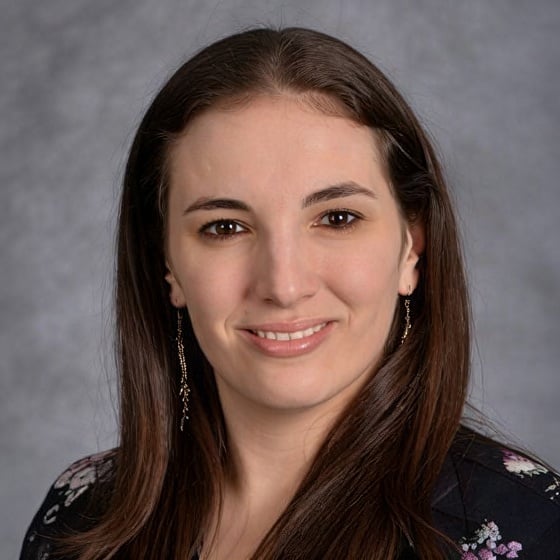
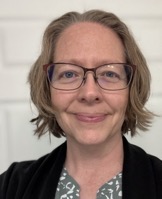
Our speaker at the library this month will be SVGS society member, Kathie Webber. This event will be in person only. Everyone is welcome to attend this free presentation
Kathie’s topic: Creating A Virtual Cemetery One Kathie’s favorite things about studying her family history has been learning where her ancestors have been buried. Twenty years ago she discovered an online tool called findagrave.com. This website and the accompanying app have enabled her to organize and expand her cemetery research. She will share with everyone the many things she has taken advantage of using Find a Grave, as well as other options that are available.
Bio:
I’ve been doing genealogy for over 40 years. I’ve researched in Washington State, Massachusetts, California, New Brunswick, Nova Scotia, and Ireland. My favorite notable ways to research include visiting cemeteries, family history centers, online research, Facebook groups, and travel.
There will be a short break with refreshments after the presentation followed by our monthly business meeting.
DIG – DNA Special Interest Group
Also join us at the SVGS library on the third Thursday of the month from 1-3pmfor our DNA Special Interest Group (DIG). This group works together to develop a better understanding of DNA techniques and strategies for finding relatives, discuss and review new DNA developments and tools and help members with their research problems.
All DNA skill levels are welcome to attend.
If you have a specific DNA topic you would like to discuss or have any other suggestions for this group, please sen an email info@stillygen.org
Also, if you have not joined us yet and would like to receive emails in the future for the DIG group, please send an email to info@stillygen.org and request to be added to the DIG email list.
New England Interest Group
The SVGS New England Interest Group (includes New York and Pennsylvania) that meets at the SVGS Library on the first Tuesday of the month is now hybrid!
If you have not joined us yet and would like to receive emails in the future for this group or wish to attend via Zoom, please send an email to info@stillygen.org and request to be added to the New England Interest Group email list and receive monthly Zoom invitations.
Please join us for Tri-City Genealogical Society’s November General meeting at 7 p.m. on Wednesday, November 12. We will be electing a new board for 2026 and need to have a quorum from the membership. Also, the proposed budget for 2026 will be presented and voted on. After the formalities we will be having an interactive presentation where everyone is encouraged to participate. For people on Zoom the opportunity will be made to share their screen if so desired. See flyer above for details.
Time: Nov 12, 2025 07:00 PM Pacific Time (US and Canada)
FamilyTree Magazine is my go-to-tutorial these days for holding-in-my-hands genealogy learning. I like “real” books; I like “real” magazines. If you do too, FT is for you!
For example, in the July-August 2025 issue there were articles on these topics:
Ancestry.com has a digitized book collection! This includes local histories, directories, memoirs and more. Click to www.ancestry.com/search/collections/catalog and then search by title or keyword. (This is NOT a link; copy and paste it.)
Annual list of 101 Best Genealogy Websites; marked if free or pay and whether first time on the list or was on previous lists. What a glorious guide!
“Signs of Life” was an article offering to “re-energize your efforts for strategies to access vital records.”
I’ve read where most men in the late 19th century belonged to a Masonic lodge. Our ancestors were joiners and not just for the comradeship but for financial support to each others’ families in times of trouble. So likely YOUR ancestor belonged to some fraternal organization. This article lists the basics of searching for such records.
Sunny Jane Morton is a regular (and top notch!) contributor to Family Tree Magazine. Her article in this issue on how to really evaluate and use the millions of new records’ hints that are appearing on the major genealogy websites all the time. She offers 12 good tips on understanding this resource.
DNA Ethnicity Estimates. This was the back page article by DNA expert, Diahan Southard. The submitted question was “why do my DNA ethnicity estimates keep changing?” How come last year my test showed I was 25% Swedish and this year it says I’m only 15%? What gives? Diahan wrote: “Think of it like this: When trying to match a paint color, you’ll have a harder time with just THREE paint swatches than if you had 300. That’s exactly what’s happening with DNA testing. DNA testing companies are constantly expanding their reference panels (their paint swatches, if you will) to give you more accurate results.”
As of few weeks ago, when I crafted this post, there were 150,162 articles under this Resource Guide on the FamilySearch.org website. So what is the Wiki anyway?
The Research Wiki is a tree, online genealogical guide that lists websites and resources to help you find your ancestors from countries around the world. The Wiki is a community project where anyone can contribute.
What can you find on the Wiki?
Genealogical databases and online resources
Genealogy research strategy and guidance
Explanation of genealogy record types and their uses
Locality pages for countries, states, counties and parishes with relevant resources.
Topic pages about genealogy, such as Organize Your Genealogy, or Gazetteers.
Pro tips for navigating the Wiki:
Don’t search by name; individuals are NOT listed in the Wiki but you will find links to databases or other resources that may contain the information you seek.
Do search by location; search by location, smallest to largest (parish/town, county, state, country).
Do check for pertinent records in each jurisdiction.
Recommendations:
For the country, or state, and/or county of your interest, consider printing out those pages for better study; keep them in your research notebook.
Do check for specific topics: Land records, Military Records, Church Records, Emigration, Immigration, etc. Such sites give you an overview while a locality search gives you specifics to that locale.
When you learn the European (or other) country of your ancestors’ origins, go to that country and print out/really study that material……. your own personal self-help guide.
The bestest advice I can give you today is to grab a hot or cold drink, set a timer for a full hour, and go explore the FamilySearch Wiki! That’s the “bestest” way to learn how to really utilize this fantastic FREE resource.
Tacoma-Pierce County Genealogical Society Legacy Family Tree SIG Meeting Tuesday, November 4, 2025, from 7:00 pm to 8:30 pm virtual via Zoom
This month we will be watching and discussing Part 1 of the video “Legacy Family Tree for Complete Beginners”. If you are just getting started with Legacy Family Tree or haven’t used it for a while this should be a helpful video and discussion for you.
This is our monthly meeting to share tips & tricks, problems & solutions. Sometimes we will watch videos or share our screens to aid in learning more about using Legacy Family Tree software.
Everyone is welcome to attend and participate in the learning. If you are just thinking about trying Legacy for the first time, you’ve been using it for a year or two or you are an old pro with many years of experience using Legacy this is the group for you.
We look forward to meeting with you, every month on the First Tuesday at 7:00 PM Pacific Time Download: Meeting invite with Links
Meeting Invite with Links in file attached below:
Please download and import the following iCalendar (.ics) files to your calendar system.
What questions do you have about: – What are…? Where do I find…? How do I…? – Who can I ask about…? Why is it difficult to…? – What helpful questions will others ask?Once registered you will be able to send your questions via a link on the PGSA website.
Free for members (Please log in to get your discount) Non-members pay $15
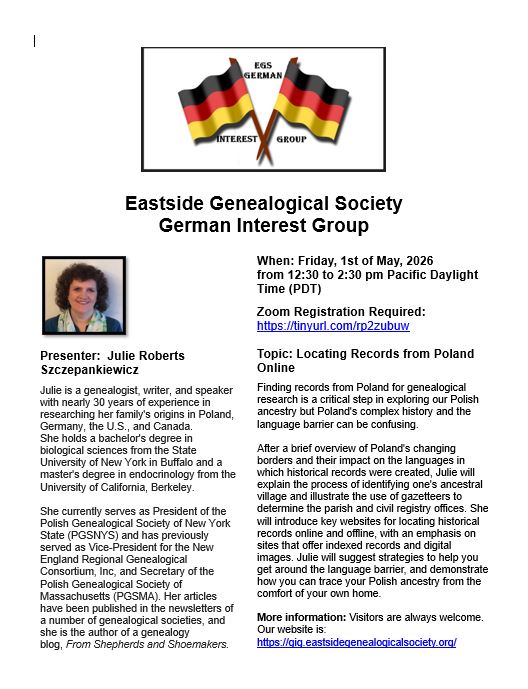
The Polish Genealogical Society of America is hosting its next quarterly webinar on November 16th at 2pm Central Time. The topic is “Ask a Polish Genealogy Researcher.” A flyer is attached – feel free to distribute to your networks.
Our presenter, Aleksander Zawilski, is a researcher and tour guide with Polish Origins. He will answer your questions about researching Polish genealogy.
What questions do you have about: – What are…? Where do I find…? How do I…? – Who can I ask about…? Why is it difficult to…? – What helpful questions will others ask?
If you would like to submit your questions in advance, please do so before October 30th and send to: president@pgsa.org
This webinar is free for PGSA members (please log in to get your discount) and non-members pay $15.
A very sad cause of death. “It was determined on March 8, 1670, in Plymouth, that one Thomas Lucase died “hee being very ancient and decriped in his limbs and it being very cold and having drunk some drink, gott a violent fall into a ditch in a very dangerous place and could not recover himself but bruised his body and lying all night in the cold, soe he came to his end.” (Checked FindAGrave but did not find dear old Thomas Lucase.)
True story: Looking for hubby’s ancestor in 1880, Anderson County, Texas, I typed in his name Charles Phillips. Result? Nada. Why? The enumerator wrote Charlie Phillips! Just a couple of letters can make a huge difference.
Remember to consider state censuses, especially for these states: Massachusetts, New York, New Jersey, Iowa, Kansas, Minnesota and Wisconsin. These states’ censuses offer detailed information not found in the federal censuses. All are available via FamilySearch and Ancestry. (Donna: to add this bit, I thought to check a “known fact” that one state census asked folks’ religion. I was wrong; not a one did.)
Interesting language, English. If a vegetarian eats vegetables, what does a humanitarian eat? How can a slim chance and a fat chance be the same, while a wise man and a wise guy are opposites? A house burns up as it burns down. We drive on a parkway and park on a driveway. English is a crazy language for sure.
California Great Registers: These are a fascinating help to find California ancestors after the loss of the 1890 census and before the 1906 earthquake. The growth of the state’s population after the gold rush in 1848 precipitated voter registration. The Great Registers of Voters was created by law on 19 March 1866. Each county was to keep a detailed list of their registered voters. These registers exist for the 50 counties that comprised California in 1872. Look for them on FamilySearch.
The Hessians are coming! The Hessians were German troops from the Hesse-Kassel in Germany who fought in the American Revolution. The British lacked enough trained soldiers so turned for assistance to the head of Hesse-Kessel whose first wife was the daughter of King George II. The soldiers totaled about 29,000 and approximately only 1700 returned to Germany after the war. Do you trace your line back to a Hessian soldier?
What is Pre-History? According to a documentary on the History Channel, anything that happened before the invention of writing is called pre-history, or prehistoric. Anything that happened after the invention of writing is called history.” Would you agree?
This is page 2 of the Washington State Sales and Use Tax Form, page 2 is the same for monthly, quarterly and annual reporting. Since our genealogical societies will be paying Use Tax on Live Presentations, this is how it is calculated. (Note while the Department of Revenue still provides the paper form on their website, they require everyone to file online now. ) The cost of the live presentation goes on line 31 for the state use tax of 6.5%. Line 35 is where you calculate the local use tax if everyone was at that location. I used the rate of 2.6% for the City of Spokane. Notice there are lines for more locations and so if you have people on Zoom at different locations you need to calculate how much of the $900.00 went to each location and then calculate the local tax for each location. Now since the Spokane local rate is second highest in Spokane county doing all of the required calculations will probably save some local use tax. So I did a test calculation to see how much money you might save if all the people on Zoom are in different local tax rates. To make the calculations easier I assumed we had 90 people at the October seminar and that 80 of them were in the room with the speakers (actually the speakers were on Zoom also). So a quick calculation:
80 people at Spokane is $800.00x 2.6% is 20.80
3 people at $10.00 each x 1.6% =0.48
3 people at $10.00 each x 2.4% = 0.72
1 person at $10.00 x 2.7% = 0.27
1 person at $10.00 x 2.5% = 0.25
1 person at $10.00 x .015 = 0.15
1 person at $10.00 x .026 = 0.26
All this work totals up to $22.93 local tax which means doing this much bookkeeping saves 47 Cents! For 20 people on Zoom double the savings to 94 Cents!
And you need the addresses of all the people on Zoom so you can calculate their local rate and keep all these records for at least 6 years. Now do we need to keep addresses of our Zoomers for the government? One option they give in their guidelines is to assume everyone is in the same room with the speakers and pay the use tax on that location, or for us the 2.6% local rate. And for saving of 94 cents this amount of bookkeeping is not worth the extra work.
I went to the Department of Revenues website: https://secure.dor.wa.gov/gteunauth/_/ and it has Business lookup to see if you signed up when you became a non profit, and also a Quick Sign up Wizard for non profits that either did not sign up when they became a non profit or signed up over 5 years ago.
You are free to copy articles to any non-commercial web site or message board or printed publication you wish. Don’t bother to ask permission, just do it.