Let’s Talk About…. Cajun & Creole

 (The above was snipped from The Historic New Orleans Collection; used with thanks. The map below was snipped from the website of the Laura Plantation; again with thanks. The bottom information was snipped from the website Explore Houma, Louisiana’s Bayou Country; with thanks.)

THE DIFFERENCE BETWEEN CAJUN & CREOLE

The term Creole can have many meanings, but during the early days of Louisiana, it meant that a person was born in the colony and was the descendant of French or Spanish parents. The term is a derivative of the word “criollo,” which means native or local, and was intended as a class distinction. In present Louisiana, Creole generally means a person or people of mixed colonial French, African American and Native American ancestry. The term Black Creole refers to freed slaves from Haiti and their descendants.

Still another class of Creole originates with the placage system in which white and creole men took on mixed-race mistresses in a lifelong arrangement, even if the men were married or married later. In this arrangement, the women had property, their children were educated and entitled to part of the man’s estate upon his death. In New Orleans, these people made up the artisan class and became wealthy and very influential.

“Cajun” is derived from “Acadian” which are the people the modern day Cajuns descend from. These were the French immigrants who were expelled from Nova Scotia, and eventually landed in Louisiana after decades of hardship and exile. Hearty folks from many backgrounds married into the culture, including Germans, Italians, Free People of Color, Cubans, Native Americans and Anglo-Americans. French or patois, a rural dialect, was always spoken. Due to the isolation of the group in the southern locations of Louisiana, they have retained a strong culture to this day.

ANY QUESTIONS? Ask Google!

Outstanding Volunteer/Team Nominations Sought

It’s that time of year! Time for your society to honor your outstanding volunteers or teams with an Outstanding Volunteer or Team Award. 

  • No later than July 1, 2024: Submit the form and photograph of your honoree(s) to Info@wasgs.org. The narrative (approximately 150 words) should explain the accomplishments of your nominee/team and why you are honoring him/her/them. The photo should be a good quality digital photograph (at least 300 dpi).
  • September 1, 2024: Formal announcement of the recipients will be announced.

A few special notes:

  • Local societies can submit up to two individuals or one teams/projects for special recognition by WSGS. Contact Roxanne Lowe at Info@wasgs.org if you have an extraordinary situation.
  • The Outstanding Volunteer/Team Award program is not a competition – it is locally driven. All nominees from local societies will be honored with an Outstanding Volunteer/Team certificate, but we want these awards to be special, so please don’t nominate your whole society (even though they are outstanding!).
  • Posthumous awards may be considered.
  • If your nominee is camera shy & doesn’t want to have a picture submitted, that’s fine. Also, if you’re unable to snap a picture of your whole team, we’re okay with individual member photos.
  • Nominees may have received an Outstanding Volunteer award previously. Click here for a cumulative list of awardees (alpha by name and by society).
  • Please honor the July 1 timeline for nominations. There is a lot of behind-the-scenes work, including reviews, to be done before the announcement on September 1.
  • The nomination form is available here. Please complete one form per person or team.

Additional details and deadlines may be found at the WSGS website here.

Please contact Roxanne Lowe at Info@wasgs.org if you have questions or suggestions.

Heritage Quest Research Library Basic Scandinavian Research

Basic Scandinavian Research Any genealogical research needs to be based on an understanding of the history, culture, geography, language, and resources of the area. This presentation will introduce these subjects for the Scandinavian countries – Denmark, Sweden, and Norway.  Some of the unique factors involved in Scandinavia include the use of patronymics, religion, geography, and history.  The three countries have much in common, but some differences will be highlighted. Diana Crisman Smith began researching her family in childhood, and has been researching, speaking, writing, and teaching for over 4 decades. She has published numerous magazine articles, a newspaper column, and is the author of 3 books.   When: Thursday, April 4, 2024
Time: 11:00 AM to 12:00 PM
Where: ZOOM ONLY
Price: $20 members 
           $25 non-members Sign-up and Payment:
Go to hqrl.com and click on the HQRL Store
Be sure to sign in as a member to receive the discount. 
Copyright © 2024 Heritage Quest Research Library, All rights reserved.
You have told us that you want to receive our news and updates from our library.

Our mailing address is:
Heritage Quest Research Library
2102 East Main Suite 105
Puyallup, WA98372-3205

Yakima Valley Genealogical Society Spring Seminar April 13, 2024

Yakima Valley Genealogical Society

1901 S. 12th Avenue

Union Gap, WA 98903

Phone: (509) 248-1328

Email: yvgs@yvgs.net

Yakima Valley Genealogical Society

Spring Seminar

Saturday, April 13, 2024

9:00am – 4:00pm Lunch and snacks are included. 

Location: Y.V.G.S. Library with Registration at 8:30am

Speaker: Nationally recognized, Christine Cohen

Subject: A Full Day Dedicated to Finding Your Ancestors. 

Christine will be speaking on the following topics: Immigration Ports of Entry. Naturalization and Citizenship Records. Researching Union Civil War Veterans. Cousin Baiting & Cousin Stalking.

The Registration form is online at www.yvgs.net  Click on Society News.  Spring Seminar. Advanced Registration before April 7th. $40.00. Onsite April 13th Registration 8:30am to 9:00am. $45.00. No Refunds of Registration fee after April 7th.

Tacoma Pierce County Genealogical Society Legacy Family Tree SIG

Tacoma-Pierce County Genealogical Society Legacy Family Tree SIG Meeting
Tuesday, April 2, 2024, from 7:00 pm to 8:30 pm virtual via Zoom

This month’s topics are To-Do Lists, History List, and Timelines.

If you have any suggestions for future topics, please send them in.

This is our monthly meeting to share tips & tricks, problems &
solutions. Sometimes we will watch videos or share our screens to aid
in learning more about using Legacy Family Tree software.

Everyone is welcome to attend and participate in the learning. If you
are just thinking about trying Legacy for the first time, you’ve been
using it for a year or two or you are an old pro with many years of
experience using Legacy this is the group for you.

We look forward to meeting with you, every month on the First Tuesday
at 7:00 PM Pacific Time

Please download and import the following iCalendar (.ics) files to
your calendar system.

Monthly Calendar Reminder:
https://us02web.zoom.us/meeting/tZYpfuyuqDovHNwtBgxtQjWKOjDQ8k5Q9bPD/ics?icsToken=98tyKuGqqjIvHNKUtR-PRpwQBor4Z-7wpn5Ygo1KiD3iGzRiaDTdGehmA-p0RemJ

Join Zoom Meeting:
https://us02web.zoom.us/j/82495661568?pwd=dy85YmluVzF5aEU4SzFTcTUrVDlTUT09

Meeting ID: 824 9566 1568
Passcode: 715731

One tap mobile:
+12532050468,,82495661568#,,,,*715731# US
+12532158782,,82495661568#,,,,*715731# US (Tacoma)


Dial by your location:
+1 253 205 0468 US
+1 253 215 8782 US (Tacoma)
Meeting ID: 824 9566 1568
Passcode: 715731

Find your local number:
https://us02web.zoom.us/u/kcphK19I1E

Western Pennsylvania Genealogical Society June 21-22 Conference

The Western Pennsylvania Genealogical Society (WPGS) has a spectacular speaker line-up for the June 21-22 conference, The Journey of Our Ancestors: Tracing Our Western Pennsylvania Roots

Attend presentations on migration, land, DNA, the Pennsylvania State Archvies, ethnic ancestors and so much more!

Check out the full agenda and speaker line-uphttps://wpgs.org/50th-anniversary-conference/.

Whether you attend in person or virtually, connect with fellow genealogists and further your research. All recorded sessions will be available for 90 days.

Register before April 30 to get Early Bird pricing.

We hope to see you there!

Kathleen Sizer Named One of WSGS’s Outstanding Volunteers in 2023

Since 2003, the Washington State Genealogical Society has recognized over 600 outstanding volunteers and teams, nominated by their local society or genealogical organization for their service and dedication. These volunteers are the backbone of their local society, giving their time and expertise, to the organization and the field of genealogy. In the coming months, you will be introduced to each of the 2023 award recipients and learn why they received the 2023 WSGS Outstanding Volunteer and Team Award.

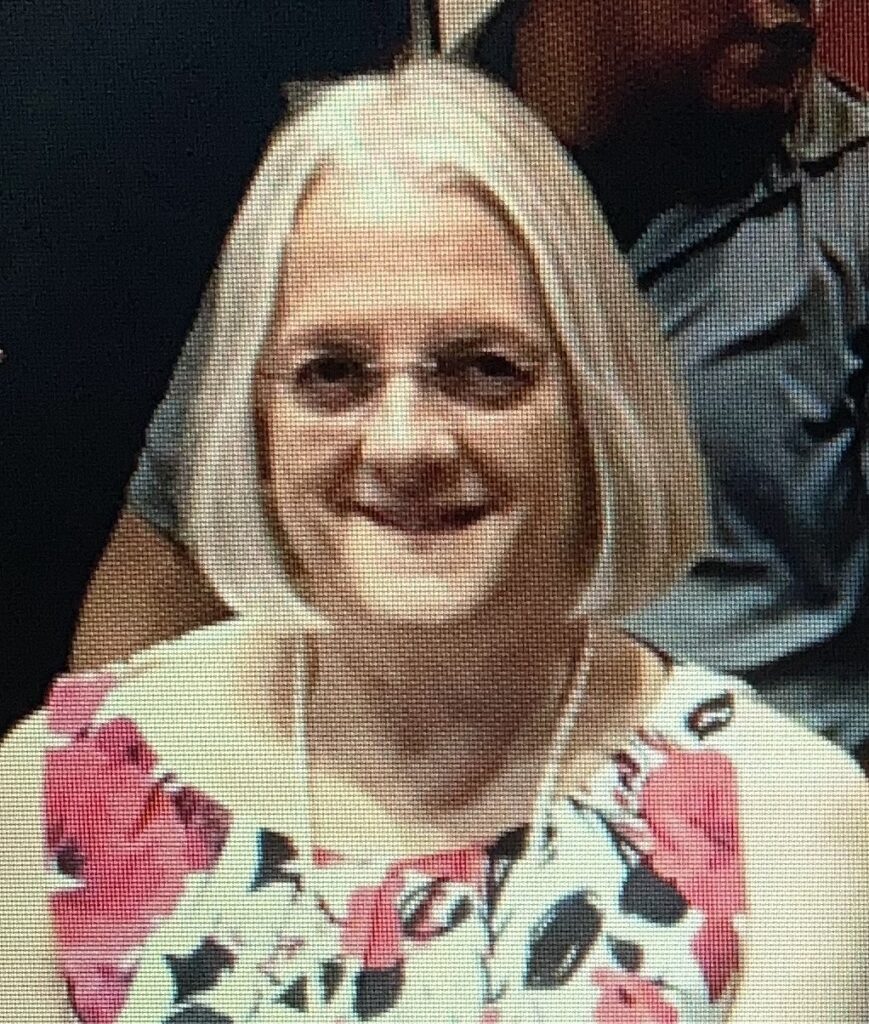
Today we’re introducing Kathleen Weddle Sizer of Granger, Washington, who were nominated by the Yakima Valley Genealogical Society (YVGS).

Kathy joined YVGS in 1975 and served the public coffee at Indian John Hill Rest Area on I-90 in fundraising.  She has been a librarian since the 1980s and served as vice-president, president, secretary and currently as treasurer of the society. She is also a jack-of-all-trades volunteering in hospitality, yard sales, mowing the lawn, helping clean the library and the past two years has been on the bylaws and standing rules committee updating the society’s rules to match the new State regulations.

Kathy is the current president of WSGS. She has also served WSGS as membership chair since 2017 and past secretary. 

For more information on the WSGS Outstanding Volunteer Award program, visit the Recognition page of the WSGS website or contact Info@wasgs.org. Please type “Volunteer Award” in the subject line.

Let’s Talk About: Plants of the Oregon Trail,Part 1


In preparation for our EWGS May meeting, I thought I’d share something I submitted to our BULLETIN back in March 2009:

These are notes that I took in August 200-8, when I attended the Oregon California Trails Association (OCTA) Conference in Nampa, Idaho. Pat Packard was one of the featured speakers. She spoke on the plants of the Oregon Trail and how the folks perceived the plants and used them as they went along. I thought our EWGS readers might enjoy “hearing” her too. 

Plants fueled the trip for both men and animals. Plants dictated the route, the leaving times, the stopping times and points for the entire trip. They could not pack and carry with them enough food for their animals as they went along; horses and oxen had to eat along the way. 

Most of these families had already moved an average of five times. They thought of themselves as “movers.” Because of that, they had experience with new plants in new places. Also because of that, they had developed a theory that if they didn’t know what the plant was, and could not name it, they it was to be considered poisonous and not to be eaten. 

Most think they did glean and eat along the way. Not so, according to Pat Packard, for these reasons: 

(1) they were often in desert country where there was nothing to eat

(2) they travelled in summer when food-plants were less abundant

(3) they constantly encountered unknown plants and were fearful

Their basic diet was beans, bacon and biscuits. This is a diet high in carbs and protein. There was very little Vitamin C, and scurvy was the third highest cause of death on the Oregon Trail. English sailors had long ago discovered that limes helped and could be carried on long voyages. They got the idea that acid/sour substances were the cure for scurvy. The immigrants didn’t have limes, but they did have vinegar. In her research, Ms. Packard found little mention of the pioneers searching to find vinegar or pickles to pack and take with them. This seems obvious to us now but not to them then. They really needed fresh fruit and greens. They had some dried fruit but unfortunately drying the fruit destroys the Vitamin C. They kept in mind the old advice about beware of poisonous plants and even as they saw various fruits and greens, they were fearful to use them. On the Mormon trains it was better because in many cases folks had been over the same trail before and their advice was passed along to new immigrants. Nearly 100% of the Mormon pioneers utilized the wild plants they found. 

TO BE CONTINUED

Let’s Talk About…. Musems: Great Learning Places


Bet you had no clue that there was a museum in Spokane having over 19,000 articles from the fire fighting industry?? I did not! But I do want to go!

There are plenty of museums in the Eastern Washington area as well as scattered all over our wonderful, historically-minded, state!

Below is a copied bit from the Washington State Genealogical Society (www.wasgs.org) where you’ll find a pages-long list of museums spread all around our Evergreen State! (The list was mostly compiled by EWGS member, Duane Beck.)

As that list on the state society webpage covers the entire state, even in your travels you might/could/should/ought to visit a museum and get some extra “larnin into your noggin.”  (Speaker George Schweitzer used to say that.) 


There were these many listed for the Spokane area…..the entire list was PAGES long…… so there are plenty of museums in your area to learn from and visit!


P.S. The list was compiled some time ago. If you wish to visit a particular museum, I’d strongly advise you to check out their website and/or their Facebook page.