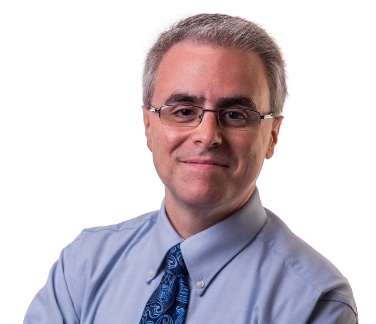
Closing Seattle National Archives

Greetings Fellow Family Historians and Pacific NW History Enthusiasts,

I am addressing you in this email not as the president of the Skagit Valley Genealogical Society but as a member of the genealogy community who shares your interest in our regional history. Please be clear that this email reflects my private thoughts and concerns that I wish to share with my  fellow family-historian and enthusiast of local and regional history. At this time, this is not a reflection of SVGS or any other organization that I belong to.

Today, on Dick Eastman’s genealogy  blog ( www.blog.eogn.com) I came across this surprise announcement (Please see PDF attached). Mr. Eastman’s article was about the Office of Management and Budget’s plans to close the National Archives and Records Administration (aka NARA) branch in Seattle. I thought you would care to be informed about this decision that was made without public input by the Office of Management and Budget.

This behind-closed doors, without public input, decision to close and move this regional archive to either Southern California or Missouri so the Office of Management and Budget can sell the property, and heavens knows what this valuable Seattle property could potentially yield for developers, perhaps building some corporate building or luxury condos, of course, o the highest bidder. To me this seems selfish, greedy and at best, short sighted.

NARA’s facility in Sandpoint, Seattle and its close proximity to the University of Washington has enabled countless academics, professional historians and researchers from the general public to publish theses, books, and a sundry of educational materials to enlighten all of us about the Pacific NW’s rich and fascinating past. Countless genealogy researchers also make the journey to Sandpoint in Seattle from across the Pacific Northwest region to make productive use of NARA’s valuable primary sources.

In 2014 17 genealogist-mentors and 17 Burlington-Edison Alternative High School seniors visited NARA in Seattle. Those students, who were at-risk for not graduating, learned so much about our state and regional history and the shear magnitude of the vast historical resources available to them and to all students of history. I know it left a lasting life-long impression on their young minds. They joined the countless visitors to NARA that left better informed, more knowledgeable about research methodology and with a deeper interest in history.

I tend to be long-winded in my writing, so I will leave off here so I do not overstay my welcome and your attention.
Below is the contact mailing address if you wish to express your opinion about NARA Seattle staying in Seattle – not moving Washington and Alaska’s (etc) historical records and primary sources to Missouri or California where those local communities would have little to no interest in these resources.

Thank you for your time and for joining me in supporting our national and pacific northwest regional treasures housed at NARA in Sandpoint, Seattle, Washington – where they belong and for all of us to freely access and enjoy our region’s history. Please write to:

Emacs!

The email address for Mr. Russell T. Vought is:  Russell.t.vought@omb.eop.gov

With my sincere appreciation,

Margie Wilson
Amateur Family Historian and History Enthusiast

THE GENEALOGICAL FORUM’s Thursday Evening E-News Edition January 23, 2020
Curious about the status of your GFO Membership? We’d love to have you as a GFO Member!
gfo.org | 503-963-1932 | info@gfo.org Be sure to check the complete GFO CALENDAR.
Also, don’t miss the current issue of The Forum Insider
GFO Objects to Closure of National Archives Seattle
This week we were startled to learn that a secret plan to close The National Archives at Seattle is nearly a done deal. This facility provides access to permanent records created by Federal agencies and courts in Oregon, Washington, Alaska, and Idaho. Without the reporting of KIRO radio in Seattle, no one would have known this closure was in the works.
Courtesy of The National Archives at Seattle
Despite the lack of any public comment period, the GFO sent the following email to Russell Vought, the acting director of the Office and Management and Budget: Dear Mr. Vought, I am writing on behalf of the Board of Directors and the 1075 members of the Genealogical Forum of Oregon to register our strong objections to the planned closure of Seattle’s National Archives facility. The decision to close this federal repository of public records was made in complete secrecy, with no input from the public or any other government entities in the region. No local hearings or requests for feedback were held in Washington, nor in Alaska, Idaho, Montana, or Oregon. The Seattle National Archives and Records Center holds records, mostly un-digitized, starting in the 1840s for the five NW states. These records are vital public documents for anyone researching American history. No consideration of the importance of maintaining archival resources in the Pacific was made. The National Archives goals do not appear to include keeping local resources close to their origin and where most use will occur. We must ask, “Why not?” It is vital these record are kept in our region and remain accessible. Transferring records relevant to the Pacific Northwest to a records center in Kansas City, Missouri, effectively bars access to those to whom the records are most relevant. We urge you to keep Northwest records where they will be most used, and to keep the expert archives staff who specialize in Pacific Northwest records. Vince Patton
President, Genealogical Forum of Oregon
Spring Seminar with Karen Stanbary: Solve Puzzles with DNA
Join us for our 2020 Spring Seminar, “Solve Puzzles with DNA,” on April 4 & 5, to be presented by nationally-recognized genetic genealogy author and educator Karen Stanbary, CG®, MA, LCSW.
The Saturday, April 4 classes, will be held from 10:00 a.m. to 4:30 p.m.at Portland’s Center for Self Enhancement (SEI). Karen will guide experienced beginners and above in learning how to manage and interpret DNA evidence, then how to incorporate it into existing documentary research and provide guidance on managing conversations about unexpected DNA results. If you register now, the cost for GFO members for this full day is just $45 and for non-members, $50. The Sunday half-day classes on April 5 will be held at the GFO from 9:30 a.m. – Noon. Deepen and expand your intermediate- to advanced-level skills as Karen presents more complex genealogy puzzles requiring more complex DNA evidence analysis. Early registration price for this half-day is just $25 for GFO members and $30 for non-members. Download the Seminar Flyer for more details.

Take advantage of those Early-Bird Registration prices! On March 1, all prices will increase by $5. This is a great opportunity to learn more about solving those genealogy puzzles with the use of DNA.
Register Now
February Workshop: Advanced Excel for Genealogy
Spreadsheets can be a powerful tool to help you analyze your genealogical data and keepi track of your research; and they are essential in managing your DNA information.
From 9:00 a.m. – 12:30 p.m. on Sunday, February 23, join BCG Certified Genealogist, Mary Kircher Roddy, as she presents a hands-on guide for the experienced spreadsheet user using Excel to gain perspective on and to further your genealogy research. For a more complete description, download the seminar flyer. Seating is limited to 30 people! Everyone gets a spot at a table. Participants should bring their (fully charged) laptops pre-loaded with Excel. Mary is an active member of Seattle Genealogical Society, the Genealogical Speakers Guild, the Association of Professional Genealogists, and the National Genealogical Society. She has published articles in Family Chronicle, Internet Genealogy, and the National Genealogical Society Quarterly. For Early-Bird Registration on or before Jan. 31, the fee is $30.00 for GFO Members and $35.00 for non-members. You’ve got one more week before the price increases $5 on Feb. 1.
Register Now
GFO Stars: Manuscripts Committee Volunteers
This month, the GFO Board is proud to select four volunteers as our GFO Stars of January. Cat Cope-Arnold, Anita Lustenberger, Bonnie Randolph, and Ruth Summers have contributed hundreds of hours over several years to help with one goal—creating digital files from 350,000 pages of donated personal papers collected by the GFO.
Top left, clockwise: Anita Lustenberger, Cat Cope-Arnold, Bonnie Randolph, and Ruth Summers
They sort, remove staples, unfold, and scan these papers so that one researcher’s life work can be available to others. Because of their dedication, there is an end in sight for this project! Thank you Anita, Bonnie, Cat, and Ruth!
Needed: Volunteers with Adobe Acrobat Pro Software
We need help to process our scanned periodicals! Sunday work parties have been lively, with volunteers prepping and scanning GFO’s periodicals collection while chatting about all things genealogy. To keep up with the steady stream of material, we need more people to help with the computer processing. Using Adobe Acrobat Pro, the scans are combined, reviewed for problems, and text recognition processing is done. If you have the software needed and can help, please contact Laurel Smith at library@gfo.org.
News from the Library
New BooksA history of the German language: with special reference to the cultural and social forces that shaped the standard literary languageBook of Gobi: Siskiyou Smokejumper Base, 1943-1981City in the forest: the story of LansingEstate records of Edgecombe County, North Carolina, 1730-1850Garrett Surname: Ireland: 1600s To 1900sHow our ancestors died: a guide for family historiansRichardson County, Nebraska, 1985Sesquicentennial sampler, a history of Mormons in the Rogue Valley (Oregon): to commemorate the 150th anniversary of the Church of Jesus Christ of Latter-day SaintsSurname atlas of GermanyTexas in 1850The Applegate Trail of 1846: a documentary guide to the original southern emigrant route to OregonThe descendants of Alonzo Bartlett (1843-1933) and Ellen Bassett (1851-1897)The Family Tree cemetery field guide: how to find, record, & preserve your ancestors’ gravesThe great fire of London.The parish registers of Gulval (alias Lanisley) in the County of Cornwall (1598-1812)The Sutherland pioneers of Beaverton and Woodville, Ontario, Canada.The Virginia military surveys of Clermont and Hamilton Counties, Ohio, 1787-1849Tracing your docker ancestors: a guide for family historiansTracing your Freemason, friendly society and trade union ancestors: a guide for family historiansWe, the people … of Winnebago County. Winnebago County Bicentennial Commission, 1975 New Digital FilesBarney Family NewsForge: the Bigelow Society quarterlyWPA Historical Records Survey: Benton County Commissioners’ Journal, 1850-1855, Probate Book AWPA Historical Records Survey: Benton County, Oregon Cemetery RecordsWPA Historical Records Survey: Benton County, Oregon Churches
Surplus Book: Colorado Territorial History
Do you have Colorado roots? There’s a very good bet your people are mentioned in this book. Colorado Families: A Territorial Heritage includes 40,000 individuals in its 735 page.
This is a big work of history. The Colorado Genealogical Society encouraged everyone with ancestors settling in Colorado before January 1, 1877, to submit information.
This book says, “Every pioneer was eligible, regardless of race, creed, nationality or ghost
in the family closet. Never has a Colorado history book included so many people – some 40,000 individuals.”
They also add that they “made special efforts to recruit minority histories.” Colorado Families was published in 1981.
This copy is a retired library book with one library mark inside and a label on its spine. Otherwise, this heavy volume is in truly excellent condition. Our price to pickup: $35
Price to ship to you: $45 If you’d like to buy this book, email booksales@gfo.org.
Survey Results: You and the Family History Library
Forty-seven people responded to our survey about the Family History Library in Salt Lake City. Of those, 66% reported having gone to the library to do research, and 100% of those said it was worth the trip! When asked if being unable to order microfilms would increase or decrease likelihood of a visit, most respondents said it made no difference. And all the digitized microfilms available through FamilySearch didn’t make a difference either. So it seems that most of us are hooked on the Family History Library. Here are some of the tips we received to help you plan your visit***:
Consult articles on prepping for your visit at FamilySearch and at FamilyTree Magazine. Organize. Prepare ahead. Have your research problem outlined clearly before you go, make a research list, and check the library catalog to be sure that you put in an advanced request for books and microfilm you want to see that are not on the shelves or in the building.
Once at the archives, stick to working on your research goals and don’t allow yourself to get distracted by other books or materials. Have options and alternatives – a Plan B – if your initial plan doesn’t work out. Before you go, use their catalog to make a list of what is only available at the library for research. Then organize by type of records and focus on that type until completed. Don’t spend a lot of time reading. Take a flash drive and save what you find. If the item is an original document make a photocopy. Verify that the items are saving to the flash drive. Take only photocopies of important documents you might want to reference or, better yet, scan them and have them on your thumb drive. Label your thumb drive with your address and phone number should you leave it at a work station or in a computer. Put a clearly named file on the drive with your contact information.
Be sure to visit the first floor you can now print a free big color fan chart from your FamilySearch tree. It’s nine generations and a big help in seeing where you need to concentrate your efforts. Go have fun. If you don’t feel satisfied with the first person who assists you, ask someone else. Everyone there is very friendly. Build in time in case you need to go the Utah State Archives. Particularly for divorce records in the early 1870s as UT was a divorce mecca with some done via mail. Allow as many days as possible, [as well as] time to eat. Look over your work on Sunday and go back Monday to reconcile problems. MY QUESTION — Would GFO ever organize/conduct a trip to the FHL in SLC? Go early in December, not very busy then. *Note that some responses have been combined or edited for brevity.
New Survey: Your Learning Style One of our respondents wanted us to ask our readers, “How do you learn best?”
Take the Survey Now
This week at GFO …
Saturday, January 25th
DNA Advanced Group 9:00 a.m – 12:00 p.m.
Join us for two presentations: GEDmatch: An Introduction will be presented by Lisa McCullough. Handout can be downloaded here.
Maximizing Your Use of GEDmatch – will be presented by Tim Janzen. Handout can be downloaded here. Any questions? Contact dna@gfo.org.
British Interest Group 1:00 – 3:00 p.m.
This group’s focus is on researching in the British Isles: England, Wales, Scotland, and Scots-Irish. This month, we will discuss online sources, news,
The Highland Clearances in Scotland, and any recent successes. Also, bring those brick walls if you got ’em. Questions to group facilitator, Duane Funk at uk@gfo.org.
Sunday, January 26th
Library Work Party 9:00 a.m. – 5 p.m.
Come help with the digitizing effort. Doors open at 9 and work will likely continue most of the day. Some people come for just an hour or so; others work the full time. You are welcome to do either. Any time you can share is valuable. Come join in the fun.
Wednesday, January 29th
GFO Library Open Late to 8:00 p.m.

Closing Seattle National Archives

Judy Russell gave me permission to copy her blog post for our readers.

2020 alphabet soup: B is for…

by Judy G. Russell | Jan 23, 2020 | Records Access

Buildings

One building in particular, that is.

This one.

The National Archives building in Seattle, Washington.

Which the Public Buildings Reform Board has decided should be sold… because the real estate it sits on is a hot property.

Not one whit of consideration for the fact that the records housed within that facility are of enormous value to the people of the Pacific Northwest.

Not one whit of consideration for the fact that records previously housed in Alaska have already been moved once, to the Seattle facility.

Not one whit of consideration for the fact that the alternate repositories proposed — Kansas City for some records and Riverside, California, for others — are not at all easy to access for folks from this part of the country.

And not one whit of consideration for the fact that accessing records at Kansas City is probably the least convenient of all the archival facilities in the country.

But only the fact that “Relocating (this facility) will make 10-acres of highly valuable land available, likely for residential housing, in the Hawthorne Hills neighborhood just to the west of Lake Washington in the Puget Sound region of Washington…”

All without a single opportunity for a single member of the public impacted by this decision to be heard.

A letter sent by Vince Patton, President of the Genealogical Forum of Oregon, to the federal Office of Management and Budget blasted the decision:

“The decision to close this federal repository of public records was made in complete secrecy, with no input from the public or any other government entities in the region. No local hearings or requests for feedback were held in Washington, nor in Alaska, Idaho, Montana or Oregon.

The Seattle National Archives and Records Center holds records, mostly un-digitized, starting in the 1840’s for the five NW states. These records are vital public documents for anyone researching American history.

No consideration of the importance of maintaining archival resources in the Pacific was made. The National Archives goals do not appear to include keeping local resources close to their origin and where most use will occur. We must ask, “Why not?”

It is vital these record are kept in our region and remain accessible. Transferring records relevant to the Pacific Northwest to a records center in Kansas City, Missouri, effectively bars access to those to whom the records are most relevant.

We urge you to keep Northwest records where they will be most used, and to keep the expert archives staff who specialize in Pacific Northwest records.”1

And the Records Preservation and Access Committee — jointly comprised of representatives from all the major national genealogical societies — has joined in opposing the move: “If a decision is made to sell the property, the National Archives Branch needs to be relocated into another facility in the Seattle area. Each National Archives Branch includes original documents from the region that are available at no other location and have not been digitized. If the Archives Branch were closed and not relocated, it is our understanding the records would be moved to Kansas City, Missouri (1,800 miles from Seattle) or Riverside, California, (1,200 miles from Seattle). Either location would make those records inaccessible to most residents of the northwestern United States.”2

And historians, researchers and others in the Pacific Northwest are just appalled.3

A final decision on this building sale could be made by the Office of Management and Budget as early as this Sunday, January 26th. If there’s any chance for us to be heard, we need to speak out NOW.

The Legal Genealogist would love to tell members of our community concerned about this where to write to express their own individual concerns — and our outrage at this decision and its secrecy. But there’s no clear path to comment on this because of the secrecy.

So here are our options:

1. Write (email) to the head of the Office of Management and Budget, acting director Russell T. Vought. His email is Russell.t.vought@omb.eop.gov.

2. Write (email) to the agency proposing the sale of the property, the Public Buildings Reform Board. Its email is fastainfo@pbrb.gov.

3. Contact the National Archives via its contact page at https://www.archives.gov/contact.

4. Contact your United States Senators (find the contact info for your two senators at https://www.senate.gov/general/contact_information/senators_cfm.cfm) and your member of the House of Representatives (find the contact info for your representative at https://www.house.gov/representatives/find-your-representative).

The one option we do not have is to stand silent.

Access to our heritage is at stake.


Cite/link to this post: Judy G. Russell, “2020 alphabet soup: B is for…,” The Legal Genealogist (https://www.legalgenealogist.com/blog : posted 23 Jan 2020).

SOURCES

  1. Vince Patton to Russell T. Vought, Acting Director, Office of Management & Budget, email, 22 Jan 2020, copy provided to JG Russell.
  2. RPAC to Public Buildings Reform Board, email, 23 Jan 2020, copy provided to JG Russell.
  3. See Feliks Banel, “Officials, historians slam ‘horrendous’ plan to close Seattle National Archives,” MyNorthwest.com, posted 22 Jan 2020 (https://mynorthwest.com/ : accessed 23 Jan 2020).

Eastern Washington Genealogical Society Meeting

How to Date Old Photos and How to Preserve Them

Regular Meeting:  Saturday, February 1 How to Date Old Photos and How to Preserve Them  presented by Melode Hall (EWGS Meetings) 12:30 pm to 3:00 pm Bernardo Wills Architect 153 S Jefferson St, Spokane, WA 99201      (This is our new regular meeting place.) Melode Hall will be presenting“How to Date Old Photos and How to Preserve Them.”

Our Speaker, Melode Hall from Scrapbooking on GeigerHandoutsPrint your copies at home if possible. The first 2 arePhotos and the last is a Word document.Photo WorksheetReference ToolsTraditional Albums

EWGS Meets at New Location

The Bernardo-Wills Architecture Building where EWGS will meet for at least 2 years. It is located at 153 S Jefferson St,, Spokane, WA 99201 (just south of the Railroad). This picture on the left is the front of the building and their sign (along Jefferson St.) The view on the right is the front of the building from Jefferson. There are 20 free spaces in front and lots of parking meters (needing quarters or possibly your smart phone).   Also close to 6 STA bus routes.

Heritage Quest Research Library February Class

Steven W. Morrison
Saturday, February 8, 2020
 
SESSION 1:    10:00 AM Fact Checking Your Family Traditions Some families are lucky, they have “family lore”.  But is this story true?  With new online collections we can now double check to see how it holds up to the light of some original records.  Only then will you know if it’s a keeper or just fools gold.  A case study of colonial Virginia entrepreneur Isaac Perkins/Parkins.
$ 20.00 per Session members
$ 25.00 per Session non-members 

Session 2:  11:30 AM Using Hinshaw and Other Finding Aids to Locate Original Quaker Records During the past century, Quaker historians and clerks have been busy copying old meeting records and have created a wide variety of finding aids.  In the 1930s, Willard W. Hinshaw began publishing six volumes of his historic Encyclopedia of American Quaker Genealogy, with Willard C. Heiss following with six volumes for just Indiana.  We will learn how these tools can shortcut your search for original Quaker records. $ 20.00 per session members
$ 25.00 per session non-members
To reserve a place please call 253-863-1806 or drop by the library to sign up.  

AFTER RESERVING A SEAT, IF YOU ARE UNABLE TO ATTEND, PLEASE CALL SO THAT OTHERS MAY ATTEND.
All of our classes are held in the HQRL Classroom. 

The German Interest Group of the Eastside Genealogical Society February 2020

The German Interest Group

of The Eastside GenealogicalSociety (EGS)meeting

When: Friday, February 7, 2020 from 12:30 to 2:30 pm

(Doors open at 12:10 for networking)

Where: Relief Society Room of the Latter-day Saints Church

10675 NE 20th St, Bellevue, WA 98004

Topic: “More German Church and Civil Record Tips” – This presentation will enhance our prior programs with additional tips for 1) locating the German records in the United States and elsewhere, 2) reading the old German handwriting in those records and 3) translating the German words into English.

Presenter:  Dorothy Pretare started collecting family history in 1995 and is active in 2 local genealogical societies, leader of the EGS German Interest Group and a member of 3 societies in Minnesota.  In 2008, she visited her ancestral villages in old East Germany and present-day Poland.

More information: https://egsgermangroup.wordpress.com/ . Visitors are always welcome.