Tuesday Trivia

I’ve been typing the life story of a dear couple of 90-year-old friends of mine who are legally blind. Yes, they full well realize that they should have done this sooner but alas, they didn’t. (Are YOU taking notes here?) He was from the logging/lumbering area in the north Idaho panhandle and I must admit that I’ve learned much more about that industry than I would have ever guessed. Did you know that in these deep piney woods of the Pacific Northwest, which is latticed with streams and lakes, that lumber camps would be built on a stream site for only 2-3 years or until they had cut down all the nearby trees. Then they would pick up and move the mill ten miles or less to another site and begin the process all over again. They land they logged was purchased by a timber company and when the mill and men moved on, the “logged cut” acres were then sold to settlers and homesteaders. Railroads were vital to the hauling of the timber and then to the settling of the area. Small towns already established by a nascent logging camp would grow when the railroad arrived for not only would they be improved as supply centers for the people already established around them but they would be the collecting centers for the products shipped out. ​​And these same values would cause new communities to be established. ​
(Did you have ancestors involved in the timbering or logging industry in the Pacific Northwest?)

Northwest Genealogical Society Conference Speakers

2017 Genealogy Conference Speakers

Click above to register.

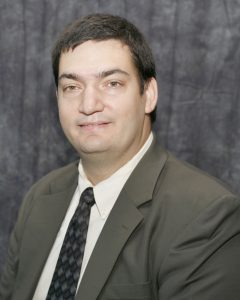
Kenyatta D. Berry is genealogist and lawyer with more than 15 years of experience in genealogical research and writing. She began her genealogical journey while in law school and studying at the State Library of Michigan in Lansing. A native of Detroit, Berry graduated from Bates Academy, Cass Technical High School, Michigan State University and Thomas M. Cooley Law School. She has deep roots in Detroit, her ancestors have lived in Detroit since the 1920’s.
A frequent lecturer and writer, she focuses on African American, Slave Ancestral Research and DNA. Berry has been featured in Real Simple, Jet, Wall Street Journal, Orange County Register, Sacramento Bee, Wave Newspaper and other publications. She has been a guest on numerous radio programs including MakeItPlain #WomensWednesday on SiriusXM Radio.
On March 11, 2016, Kenyatta received a California Legislature Assemblyman Resolution from the Honorable Jim Cooper on the floor of the State Capitol where he declared March 11th, Kenyatta D. Berry day. The Resolution recognized her work in the genealogy industry and on Genealogy Roadshow.
She also received a Resolution from the City of Sacramento on March 12, 2016, recognizing her work in Slave Ancestral Research and on Genealogy Roadshow. Kenyatta has appeared on numerous morning news shows in various markets and recently appeared on The Real where she revealed the DNA results of the Hosts. An avid sports fan, Kenyatta loves to watch the Lions, Tigers and Red Wings from her home in Santa Monica.
Daniel Earl got his start in family history at age 10 when his father took him to the grave of his great-grandfather that sparked a lifetime of interest in family history. Daniel has spent the last 25 years researching his own family history and helping others make history a part of their story. In addition to being a professional genealogist and genealogical lecturer, Daniel is married and the father to six wonderful kids. He lives just outside of Lansing, Michigan.
A microbiology graduate, Diahan Southard has spent 15 years in the genetic genealogy industry. In her current position as Your DNA Guide, she provides personalized, interactive experiences to assist individuals and families in interpreting their genetic results in the context of their genealogical information.
She is also the author of DNA Quick Guides, producer of a video tutorial series, as well as a featured author for Family Tree Magazine, regular contributor to Lisa Louise Cooke’s Genealogy Gems, and recurring writer in Your Genealogy Today magazine.
Peggy Clemens Lauritzen, AG, was involved in genealogy before she was even born. The daughter of avid genealogists, she was spending time in courthouses and cemeteries while other children were playing on swings and going to the beach. The love of her family’s history has never left her, for she vividly remembers interviewing her grandparents, all of whom were born in the 1800’s. She felt when she touched their hands, she was touching history. With her experience serving as a Family History Director, she frequently speaks at genealogical societies, workshops, seminars, and webinars where she loves bringing genealogy to life. Some of those would include The Ohio Genealogical Society, The Ohio State University, Brigham Young University, and many other state and local genealogy societies. It was over fifteen years ago that she felt to further her knowledge and become Accredited. Her area of expertise is the mid-South, where every one of her ancestors planted their roots. She has recently completed several Legacy QuickGuides on Appalachia, which are also available on www.legacyfamilytree.com and www.amazon.com, and is an instructor at Ancestry Academy. She has recently been asked to be part of the GenealogyDotCoach consulting team.

Monday Mystery

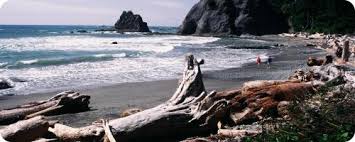
Today’s mystery is another location, most appropriate for these hot summer days………… what beach is this, specifically? Bet many of you have been there!


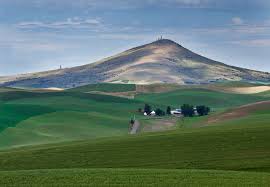
Congrats and Strawberry Shortcake to Curtis Hoffman for being the first to identify last week’s mystery photo as Steptoe Butte in Whitman County, south of Spokane. He remembers his family driving up there in the 1960s.

Anne Grimm and Sonji Ruttan also gave correct answers. Good for youse guys!

Spotlight on the Northeast Washington Gen Society

I had a delightful, catch-up lunch a few days ago with Karen Struve and Susan Dechant of the NeWGS. Karen is the current president and Susan is immediate past president. We talked about NeWGS, their plans, progress and problems. (Karen on left below.)

NeWGS was founded in 1981 with the goal of preserving the histories of Stevens, Ferry and Pend Oreille counties (the far northeast corner of Washington). Their membership averages about 60, with 25-30 coming to meetings, and their genealogical collection is housed in the Colville Public Library.

Their biggest problem is the same as so many societies face: lack of participation of members and a core group doing all the work. Susan and Karen have bounced the presidency back and forth several times. Their long-standing publication, Pioneer Branches, has been discontinued because nobody would step up to be editor/coordinator. Their day-of-meeting computer classes have also been cancelled, again due to lack of folks stepping up to help.

No bearers of gloom and doom, Karen and Susan were upbeat and enthusiastic. “We just got three new members!” Karen told me. Their biggest project is to maintain the Evergreen Cemetery (which they own). Member Lora Rose has crafted several tombstones for known burials that had no marker. Member Sue Richart regularly drives the 160 miles to Pullman to digitize papers from the WSU special collections that pertain to their area. And they will again this year have a promo booth at the Colville Fair in August.

They do work with the Stevens County Historical Society and will do research by mail. Check out their website, www.newgs.org.

I’m proud to do a spotlight on the Northeast Washington Genealogical Society today!

Friday Serendipity

This is Part 3 about Mason City, built to house the workers on Grand Coulee Dam, and their local company-published newspaper.

Interesting quotes:

“Up to 1928, a million dollars has been expended in various surveys to where the dam should be built.” (Folks, that is $13,955,606.94 in 2017 dollars!! Nearly fourteen BILLION…just to find the best/correct site.)

“Air is a major item used in the construction of Grand Coulee. Nearly 3,000,000 cubic feet of air is being used daily to run the jackhammers, bit sharpeners, forges, and numerous other devices.”

“Tools don’t cause accidents; it’s the men who use them.”

The Mason City theater in August 1935 was showing the film, Call of the Wild, with Clark Gable and Loretta Young.

Produce ads in 1935 in Mason City grocery stores:

  • Thompson Seedless Grapes – #3 for 10 cents
  • Tomatoes – 2 for 5 cents
  • Watermelon – 1 cent per pound
  • Hamburger – 12 cents per pound
  • Weiners – 15 cents per pound
  • Eggs – 21 cents per dozen
  • Brown Sugar – #1 package for 5 cents
  • Peanut Butter – #1 glass jar for 17 cents
  • Lettuce – 2 heads for 7 cents

(Let us do remember that the average weekly wage for a worker in 1935 was $12.00. Likely the Grand Coulee Dam workers got a bit more.)

May 13, 1936:  “The payroll this week: 347,624 checks issued for over $6,000,000.” (I divided that out; it comes to $17.26.)

And there was this cute joke:  “Without doubt woman is the eternal question. It may also be added that man is eternally finding the wrong answer.” 

Did one of your ancestors work on the building of Grand Coulee Dam???


THE GENEALOGICAL FORUM’s Wednesday Evening E-News


THE GENEALOGICAL FORUM’s
Wednesday Evening
E-News
26 July 2017

For more information visit www.gfo.org, contact us at info@gfo.org, or call our library at 503-963-1932. We love hearing from you!


Also, if you missed your free copy of our monthly Insider for July 2017, you’re in luck because we saved you a copy HERE. NOTE: The Insider issues are now located under the “Learn” > “Our Publications” menu at our new website (still gfo.org).
Curious about the status of your GFO Membership?? We’d love to have you as a GFO Member!
***

GFO’s Book Sales Team Dilemma

We need your help!!

Continue reading →

Wednesday Nostalgia

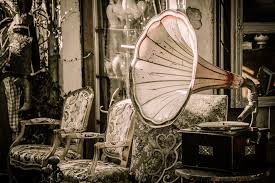
Thinking about odd things, I wonder which is really better? To save Great-Grandmother’s brooch in its velvet box where few of her descendants will see it, wear it, or know of its history or to just let it go with her stuff to the Thrift Shoppe when she passes and the family cleans out her house??

I really thought about this idea as I enjoyed the site of so many old brooches and pins offered for sale at a recent Vintage Faire. Many of these pieces of adornment was some woman’s treasured item, don’t you suppose?

Far, far, FAR better would be to ensure that all Great-Grandmother’s descendants know about that brooch of hers. Bet you’d agree to that.

(Note the prices and note the fence/gate that this display was mounted upon. )

Tuesday Trivia

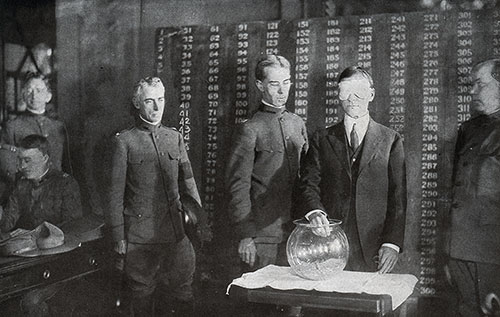
According to a reminder bit in my local newspaper, it was 100 years ago about now that the first World War I draft registration numbers were called. Most of us know about, and have happily used, the World War I Draft Registration records but have we thought further to WHY those little cards were created and HOW the men were called up? Check it out….. most interesting reading.

The World War One Draft – Reporting of the First Draft Lottery – 1917

​

The Secretary of War, Mr. Baker draws the first number in the World War 1 Draft and Announces ” 2 5 8″ Photograph Copyright 1917 by Committee on Public Information.

Draft lottery selects 1,374,000 men for examination to provide 687,000 of first increment troops others of 10,000,000 are definitely listed for future service; Baker draws the first number.
​ ​

Gen. Crowder, Gen. Bliss, Senator Chamberlain and Representatives Dent and Kahn also select capsules from the 10,500 in the great glass bowl in senate office building room where drawing continues until morning

​. ​

Newspapermen present drafted—society women in night throngs—scenes and incidents that thrill.

Read more: World War One Draft – Reporting of the First Draft Lottery | GGArchives http://www.gjenvick.com/Military/WorldWarOne/TheDraft/SelectiveServiceSystem/1917-07-20-Draft

​ ​

DrawingTheFirstNumber.html#ixzz4nljqpuav

Monday’s Mystery

Today’s mystery is a photo-mystery. What is this (obviously a hill!) and where is it and why is it important to Washington history?

With last week’s mystery, I was musing about how a little wooden image of an ancient Hindu elephant god came to be floating along the western-end-edge of Long Lake where I found it among the driftwood. Two possible solutions were offered….love ’em!

Sonji Ruttan:  A group of Hindus were holding a seance on a luxury houseboat on Long Lake and offered this to the river god.

 Bettye Hull: There was a very old Hindu man traveling by wagon train in the 1880s through these parts. The wagon train was raided by Indians and many things were stolen. Obviously, this fell out of the bag of “loot”, or was discarded by the Indians because they had no idea what it represented.